Activity
Mon
Wed
Fri
Sun
Jul
Aug
Sep
Oct
Nov
Dec
Jan
Feb
Mar
Apr
May
Jun
What is this?
Less
More
Memberships
Endless Evolution w/ Duffin
2.9k members • Free
Castore: Built to Adapt
1k members • Free
167 contributions to Castore: Built to Adapt

Mar 24 •
NMN vs TND1128
@Anthony Castore what are your thoughts of TND1128 being superior over NMN as a NAD+ precursor? The studies I’ve read indicate that TND1128 is a superior MAM+ precursor for activating SIRTUINS, help self regulate redox, with anti antioxidant and anti-inflammatory properties. That being said, all the studies were conducted on mice and we know that there’s not a direct correlation.

1 like • Apr 10
@Anthony Castore ☝️this

Jan 31 •
Carbs vs No Carbs on Retatrutide Here’s What Everyone’s Missing
This Retatrutide carbs vs no-carbs discussion is a perfect example of the kind of work we’ll be doing inside the Cellular Intelligence Circle. I am attaching a video so you guys can get a sense of what to expect. Not hot takes. Not protocols copied from the internet. Not arguing teams or tribes. Instead, I’ll show you how I actually think. How I zoom out, identify what system is really being affected, and trace decisions back to first principles like cellular energetics, redox balance, signaling hierarchy, and context. You’ll see how to move beyond surface-level debates and start asking better questions. The kind of questions that cut through hype, confusion, and false certainty. The goal of the Circle isn’t to tell you what to think. It’s to teach you how to think for yourself. If you’re tired of conflicting advice, overconfident influencers, and protocols that work in theory but fall apart in real humans, this community is built for you. We’ll break down topics like peptides, metabolism, training, recovery, fat loss, and longevity in a way that connects the dots instead of fragmenting them. We kick off in February, and each month will center around a focused agenda designed to build real understanding, not just information overload. Members will get long-form breakdowns, case studies, monthly live Q&A discussions, and practical frameworks they can actually apply. If this video made you stop and rethink the question instead of picking a side, you’re exactly who this was built for. More details coming soon…. The Cellular Intelligence Circle launches February.

3 likes • Jan 31
If i dont have carbs people around me will die🤷♂️
2 likes • Feb 2
@Anthony Castore this🔥🔥🔥🔥
Aug '25 •
Everyones favorite non peptide supplement
I was just wondering what everyone’s favorite non peptide,sarm, steroid supplement was. Heres mine
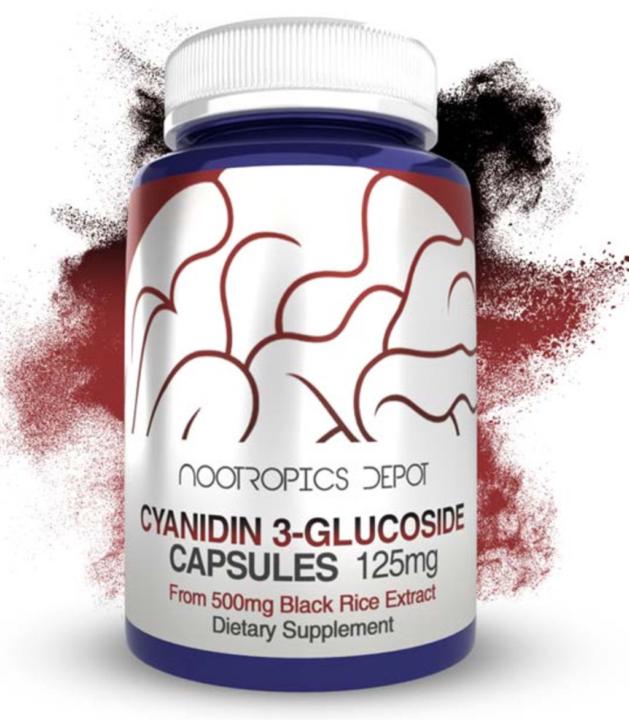
0 likes • Dec '25
@Valerie Duvall theyre great!! Give them a shot
1 like • Jan 27
@Jan de Jong yes, i take it every night. Its a constant part of my sleep stack like ZMA,5-htp, and glycine
Jan 27 •
WHY PERFORMANCE IS ABOUT TRANSITIONS, NOT INTENSITY
Most people think performance improves by pushing harder. More intensity, more volume, more effort, more stimulation. That belief makes sense because intensity is visible. You can see heavy weights, fast running, deep breathing, sweat, and fatigue. What you cannot see is what actually determines whether the body adapts or breaks down. That hidden factor is how well the body handles transitions. Biology does not reward force. It rewards coordination. At every level of the body, from a single cell to the entire nervous system, health and performance depend on how smoothly systems shift from one state to another. These shifts include rest to effort, effort to recovery, fed to fasted, stress to calm, inflammation to healing, and sleep to wakefulness. The quality of these transitions determines whether the system becomes stronger or weaker over time. A transition in biology is any moment when demand changes faster than structure can adapt. When exercise begins, muscles suddenly require more energy. When exercise stops, energy demand suddenly drops. When food is eaten, nutrients flood the bloodstream. When fasting occurs, energy must be mobilized internally. When stress hormones rise, immune and metabolic priorities shift. These changes are not steady states. They are moments of adjustment, and they are where the system is most vulnerable. Most people misunderstand how energy works in the body. Energy is not something you simply have or run out of. Energy is controlled flow. At the cellular level, this flow is managed by mitochondria. Mitochondria are often called powerhouses, but a better way to understand them is as traffic controllers. Their job is not just to make energy, but to regulate how electrons move through a tightly controlled system. Electrons enter mitochondria from the breakdown of food and stored fuels. These electrons move through a series of protein complexes called the electron transport chain. As electrons move through this chain, energy is released in a controlled way to produce ATP, the molecule used to perform work. ATP is not the goal. It is the result of proper electron flow. When electron flow is smooth, energy production is clean and signaling is preserved. When electron flow becomes congested, problems arise.
1 like • Jan 27
🔥🔥great breakdowns

Jan 20 •
maizinol
Just wanted to share this…. stumbled upon an extract called maizinol….. derived from corn. Has some pretty impressive effects for increasing deep sleep by up to an extra 30 minutes a night over the course of a few weeks which is pretty astounding. here’s the pubmed links if anyone is interested https://pmc.ncbi.nlm.nih.gov/articles/PMC12759108/ https://pmc.ncbi.nlm.nih.gov/articles/PMC9889011/ Interestingly it looks like cvs brand has the only product i could find that only has maizinol as the sole ingredient it’s called “deep sleep support” . Please chime in if anyone has tried this for sleep
2 likes • Jan 20
Its hard to find it by itself and not in a mix
2 likes • Jan 20
It works well though
1-10 of 167

@anthony-hicks-9073
Dad first. Coach always. NCAA ref who thrives in chaos. Fueled by sarcasm, big ideas, bigger laughs. Life’s short—make stories worth telling!
Active 3d ago
Joined Aug 2, 2025
INFJ
AZ
Powered by