Activity
Mon
Wed
Fri
Sun
Aug
Sep
Oct
Nov
Dec
Jan
Feb
Mar
Apr
May
Jun
Jul
What is this?
Less
More
Memberships
Bhutanese Civil Engineer
7 members • Free
AI Builders Club
29 members • Free
1 contribution to Reclaim Your Health

🔥
Oct '25 •
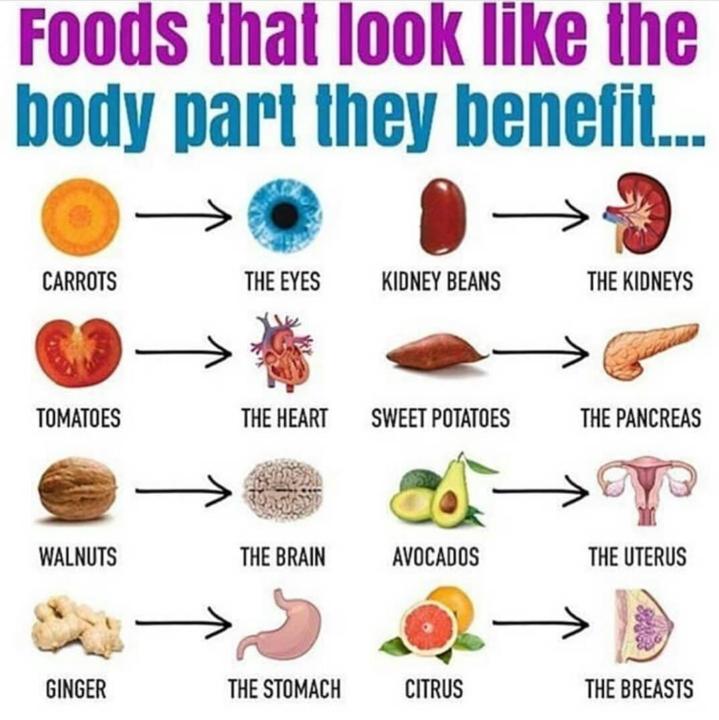
🧠Foods that look like the body part they benefit
I was talking to someone years ago and they mentioned that walnuts help with brain function and then made the obvious observation of how walnuts actually look like the brain. This, along with a recent post that I saw, made me think about the question "what other fruits/vegetables look like the body parts that they benefit?". (honestly though, I always thought...if something benefits one thing it benefits the whole system, but it's a fun thing to think about anyway). While not every visual match has deep nutritional evidence behind it, many of these pairings actually make biological sense...here are some examples! :) 🥕 Carrots > Eyes Slice a carrot crosswise and you’ll see a pattern that looks like an iris and pupil! Cool. :) Carrots are rich in beta-carotene, a form of vitamin A that helps maintain good vision and protects the surface of the eye.They also support night vision by helping the retina function properly. (this took me on a little detour about bunnies and figuring out if they have good eyesights.haha) 🧠 Walnuts > Brain Walnuts look like a brain with two hemispheres.They’re packed with omega-3 fatty acids, which support brain structure, cognitive function, and help reduce inflammation. Some studies show that eating walnuts can help with memory and mood regulation ❤️ Tomatoes >Heart Cut open a tomato and you’ll see chambers that resemble the heart’s ventricles.Tomatoes contain lycopene, an antioxidant linked to reduced risk of heart disease. Cooking tomatoesincreases lycopene absorption! * Avocados > Womb and Cervix The shape of an avocado mirrors the uterus, and it takes about 9 months to grow from blossom to ripe fruit (fun fact I did NOT know). Kinda symbolic i suppose. Avocados contain folate, a nutrient essential for reproductive health and fetal development.They also provide healthy fats that balance hormones and reduce inflammation. 👂 Mushrooms >Ears When sliced, mushrooms resemble the shape of an ear (I'll never look at a mushroom the same way again, haha...why is this kinda funny?) They’re a great source of vitamin D, which supports bone health (including the tiny bones in the ear--I feel like this is a stretch but that's fine ) and contributes to auditory function.

2 likes • Oct '25
Awesome info! Just loved how everything connects to health💯
1-1 of 1

Active 12h ago
Joined Oct 1, 2025
Powered by