
Pinned

Dec '25 •
NO.10 Reading
Please continue to feel and experience it..."In our mental activities, the state when there are no distracting thoughts or various mental fluctuations is called the Primordial Spirit. In daily life, the various thoughts and discriminating mind are referred to as the Conscious Spirit. The part of mental activity that can perceive the tranquil state of the Primordial Spirit is called the True Intent. Generally speaking, the Primordial Spirit does not easily manifest in our daily lives. As soon as a thought arises, it is overshadowed by consciousness and is no longer the Primordial Spirit but the Conscious Spirit. However, when your mind is highly focused, to the point where this thought merges with your life activities, this state represents the union of the Primordial Spirit and the True Intent. In truth, there is no real or clearly defined boundary among the Primordial Spirit, the Conscious Spirit, and the True Intent. The Conscious Spirit inherently carries the Primordial Spirit; one cannot seek the Primordial Spirit apart from the Conscious Spirit, as that would be like searching for a donkey while riding it—it simply cannot be found. It is like looking elsewhere for the donkey while seated on it, only to realize it was there all along upon looking back. I often use this metaphor: the Primordial Spirit is like water, and the Conscious Spirit is like waves. The waves exhibit various dynamic movements, but they rely on the water to ripple. Where would one find the water without the waves? Water and waves are essentially one; when the waves calm down, the original state of water is revealed. Any undulation or movement is called a wave. Similarly, the Conscious Spirit and the Primordial Spirit are like this: when mental activity is complex and fluctuating intensely, it is called the Conscious Spirit; when it becomes calm, it is called the Primordial Spirit." This part is very good to practice, to experience what is our Trueself, what's our mind, and what's required conscious state during practice( True intent). So please repeatedly read and feel it.
9
0
Pinned
Dec '25 •
Breast Cancer causes by TCM
Traditional Chinese Medicine (TCM) identifies breast cancer as a manifestation of internal imbalances within the whole body, not just a localized disease. The root causes of breast cancer, according to TCM, are often linked to patterns of disharmony, such as: - Liver Energy Stagnation: Emotional stress, worry, and suppressed feelings may cause the Liver’s energy to stagnate, leading to blockages in the chest and breasts. - Phlegm and Dampness Accumulation: An unhealthy diet or weak digestion may result in excess phlegm and dampness, which can combine with stagnant Qi and blood to form lumps. - Blood Stasis: Long-term stagnation of Qi and phlegm can hinder blood circulation, creating hard, fixed masses. - Deficiency of Energy and Blood: After long illness or excessive treatments, the body’s energy or blood may weaken, reducing resistance and allowing disease to progress. These imbalances are believed to be the result of systemic disharmony between Qi, Blood, Yin, and Yang. TCM offers personalized herbal medicine and acupuncture to address these imbalances, aiming to boost energy, soothe Liver Qi, resolve phlegm, activate blood circulation, and tonify deficiencies.
5
0
Pinned
Dec '25 •
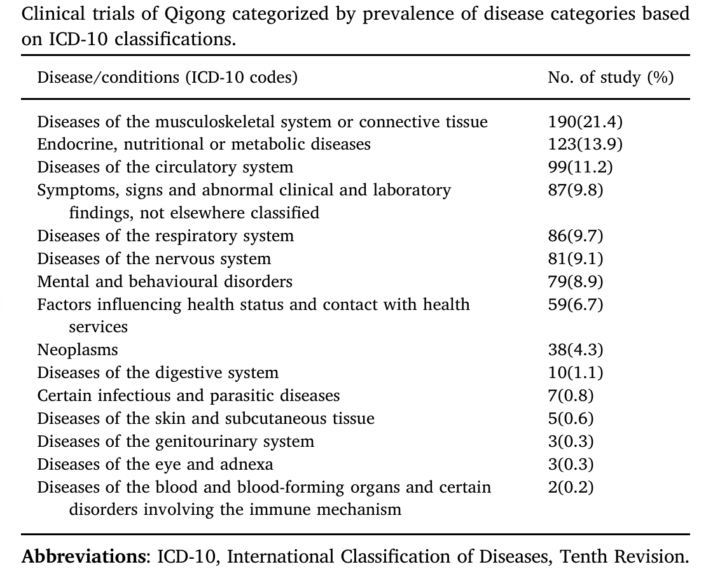
Evidence Base of Clinical Studies on Qi Gong: A Bibliometric Analysis
This study shows that qigong has significant effect on various health conditions.
8
0
6d •
Root Causes by TCM for Digestive Disorders
Traditional Chinese Medicine (TCM) identifies several root causes of digestive disorders, including: - Spleen and Stomach Imbalances: These organs govern digestion and nutrient transformation. Disruptions can lead to conditions like IBS and leaky gut. - Dampness: This refers to the body's tendency to retain moisture, which can cause digestive stagnation and issues like bloating and constipation. - Liver Qi Stagnation: Emotional stress can disrupt the flow of Qi, affecting the Spleen and Stomach, leading to symptoms like abdominal pain and bloating. - Dietary Habits: Poor eating patterns, including overeating, consuming cold or raw foods, and excessive consumption of greasy or spicy foods, can contribute to digestive imbalances. - Emotional Stress: Chronic stress can affect the Liver's ability to regulate Qi, leading to digestive problems. TCM addresses these root causes through a holistic approach, including dietary changes, herbal remedies, and acupuncture to restore balance and promote digestive health.
0
0
7d •
ROOT CAUSES BY TCM FOR TRAUMA
In Traditional Chinese Medicine (TCM), trauma is viewed as a complex internal process that disrupts the flow of Qi (vital energy) and Blood, leading to various patterns of imbalance. Key root causes include: - Disruption of Qi and Blood: Trauma can cause stagnation or deficiency, affecting circulation and energy flow. - Emotional Impact: Trauma often leads to emotional distress, affecting the Heart and Kidneys, which govern the body's energy and emotional state. - Holistic Approach: TCM emphasizes addressing both physical and emotional aspects of trauma to achieve comprehensive recovery. - Patterns of Imbalance: Different types of trauma can create distinct patterns, such as Blood Stasis or Qì Stagnation, each requiring tailored treatment. Understanding these root causes helps in developing a holistic approach to healing trauma in TCM.
0
0
1-30 of 324
skool.com/zhongdao
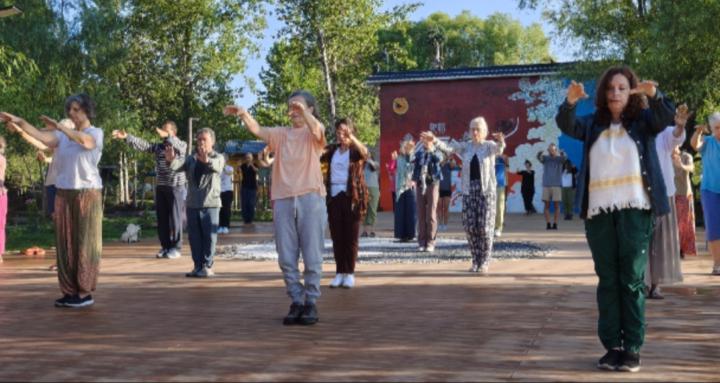
Deeply learn and experience ancient Eastern wisdom, Tai Chi, Qi Gong, and Traditional Chinese Medicine, embarking on your energy cultivation journey.
Leaderboard (30-day)
1

+1
Powered by