Activity
Mon
Wed
Fri
Sun
Nov
Dec
Jan
Feb
Mar
Apr
May
Jun
Jul
Aug
Sep
Oct
What is this?
Less
More
35 contributions to ZhongDaoTaiChi & QiGong & TCM

Oct '25 •
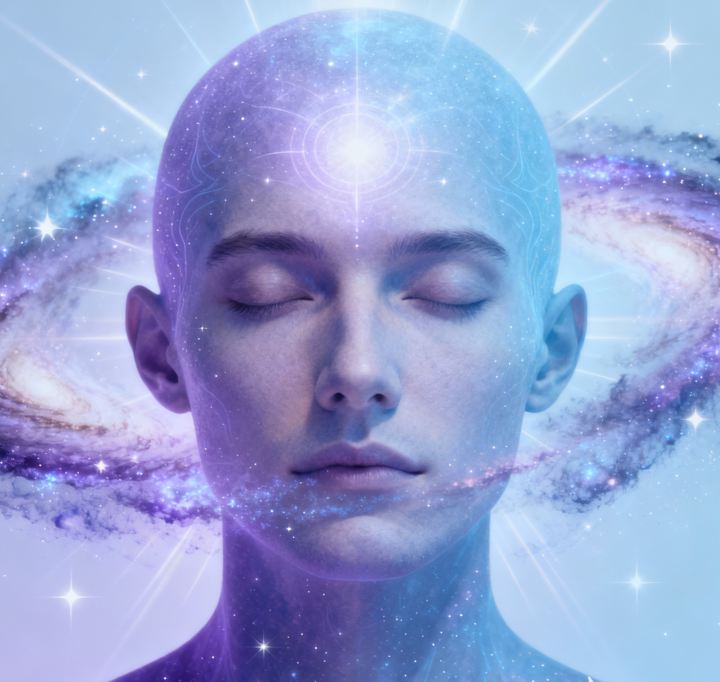
93:I recall one teacher mentioned that one should not blindly concentrate consciousness on the head, as improper practice could lead to cerebral hemorrhage. Is this accurate?
Dr.Pang said: In the methods of focusing the mind discussed in The Essentials, there are three types: form-based focusing, divine light focusing, and pure mental focusing. Form-based focusing (or internal vision focusing) involves using the eyes to visually focus inwardly on one's own body. Some schools of thought caution that individuals with excessive yang energy who focus on the upper body may risk elevated blood pressure or cerebral hemorrhage. This warning, however, applies specifically to form-based focusing and not to divine light focusing or pure mental focusing.

1 like • Apr 12
@Fabiola Areas So make it easily to understand, it means that we practice like 3CM standing posture, this kind static practice, best way only use the light which gathered by mind( special method to practice) to focusing, or only pure mind focusing, do not use the eyeballs to focusing tightly on some parts of body, especially not put it on the head, it will rise qi up from physical level...
Apr 12 •
NO. 15 The Yi Yuan Ti contains all the information of life.
From the perspective of racial development, humanity is the result of a long evolutionary process of living beings. From single-celled organisms to higher animals, each step forward has condensed information from both the organism itself and the natural world, thereby enabling continuous self-improvement—evolution. By the time humans emerged, the body had already accumulated vast amounts of information from lower to higher life forms. The German philosopher Oken said: "Man is the pinnacle of natural development, and therefore must encompass all that came before within himself, just as a fruit includes within itself all the previous stages of development of the tree. In a word, man is necessarily a miniature image of the entire universe." Perhaps someone might ask: Since humans are so advanced, how can they still retain information from lower organisms? To resolve this doubt, one need only look at the individual developmental history of a human being. Each of us evolves and develops from a simple fertilized egg—a single cell—and all the cells in the human body retain the genetic inheritance of that single cell, the fertilized egg. Moreover, the endings of nerve cells extend throughout the body, maintaining close connections with it. In view of this, the vital information of all tissues and parts of the body inevitably converges into the Yi Yuan Ti.
0
0
Apr 3 •
NO.14 Reading:The Relationship Between the Yi Yuan Ti and the Nervous System
The nature of the Yi Yuan Ti is determined by the functional characteristics of nerve cells. As we know, nerve cells differ from ordinary biological cells. In the process of their own metabolism, they not only perform the absorption and excretion functions common to all biological cells but also enhance the ability to receive and transmit information carried by energy. This gives nerve cells broader channels and content for interacting with the external world, and this function continues to improve as the nervous system evolves. The entirety theory of Hunyuan proposes that any physical object is a tangible, condensed state of its own Hunyuan Qi, surrounded by a sparse, diffuse form of that same Qi. In light of this, when nerve cells become densely packed, the Hunyuan Qi around each cell permeates and merges with that of others, forming an interconnected whole. This whole is both influenced by changes in the nerve cells and can, in turn, exert an influence on them. As animals evolved into humans, the nervous system became highly developed and finely divided in labor, further enhancing the ability of nerve cells to receive and transmit energy and information. The unified whole formed by the Hunyuan Qi around numerous nerve cells also strengthened significantly, and its functions underwent a profound transformation. It could not only reflect external events but also mirror various internal changes within itself—this is the result of the multi-layered self-reflection within the Yi Yuan Ti. Thus, it acquired relative independence. At this point, we no longer refer to it as the Hunyuan Qi of brain cells but instead call it the Yi Yuan Ti.
1 like • Apr 3
So dear friends, please notice: From Reading 12 starts, the contents what I have shared, all talking about our True Self. It's very very important. At the beginning when you read it, might be not easy understand it, but you must repeatedly to read and feel, always pondering over it, the process by which you ponder over, it's the process of approaching YI YUAN TI, your True Self. So pay high attention please...
Mar 13 •
NO.13 Reading
The Yi Yuan Ti contains all the information of human life, akin to the "primordial chaos" described in modern physics. It possesses the ability to receive various information and reflect things; the function to store, synthesize, analyze, and retrieve information; and the capacity to issue informational instructions. When undisturbed by external influences, it remains in its original uniform state, similar to the ancient saying of "serene and motionless." When subjected to various disturbances, it generates reflections and responses that align with the external objects, analogous to the ancient notion of "responding and comprehending upon stimulation." It can be compared to a mirror: when no object is present, the mirror is empty; when an object appears, the mirror reflects its image. However, the mirror's reflection is singular and planar, capturing only optical characteristics. In contrast, the Yi Yuan Ti is boundless, capable of reflecting all attributes of things as well as its own intrinsic qualities. When the Yi Yuan Ti establishes connections and response patterns with the external world, the movements and processes within it constitute conscious activities.
3
0
Jan 28 •
NO.12 Reading YI YUAN TI -- TRUE SELF
What is Yiyuanti? Yiyuanti is a part of the Hunyuan Qi within the human body. It is a form of matter that is invisible, intangible, and formless. Internally, it is perfectly homogeneous and undifferentiated. It is compatible with the physical structure of the brain, centered around the brain's core—specifically, the center of the brain—and extends both inside and outside the brain, reaching throughout the entire body and spreading even beyond it. Yiyuanti represents the holistic functional state of Hunyuan formed by all the nerve cells in the human nervous system and their associated Hunyuan Qi. Nerve cells serve as the foundation in which Yiyuanti is established, yet Yiyuanti possesses a certain degree of independence and can create a reactive influence on the nerve cells.
2 likes • Jan 28
In this part, very important words: Matter: Yi Yuan Ti is one form of matter. It's finest energy, but energy is still a form of matter. Matter has many aspects, they are showing different forms, as solid physical matter, or can't be seen the energy form, also more subtle information form... Compatible: Yi Yuan Ti merges with the organ of brain. Yi Yuan Ti relys on nerve cells to exist, but it still has independence, expecially when it trains.
1-10 of 35
@ling-ling-5114
Senior Traditional Chinese Medicine Practitioner, Experienced Qigong master, "Non-duality Cultivaton" Practitioner.
Active 190d ago
Joined May 18, 2025
Powered by