
Write something
Pinned

⭐
9d •
2 Watch Deals Worth Your Time This Week!
Timex Spring Sale — 25% off with code SPRING25 This is the one. Timex's annual spring sale is live across the Marlin and Waterbury families. If you've been wanting a: - Marlin Moon Phase — dressy, elegant, genuinely beautiful on a leather strap - Waterbury Traditional Chronograph — versatile daily-wear - Marlin Chronograph Tachymeter — vintage-leaning sport dress …this is the window. Stack the 25% off and you're getting genuinely elevated pieces at accessible-brand prices. Timex is a true US heritage brand — founded 1854 in Connecticut. 👉 https://timex.com/collections/flash-sale Vaer Watches — USA-assembled field watches from $209 Not a flash sale, but worth reminding the group this exists. Vaer's C5 field watches are assembled in California with sapphire crystal, 10ATM water resistance, and screw-down crowns — at a price point that usually gets you a plastic-crystal quartz. If you've been hunting an "American-assembled alternative to Hamilton or Bertucci," start here. 👉 vaerwatches.com/collections/field-watch If you saw other awesome deals that is not included in the list above please drop in the comments below! 🔥

Pinned
⭐
23d •
The most expensive mistake in watch collecting isn't the watch
You've seen it happen — maybe you've lived it. A piece that looked right on paper, felt wrong on the wrist, and lost value the moment you tried to move it. A "deal" from a seller whose reputation you couldn't verify. A reference you passed on because you didn't know enough yet, and regretted six months later. None of that is a spending problem. It's an information problem. And information in this hobby isn't hard to find — it's hard to trust. YouTube has opinions. Forums have arguments. Hype pages have agendas. None of it tells you what to do with your specific budget, taste, and collection goals. That's the gap Watch Lover Premium closes. You get direct access to serious collectors and experts who've made the mistakes so you don't have to. Live calls where you can bring a real purchase decision and leave with a real answer. Trusted vendor relationships built over years, not hours of research. A community where the baseline level of knowledge is genuinely high. The collection you're trying to build in two years, alone — some of these men built it in twelve months, together. The room you're in determines the speed you move at. Join Watch Lover Premium here: https://www.skool.com/watch-lover/plans


14m •
If you have to ask about the price….you can’t afford it
This makes our little hobby look trivial by comparison. These costs are INSANE!! 😳 https://www.instagram.com/p/DXxNk9okSIa/?igsh=MXFxMXNsaXgycHZkMQ==
0
0


🔥
10h •
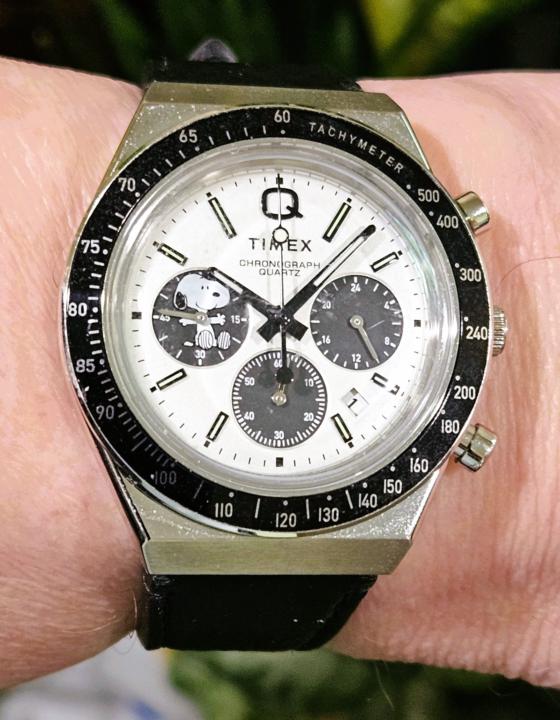
Watch of the Month for April — Snoopy!
Happy Saturday! In the same situation as our friend @Jeffrey Plotka following the 30 Day Watch Challenge, with thirty different watches all tied for Watch of the Month with one wear apiece, so no Watch of the Month for April. So, beginning a new month the same way I began April, with my little friend Snoopy, my Timex Snoopy Q Chronograph. I put off and put off and put off looking into this one, and then once I took the plunge instantly discovered how much I had been missing out on with this one. Just a fabulous watch overall, plus SNOOPY! On another note, I had to say goodbye to "Allie," my little Chihuahua companion last night. She became ill again and sadly did not make it thru this time. I rehomed her about six years ago when she was supposedly already eight years old, and had been by my side thru one surgery of mine after another after another, and was perhaps the smartest, sweetest dog companion I have ever had. A long line beginning years ago with a St. Bernard and ending with a Chihuahua. The peace comes in knowing that she is no longer suffering. Best wishes for a wonderful weekend! 😀

1-30 of 15,928

skool.com/watch-lover
A friendly community of horology enthusiasts celebrating their passion for all watch types (luxury, dive, fashion, racing, digital, mechanical, etc)
Leaderboard (30-day)
1

🔥
+7310
2
🔥
+5462
3
🔥
+5403
4

🔥
+4822
5

🔥
+4197
Powered by