
Pinned

🔥
Jun 5 •
Why Join Watch Lover Premium?
I’ve stacked so much value into Watch Lover Premium that I think it’s a no-brainer YES decision to join. https://www.skool.com/watch-lover/plans The details: - Monthly Q&A "Inner Circle Mastermind" LIVE Calls with Antonio & Expert Guests - Access To 7+ Micro-Courses Designed To Level Up Your Watch Game - Monthly Challenge & Prize Eligibility - Discount Codes at your favorite watch retailers (Save big $$$ buying watches!) - As a Patron the "activity" requirement doesn't apply to you (you won't get kicked out for just lurking) - Personal Watch Concierge - expert consultant helps find your dream watch ($1000 value) - Personal Sales Concierge - expert helps sell your watch for top dollar ($1000 value) - Invite To LIVE Event (Dallas, TX Oct 2026) Click here to join us https://www.skool.com/watch-lover/plans
46
0
🔥
18h •
Some Watches Just Hit Different… The Omega Speedmaster 321 “Ed White” 🚀
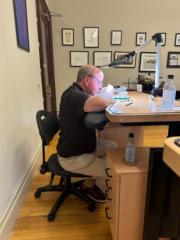
Today I’m wearing my Omega Speedmaster 321 “Ed White,” and this is one of those watches that reminds me why I fell so deeply into this hobby in the first place. There are obviously plenty of Speedmasters out there, and I’m fortunate enough to own a few different versions, but the 321 has always felt different to me. It isn’t about having the newest movement, the most technology, or even the most impressive spec sheet. It’s about the connection to what came before it. The proportions, the stepped dial, the vintage-style bracelet, and especially that beautiful Caliber 321 all come together in a watch that feels remarkably close in spirit to the Speedmasters of the 1960s. And now that I’ve started getting much deeper into watchmaking myself, I find that I appreciate the movement almost as much as the watch. Looking through the caseback and actually understanding a little more about what I’m seeing—the column wheel, the architecture of the chronograph, the levers, wheels, bridges and all of those tiny mechanical interactions—has changed the way I look at watches. I’m no longer just seeing a beautiful movement. I’m beginning to see the work and engineering happening inside it. That has probably been one of the biggest changes in my own watch journey. I still love collecting watches, but more and more I’m becoming fascinated by why they were made the way they were, how they work, and the history they carry with them. The 321 checks every one of those boxes for me.


59m •
How does "Rolex" translate in Hindi?
Titan just entered the room where that conversation happens. Fifth largest watch manufacturer in the world - like 17-million watch production per year. Tata Group. Founded in India in 1984. For decades, nobody outside India cared. That's changing — and the reason is precise, not narrative. In-house hand-wound movement. 2.2mm thick. 106 components, almost entirely manufactured in India. Flying tourbillon entered at the Grand Prix d'Horlogerie de Genève 2024 — the Oscars of watchmaking. And this year: the Edge Ultraslim Mechanical. Grade 2 titanium. 5.7mm total thickness. USD 3,300. Competing at GPHG 2026 against Parmigiani, MB&F, IWC, and Audemars Piguet. USD 3,300. Against Audemars Piguet. The Swiss have one advantage left that Titan doesn't have: 200 years of narrative. The movement, the finishing, the engineering — Titan is closing that gap faster than anyone expected. The cultural weight takes longer. But it always does, for everyone who eventually gets there. The man who bought a Submariner in 1960 because he understood what it was — not because everyone else had one — was early. He was right. What's your take — does country of origin and historic legacy still matter when the specs are this close?
2
0


🔥
15h •
WOTD- Blue Monday August 10th: Oris Aquis Limited Edition
Loving this beauty on another hot, sunny day!



1-30 of 17,276

skool.com/watch-lover
A friendly community of horology enthusiasts celebrating their passion for all watch types (luxury, dive, fashion, racing, digital, mechanical, etc)
Leaderboard (30-day)
1

🔥
+4327
2

🔥
+3267
3
🔥
+3061
4
🔥
+2840
5

🔥
+1928
Powered by