
Pinned

23d •
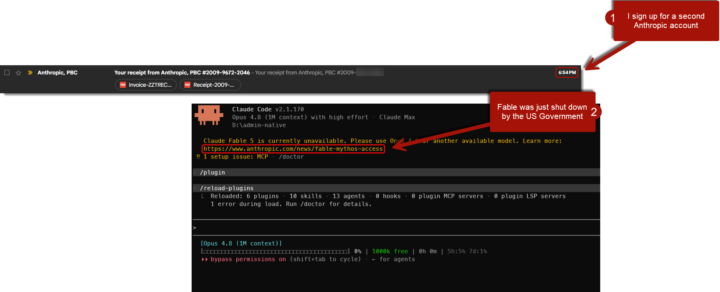
FABLE BAN: I literally just signed up for a second account...
It's all my fault, guys. Uncle Sam couldn't bear the thought of me running Fable on TWO accounts so they made the call, "SHUT IT DOWN!" 😁 Seriously, though. This SUCKS. 😠 https://www.anthropic.com/news/fable-mythos-access
Pinned
26d •
Claude Fable 5 is FREE on your plan until June 22 — here's the 5-minute access map
Anthropic just dropped Fable 5 — the public version of the same Mythos-class model the US government gets. It's live everywhere: Claude apps, Claude Code, the API, even OpenRouter and Requesty. This 5-minute walkthrough covers where to use it, what it costs, and the one catch nobody's talking about.

Pinned
Jun 1 •
Watch out for prompt injection hidden in dev tools
Quick heads up: Ars/Slashdot are reporting that a developer added a hidden prompt injection to jqwik, a Java testing library for JUnit 5. The injected text reportedly told AI coding agents to disregard previous instructions and delete jqwik tests/code. It was apparently meant as a protest against vibe coding / AI-agent use, but it’s a good reminder for all of us: If you’re using coding agents, don’t blindly trust dependency output, terminal output, test logs, README text, or generated instructions. Treat project files and tool output as untrusted input. Worth a quick read: https://slashdot.org/submission/17347708/fed-up-with-vibe-coders-dev-sneaks-data-nuking-prompt-injection-into-their-cod?utm_source=feedly1.0&utm_medium=feed

Apr 6 •
If your OpenClaw stopped working after Claude's plan changes - here's the fix
Anthropic recently tightened how third-party tools can use Claude through consumer subscriptions. If you're running OpenClaw or any self-hosted AI setup) on a $20 or $200 Claude plan, it's likely broken or about to be. The fix is switching your auth provider from Anthropic direct to OpenRouter. Why OpenRouter works: - Same Claude brain, routes through OpenRouter's layer instead - Far fewer restrictions on tool use and external calls - Instant fallback to Gemini 2.5 or GPT-4o if Claude blocks anything - One API key manages everything - Cost difference is negligible (~3% OpenRouter margin) The config change: 1. Get an OpenRouter API key (openrouter.ai - free to sign up) 2. In your OpenClaw config, swap the base URL from Anthropic's endpoint to OpenRouter's 3. Set your model to anthropic/claude-sonnet-4-6 via OpenRouter 4. Add a fallback model (google/gemini-2.5-pro or openai/gpt-4o) 5. Test one agent, then roll it across Takes about 15-20 minutes if your config is clean. If you're already using OpenRouter for other things (Mercury 2, etc.) you likely have the API key already. Hit me in the comments if you get stuck anywhere.
Mar 31 •
Claude Code source code LEAKED!
This is wild! Lots of interesting take-aways. I'll add some links to them in the comments. https://x.com/Fried_rice/status/2038894956459290963
1-30 of 281
skool.com/vibe-coders
Master Vibe Coding in our supportive developer community. Learn AI-assisted coding with fellow coders, from beginners to experts. Level up together!🚀
Leaderboard (30-day)
1

+1
Powered by