
Write something

20h •
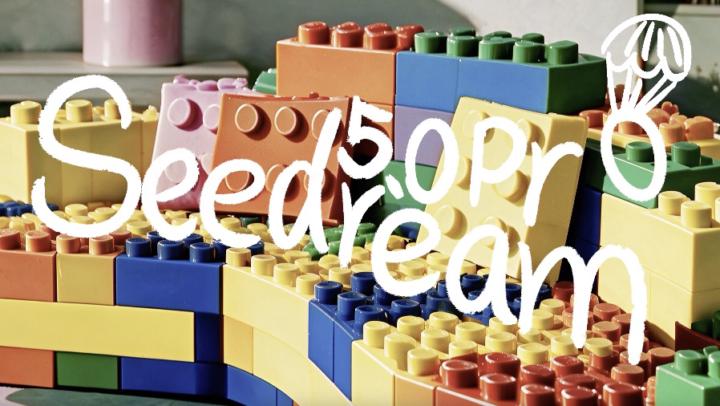
📰 AI News: ByteDance's New Image Model Understands Where Things Are, Not Just What They Look Like 📰
📝 TL;DR 📝 ByteDance released Seedream 5.0 Pro on July 8, an image model built around what it calls "grounding," a native understanding of spatial position and layout inside an image. That translates into genuinely strong text rendering across 14 languages, dense infographics that hold together, and pixel-level editing where you can change one element without regenerating the whole image. Access is mostly through third-party platforms and APIs rather than a simple consumer app, which is why this is a radar mention rather than a deep dive for most of our audience. 🧠 Overview 🧠 Most AI image generators are still genuinely bad at two things: rendering readable text, and letting you change one specific part of an image without regenerating the whole thing from scratch. Seedream 5.0 Pro is ByteDance's direct attempt at both problems, and the company is explicit about the framing: this is positioned as moving "beyond generation" into something closer to actual design software, where the model understands where elements sit in a frame and what they mean, not just what the overall image should look like. This is the "Pro" tier sitting above ByteDance's existing Seedream 5.0 and 5.0 Lite models, and it launched the same week as reporting on independent hands-on testing, giving a genuinely useful early picture of where it holds up and where it still struggles. 📜 The Announcement 📜 Seedream 5.0 Pro launched July 8, 2026, on ByteDance's Volcano Ark experience center, with rollout to the consumer-facing Doubao and Jimeng apps following shortly after. On the developer side, it is available through BytePlus ModelArk APIs, and through third-party platforms including WaveSpeedAI, fal, Magnific, and ComfyUI via partner nodes. The core technical concept ByteDance calls "grounding": the model natively understands spatial positioning and regional semantics within an image, meaning it knows not just what objects are present but precisely where they sit and how they relate to each other. That understanding is what enables the model's headline features: locking onto a specific element by point, box, or rough sketch and editing just that region while leaving lighting, texture, and composition elsewhere untouched; separating a finished image into more than ten independent, draggable layers; and generating dense infographics that combine charts, timelines, and long blocks of text in a single coherent layout.
3
0
4d •
📰 AI News: A New Study Finds AI Agents Can Use Up to 136 Times More Energy Than a Regular Chatbot Query 📰
📝 TL;DR 📝 Researchers at KAIST found that AI agents, the kind that browse the web, write code, and chain together multi-step tasks, can consume up to 136.5 times more energy per query than a standard chatbot conversation. This is a genuinely useful piece of AI literacy: the convenience of "just let the agent handle it" comes with a real cost difference that most people never see, and understanding it can inform when agentic tools are actually worth deploying. 🧠 Overview 🧠 Most people think about AI energy use, if they think about it at all, in terms of a single number: how much power does a chatbot query cost. That framing made sense when most AI interactions were simple question-and-answer exchanges. It makes much less sense now that agentic AI, tools that autonomously browse, research, write and execute code, and make multi-step decisions, has become a standard feature across major AI platforms. KAIST's research team set out to measure that gap directly, comparing energy consumption for the same underlying model operating as a simple chatbot versus operating as an autonomous agent completing a real task. The difference was far larger than most people would likely assume. 📜 The Announcement 📜 The KAIST team released their findings on July 5, describing it as the most detailed comparison yet of operational power demands between conversational AI and agentic AI. They measured energy consumption per complete query, from the moment a prompt is received to the moment a final answer is delivered, rather than just the cost of a single model inference step. For a standard chatbot interaction, energy consumption was already non-trivial but broadly manageable. When the same foundation model was set up to act as an agent, searching the web, reading and summarizing documents, executing code, and making sequential decisions across multiple steps, the energy cost per query rose dramatically. In the worst case documented, a single agentic query consumed 136.5 times the energy of an equivalent plain chatbot interaction.

2d •
📰 AI News: Anthropic Extends Free Fable 5 Access to Sunday After Backlash Over an Early Cutoff 📰
📝 TL;DR 📝 Anthropic was set to pull Claude Fable 5 out of standard subscription plans on July 8, moving it to pay-per-token usage credits. Following visible backlash from users, the company extended included access through Sunday, July 12 at 11:59 PM PT. Pro, Max, Team, and premium Enterprise plans can keep using Fable 5 for up to 50% of weekly usage limits until then, at no extra cost. After that, it moves to usage credits at $10 per million input tokens and $50 per million output tokens, double the price of Opus 4.8. 🧠 Overview 🧠 Fable 5 has had an unusually turbulent few weeks even by the standards of a fast-moving AI industry. It launched June 9, got pulled offline globally on June 12 by a US government export control order, returned June 30 once those controls lifted, relaunched publicly July 1, and was originally scheduled to leave standard subscription plans entirely by July 8, less than two weeks after its return. That original cutoff triggered real pushback from users who felt the window to actually use the model was too short to be meaningful. Anthropic responded within hours of the deadline by extending it five more days. This is a genuinely useful update if you are on a paid Claude plan and have been using or considering Fable 5, because the clock is now running again, and this time there is a real chance the extension does not happen twice. 📜 The Announcement 📜 Anthropic originally stated that Fable 5 would be included in weekly usage limits on Pro, Max, Team, and select Enterprise plans only through July 7, after which it would move entirely to prepaid usage credits. Just hours before that cutoff took effect on July 8, Anthropic posted a brief update from its official account: "We're extending access to Claude Fable 5 on all paid plans through July 12." The extension gives paid subscribers five additional days of included access, through Sunday, July 12 at 11:59:59 PM Pacific Time, before the same shift to usage credits takes effect. Nothing needs to be activated to receive the extension. It applies automatically across Claude's web, desktop, and mobile apps, as well as Claude Code, for any eligible paid plan. Starting July 13, Fable 5 usage will no longer draw from standard weekly plan limits and will instead require prepaid usage credits, billed at $10 per million input tokens and $50 per million output tokens.
5
0
5d •
📰 AI News: Runway Adds Slash-Command "Skills" for Building Ad Campaigns on Command 📰
📝 TL;DR 📝 Runway has added Agent Skills to Runway Agent, its conversational marketing tool. Type / inside the Agent, pick a packaged workflow like "build an ad campaign" or "localize ads," and it executes the full multi-step process automatically. This sits on top of Agent 2.0, released in late June, and is aimed squarely at marketers scaling creative output. It is available now for paid Runway users. 🧠 Overview 🧠 Runway Agent launched as a conversational AI creative partner: describe your product or campaign, and it works out the angles, concepts, and assets likely to perform. Agent Skills is the next layer on top of that conversational foundation, and it addresses a familiar problem with any AI chat tool used for repeated business tasks: typing out the same detailed brief every single time is tedious, even when the AI understands you well. Skills solve that by packaging a specific, repeatable multi-step workflow behind a single slash command. Instead of describing what an ad campaign needs from scratch each time, you type /, select the skill, and the agent runs its established process automatically. This is a familiar pattern if you have used slash commands in Claude Code or other AI tools, now applied specifically to marketing and creative production. 📜 The Announcement 📜 Runway positions Agent 2.0, which launched in late June, as a tool that helps marketers "make more of what works": ads, videos, and full campaigns intended to drive revenue. According to Runway's own materials, the Agent can generate marketing briefs, produce campaign assets, and analyze performance data within a single ongoing workflow, functioning less like a single-purpose generation tool and more like an end-to-end creative partner. Agent Skills builds directly on that foundation. Rather than relying purely on conversational prompting for every task, users can now invoke pre-built, packaged workflows for specific job types, building an ad campaign, creating a commercial, and localizing ads across markets are the examples currently highlighted. Each skill runs its full multi-step process on a single command rather than requiring the user to manually direct each stage.

3d •
📰 AI News: Anthropic Says It Found Something Inside Claude That Looks Like a "Workspace" for Thought 📰
📝 TL;DR 📝 Anthropic published new interpretability research on July 6 describing a small, privileged space inside Claude's internal activations, which they call "J-space," that appears to hold concepts the model can hold in mind and reason with before ever writing them down. It behaves functionally like global workspace theory, an influential neuroscience framework for how the brain filters what becomes consciously reportable. This is not a consumer product. It is research with real safety implications: catching hidden goals and detecting when Claude privately recognizes a staged test. 🧠 Overview 🧠 This is a genuinely significant piece of AI interpretability research, and it is worth understanding on its own terms rather than through either "AI is conscious" or "this is nothing" framing, because it is neither. Anthropic's interpretability team, the group that has spent recent years trying to open the black box of how large language models actually work internally, found a small subspace of Claude's neural activations that functions differently from the rest of the model's computation. Most of what happens inside a language model as it processes a prompt is not directly reportable, the model cannot describe or act on most of its own internal computation. Anthropic found that a small, sparse portion of that internal activity behaves differently: it is verbalizable, it can be held onto and reused across a reasoning process, and it appears to function as a kind of internal staging area for concepts the model is actively working with, separate from both the model's raw computation and its final output text. 📜 The Announcement 📜 The research, titled "A global workspace in language models," was published on the Transformer Circuits Thread on July 6, 2026, credited to eighteen researchers on Anthropic's interpretability team. The core discovery is what they call J-space, identified using a new technique called the Jacobian lens, or J-lens. The method works by calculating, for each word in the model's vocabulary, the average mathematical effect a given internal activation pattern has on making the model eventually produce that word, whether immediately or later in its response.
6
0
1-30 of 307

skool.com/the-ai-advantage
Founded by Tony Robbins, Dean Graziosi & Igor Pogany - AI Advantage is your go-to hub to simplify AI and confidently unlock real & repeatable results
Leaderboard (30-day)
1

+501
2

+337
3

+275
4

+148
5

+135
Powered by