Activity
Mon
Wed
Fri
Sun
Jul
Aug
Sep
Oct
Nov
Dec
Jan
Feb
Mar
Apr
May
Jun
What is this?
Less
More
Memberships
The AI Advantage
125.4k members • Free
13080 contributions to The AI Advantage

10m •
The gap between AI demos and production AI is bigger than most realize
AI demos work 90% of the time. Production AI systems need to work 99.9% of the time. That gap is where the real engineering happens. Things that matter in production that demos skip: 1. Latency budgets. A demo can take 30 seconds. Production workflows need responses in under 5 seconds. This changes your architecture significantly. 2. Cost management. A single LLM call in a demo costs pennies. 10,000 calls per day at $0.50/1M tokens adds up fast. You need caching, batching, and model tiering. 3. Failure modes. LLMs hallucinate, APIs timeout, models get deprecated. Production systems need graceful degradation for every failure mode. 4. Monitoring. You can't fix what you can't see. Every LLM call needs logging, latency tracking, and output quality checks. 5. Evolution. Models improve, APIs change, business rules evolve. Your system needs to adapt without rewrites. The hardest lesson: building a reliable AI system is 20% AI and 80% infrastructure. What's been your biggest lesson moving AI from prototype to production?

🔥
0 likes • 2m
Great perspective, Sidhartha. It's easy to be impressed by a demo. It's much harder to build something that works reliably day after day in the real world. Your point about graceful failure modes really stood out. Most prototypes assume everything goes right. Production systems have to assume things will eventually go wrong and be ready for it. Thanks for sharing this. It's a valuable reminder that the real work often starts after the prototype succeeds. 👏🚀 -Justin | AIA Team

2h •
Real test of intelligence in 2026 is what you can still do without AI.
Everyone's AI-maxxing right now. And don't get me wrong, that's great. But here's what I keep noticing. The people who impress me most aren't the ones who did something that took hours previously and did it with AI in fraction of time They're the ones who could prompt AI in a way that got them the result and tell whether what AI gave them back actually is any good That judgment doesn't come from a prompt. It comes from years of experience and getting it wrong. AI gives you options. Fast, plausible, well-formatted options. Whether one of them is actually any good is still on you. AI doesn't know what it doesn't know about your situation. The floor is rising fast. Everyone has the same tools, the same speed, the same outputs. The ceiling belongs to whoever still knows how to think underneath all of it. What's something you learned that no AI could've taught you?

🔥
0 likes • 55m
Hi, Nico! Really thoughtful perspective. AI can make us faster, but experience, judgment, and critical thinking are still what turn good outputs into great decisions. Those are skills that only come from learning and doing. What's one lesson you've learned through experience that has shaped how you use AI today? -April | MM Team

2h •
The biggest benefit of AI in a small business isn't the time saved.
The biggest benefit of AI in a small business isn't the time saved. It's what owners do with that time once they get it back. Most conversations about AI focus on hours. 10 hours a week. 20 hours a month. Numbers that sound impressive on their own. But hours saved is not the actual win. The win is what happens next. One owner used the time to finally write the strategy he'd been putting off for 2 years. Another used it to take his daughter to school every morning instead of every other Friday. Another spent it on the one client relationship that was about to walk, and kept them instead. None of that shows up in a report about hours saved. That's where the real value of AI lives. Not in the time itself. In what becomes possible once the time exists. Most business owners have been so busy for so long that they've forgotten what they'd actually do with a free afternoon. The first few weeks after automating something, most owners don't know what to do with the space. Then they remember. The idea they shelved 3 years ago because there was never time, it's moving again. What would you do with your next free afternoon?

🔥
0 likes • 1h
Love this, Alex! Saving time is valuable, but what we choose to do with that time is what really creates change. AI allows us to focus on the things that matter most. What would you spend your next free afternoon doing? -April | AIA Team

7h •
Agentic Claude OS
Draft - • IMS/QMS• IMS (Integrated Management System): A framework that combines multiple standards (ISO 9001 for quality, ISO 14001 for environment, ISO 45001 for health & safety, etc.) into one unified system. • QMS (Quality Management System): Specifically focused on ISO 9001, ensuring processes meet quality requirements. • ISO Certification Systems These are the structured processes companies must follow to achieve and maintain compliance with international standards (audits, documentation, corrective actions, continuous improvement).

🔥
1 like • 4h
Great breakdown! It looks like you're already putting Agentic Claude OS to work on a specific use case. Keep building on it and refining the process. Have you found any areas where AI has helped speed up your documentation or compliance workflows? Allen | AIA Team
🔥
4h •
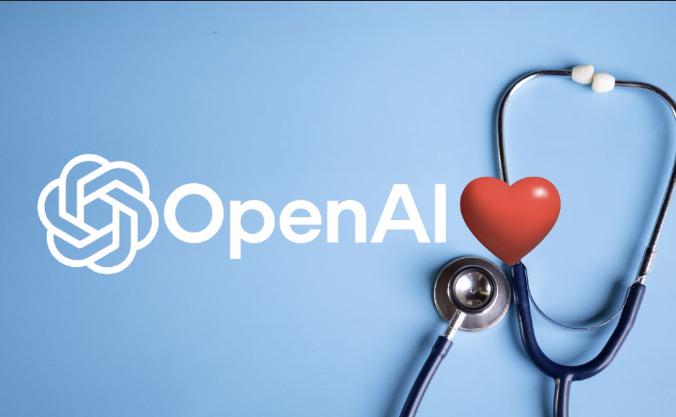
📰 AI News: The Default ChatGPT Model Just Got Significantly Better at Health Questions 📰
📝 TL;DR 📝 OpenAI says GPT-5.5 Instant, the default model used by hundreds of millions of free ChatGPT users, now performs on par with its top-tier frontier models on health-related questions. This was built with hundreds of physicians across 60 countries and shows a measurable drop in factual errors. No setup required, this is a quality upgrade to the model most people are already using. 🧠 Overview 🧠 This is not a new feature to turn on or a product to try. It is a quality improvement to the default model that powers ChatGPT for free users, and it specifically targets one of the most common and highest-stakes use cases: health and wellness questions. OpenAI reports that more than 230 million people ask ChatGPT health-related questions every week, covering things like interpreting lab results, preparing for doctor's appointments, and navigating insurance questions. Because health misinformation carries real consequences, the credibility of this kind of improvement depends heavily on how it was tested. OpenAI built this update in collaboration with a large physician network and ran extensive comparative evaluations, though it is worth noting all of the cited results come from OpenAI's own benchmarks and physician panel rather than independent or peer-reviewed verification. 📜 The Announcement 📜 OpenAI announced that GPT-5.5 Instant, released in May, now reaches health performance comparable to its frontier Thinking models on an aggregate of health evaluations, a substantial improvement over the previous GPT-5.3 Instant. The company worked with a network of over 260 physicians across 60 countries, 49 languages, and 26 specialties, who have collectively reviewed more than 700,000 example model responses. In a direct comparison, a panel of physicians evaluated 3,500 health-related responses and rated GPT-5.5 Instant higher than both older AI models and physician-written answers on accuracy, communication, completeness, and overall health decision helpfulness. Separately, monitoring of real-world production traffic showed a 71 percent drop in health responses flagged for potential factual issues over the past two months.
1-10 of 13,080

Active 1d ago
Joined Aug 28, 2025
support@aiadvantage.com
Powered by