
Write something

🚀
2d •
Gang, we’re waking this place up 🔥
Greetings Gang 😈😜 Real talk: it’s been quiet in here, and that’s on me. There are 2,100 of you, all working toward the same goal: passing the ASCP. That’s way too many smart people to be studying alone. So starting today, I’m showing up in here every weekday with something to help you study, like helpful hint/tips, mini-quizzes, and exam traps. All you have to do is show up too. Your first job (it takes 10 seconds) is to comment below with: 1. Your exam date (if you have one, if not, just put the tentative month) 2. The subject you dread most I’ll reply to every single one. The subject that gets the most votes will be the topic of my next post. If you want to go all in, my paid community kicks off 7 days of live study sessions on November 1st, one subject per day. Members also get my ultimate mycology chart, thalassemias and anemias quick guide and the bacteriology buzzwords cheat sheet. 👉🏽 Join here: https://www.skool.com/microscopeviews Let’s get it poppin in here, Gang! — Marilyn
Poll
26 members have voted

🚀
17h •
Bacteriology Biochemicals just got EASIER 🦠😉
Greetings Gang 😈😜 I gotta be honest... biochemicals are the WORST. Even now after 10 years of being in the field and over a year of teaching them... Catalase, coagulase, oxidase, bile esculin, PYR, CAMP, novobiocin... it starts to feel like a lost cause. The problem isn’t your memory. It’s how most of us study them: as long lists. Your brain doesn’t store lists well. It stores stories, pictures and decisions. Here’s how to switch. 1. Every biochemical answers ONE question. Stop memorizing “S. aureus: catalase +, coagulase +, DNase +, mannitol +...” Instead, ask: “𝗪𝗵𝗮𝘁 𝗶𝘀 𝘁𝗵𝗶𝘀 𝘁𝗲𝘀𝘁 𝘀𝗲𝗽𝗮𝗿𝗮𝘁𝗶𝗻𝗴?” - Catalase: Staph (+) vs. Strep/Enterococcus (−) - Coagulase: S. aureus (+) vs. all other Staph (−) - Novobiocin: S. epidermidis (sensitive) vs. S. saprophyticus (resistant) - Bacitracin / PYR: Group A Strep, S. pyogenes (sensitive / +) - CAMP / hippurate: Group B Strep, S. agalactiae (+) - Optochin / bile solubility: S. pneumoniae (sensitive / soluble) vs. viridans strep - Bile esculin + 6.5% NaCl: Enterococcus (+ / +) vs. group D strep (+ / −) - Oxidase: Pseudomonas, Neisseria, Vibrio, Campylobacter, Helicobacter (+) vs. Enterobacterales (−) If you know what each test splits, you can work out the answer even when you blank on the details. 2. Learn flowcharts, not facts. The exam gives you clues one step at a time, like a flowchart: Gram stain → morphology → arrangement → first test → second test. Study the same way. Example: Gram-positive cocci in clusters → catalase + → coagulase − → novobiocin resistant → UTI in a young woman = S. saprophyticus. Action step: Draw the gram-positive cocci flowchart from memory on a blank page every day this week. Day 1 will be hella messy, but by Day 5 you’ll be doing it in 2 minutes. 3. Give every organism a “personality card," and a gender LOL. Make one card per organism with: - Gram stain + shape: what it looks like under the scope - Plate: what the colony looks like (color, hemolysis, smell) - 1–2 key biochemicals: only the ones that separate it from look-alikes - The disease: the clinical story
🚀
7d •
Dreading mycology? This chart fixes that.
Greetings Gang 😈😜 Be honest: is mycology the section you dread most? You’re not alone. It’s full of look-alike molds, budding yeasts and names that keep changing. So I made The Ultimate Mycology Chart for the ASCP. What’s inside: - 72 organisms: yeasts, dimorphic fungi, dermatophytes, Mucorales, and hyaline and dematiaceous molds - Key ID features, diseases and red diagnostic pearls for each one - Look-alikes the exam loves to test, like Sepedonium vs. Histoplasma - Reference pages for stains, ID tests and culture media Here’s a free pearl: Mold in the cold, yeast in the heat... except Coccidioides, which makes spherules in tissue. And if a fluffy white mold grows from a patient who traveled to the Southwest, it stays in the biological safety cabinet! Get the full chart for $19, or get it FREE when you join Microscope Views Inner Circle, along with my antibody panel guide, anemias and thalassemias cheat sheet and the 7 days of live study sessions every month (1st–7th). 👉🏽 Buy the chart: https://www.skool.com/microscopeviewsfree/classroom ✨ Join and get it free: https://www.skool.com/microscopeviews — Marilyn


Jun 17 •
MLT vs MLS for ASCP Eligibility
Hello I am a fresh BS MLT graduate and planning to prepare for the ASCP exam. Is MLT the same as MLS, or is there any difference between them for ASCP eligibility? Thank you.
🚀
Jun '25 •
[START HERE] Welcome to the Microscope Views Community 🦠🔬😋
👋🏾 Hello, my little Gang of Nasties! I’m really glad you’re here. This space was made specifically for students and future lab professionals who are trying to study smarter, stay motivated, and finally pass the ASCP exam without losing their minds. Whether you’re still in school, prepping for boards, or coming back after a break—this is your space. 👇 Introduce yourself to our FREE Community: 1. What’s your name? 2. Where are you in your lab journey (Student? Graduated already?) 3. Which department is your biggest struggle? 4. Which department is your favorite? I’ll go first… My name is Marilyn, aka @marilynthescientist 👩🏾🔬 I’m a Clinical/Medical Laboratory Scientist with 10 years of experience in the field. 💉 I’ve worked everywhere—from tiny Critical Access Hospitals to busy Level 1 Trauma Centers. 🧳 6 of those years were spent traveling across the U.S. 🩸 Currently, I’m holding it down as a Blood Bank Supervisor in California. This space is here for us to learn, laugh, rant, and master the lab world together. No dumb questions, EVER! 📲 Follow me on socials if you want extra lab tips, rants, and ratchet breakdowns: Instagram | TikTok 🧬 If you ever have questions—even the “silly” ones—DM me or post them in the group. 😤💅🏾
1-30 of 112
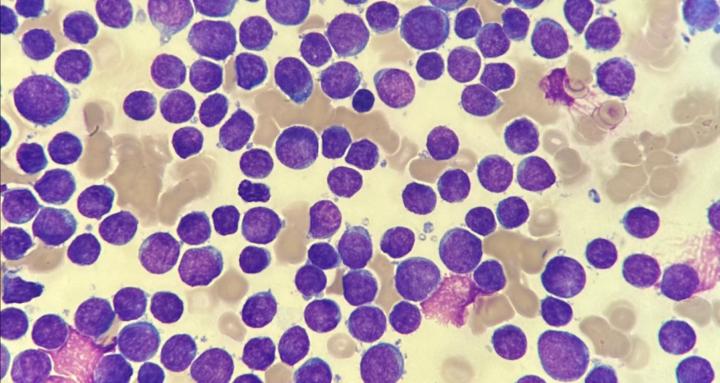
skool.com/microscopeviewsfree
🧪🔬Helping Students Effectively Study For & Pass The ASCP Exam
Leaderboard (30-day)
1
+7
2

+5
3

+4
4

+4
5

+3
Powered by