
🚀
12d • General discussion
In case you missed us today...
Greetings Gang:
Here is the recording of the live study session today, for your review at your leisure! We went over a mix of questions in Lab Ops, UA/Body Fluids, Micro, and Heme.
👇🏽 Click here to view the recording
Key Takeaways
- LAP Score is the CML/Leukemoid Differentiator: A high LAP score (e.g., 155) indicates a leukemoid reaction (mature cells), while a low score is characteristic of CML (immature cells).
- JAK2 Mutation is Not Exclusive to ET: The JAK2 mutation, often linked to Essential Thrombocythemia (ET), also occurs in Primary Myelofibrosis (PMF). The key differentiator is PMF's "marked marrow fibrosis."
- Campylobacter Jejuni's Key ID: Identify C. jejuni by its growth at 42°C, oxidase/catalase positivity, and positive hippurate test.
- Study Strategy is Critical: Use process of elimination and common sense. For complex questions, memorize 2–4 key biochemicals per organism to rule out incorrect choices.
Topics
Lab Operations & Safety
- Electrical Safety: Use a non-conductive material (wood/plastic) to separate a victim from a live electrical line.
- Patient ID: Acceptable identifiers are full name, DOB, and medical record number. A room number is insufficient and unsafe.
- Bloodborne Pathogens: Prevent exposure with engineering controls (splash guards) and PPE (gloves, masks). Asking patients about their HIV/hepatitis status is unethical and a HIPAA violation.
- Surface Decontamination: Clean work surfaces with disinfectant after any blood/OPIM spill and at the start of each shift.
- Chemical Handling: Read a chemical's label before moving or opening it.
Urinalysis & Body Fluids
- Kidney Function: Kidneys maintain acid-base balance (via bicarbonate), produce hormones (renin, EPO), and regulate water/electrolytes. They do not reabsorb waste products.
- Urine pH Indicators: The reagent strip uses methyl red (red/orange → yellow) and bromthymol blue (yellow → green/blue).
- CSF Cell ID:
- Macrophages: Large, vacuolated cells with a kidney-bean nucleus.
- Malignant Cells: Clumped, dark-staining cells with a high N:C ratio and prominent nucleoli.
- Sample Quality: Recognize common pre-analytical errors:
- Lipemic: Cloudy/milky serum/plasma.
- Hemolyzed: Red-tinged serum/plasma.
- Icteric: Yellow/gold-tinged serum/plasma.
Hematology
- Multiple Myeloma: Characterized by Rouleau formation (from excess IgG) and plasma cells.
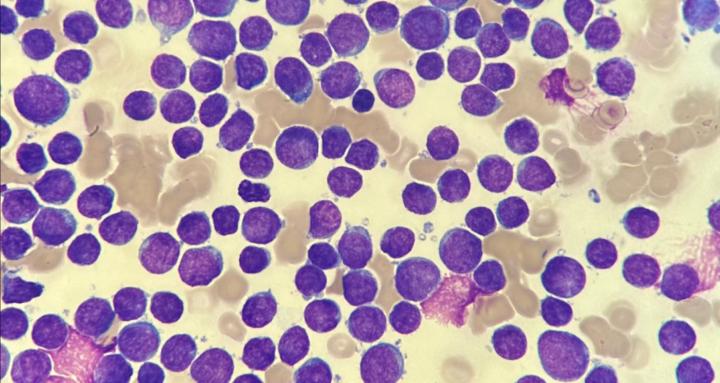
- Acute Leukemia: Presents with high fevers, bleeding gums, and petechiae. Lab findings include pancytopenia (low Hgb, Hct, Plt) and >20% blasts in peripheral blood and bone marrow. ALL is the most common childhood leukemia.
- Myelodysplastic Syndromes (MDS): Dyserythropoiesis is indicated by oval macrocytes.
- Note: Schistocytes suggest hemolysis (e.g., DIC, TTP), and basophilic stippling suggests lead poisoning.
- Myeloproliferative Disorders (MPNs):
- Primary Myelofibrosis (PMF): Hypercellular bone marrow, excess megakaryocyte proliferation, marked marrow fibrosis, and the JAK2 mutation.
- Essential Thrombocythemia (ET): Also has megakaryocyte proliferation and the JAK2 mutation, but with less fibrosis and very high platelet counts.
- Eosinophilia: A high eosinophil count can be caused by parasitic helminths, allergic reactions, and CML. It is notassociated with Mycosis Fungoides (a lymphoma).
Microbiology
- Gram Stain ID:
- Staphylococcus aureus: GPC in grape-like clusters. Catalase+, Coagulase+. The ORFX gene is specific to S. aureus.
- Streptococcus pneumoniae: GPC in pairs/chains. Catalase-, Alpha-hemolytic, P-disc sensitive.
- Corynebacterium spp.: GP rods in palisades ("Chinese letters").
- Micrococcus spp.: GPC in tetrads, often lemon-yellow colonies.
- Enterobacteriaceae ID (Providencia stuartii Example):
- Indole+: Rules out Proteus mirabilis.
- PAD+: Rules in Providencia and rules out Serratia marcescens.
- Urea-: Rules out Morganella morganii and Proteus mirabilis.
- Campylobacter Jejuni ID:
- Growth at 42°C: Key differentiator for Campylobacter from stool.
- Biochemicals: Oxidase+, Catalase+, Hippurate+.
- Parasitology:
- Chilomastix mesnili: Non-pathogenic flagellate with a "shepherd's crook" cyst.
- Xenodiagnosis: An antiquated method for diagnosing Chagas disease (Trypanosoma cruzi). It involves feeding a non-infected kissing bug on a patient and later examining the bug's droppings for parasites.
- Salmonella Serotyping: Uses O (somatic), H (flagellar), and Vi (capsular) antigens. The F1 antigen is for Yersinia pestis.
Next Steps
- Marilyn: Create a consolidated PDF chart for hematology disease states (erythrocytes, leukocytes, platelets) and upload it to the Inner Circle community.
- Community: Support Tina (exam today) and Nicole (exam Tuesday).
- Consider joining the Inner Circle for the upcoming 7-day study session series.
👇🏽Click here to join the Inner Circle Community.
2
0 comments
In case you missed us today...
skool.com/microscopeviewsfree
🧪🔬Helping Students Effectively Study For & Pass The ASCP Exam
Leaderboard (30-day)
1

+8
2

+5
3

+3
4

+2
5

+2
Powered by