
Write something
Pinned

⭐
🔥
1d •
🌟Saturday Bake-Along: Baguettes Working Thread🔥💯
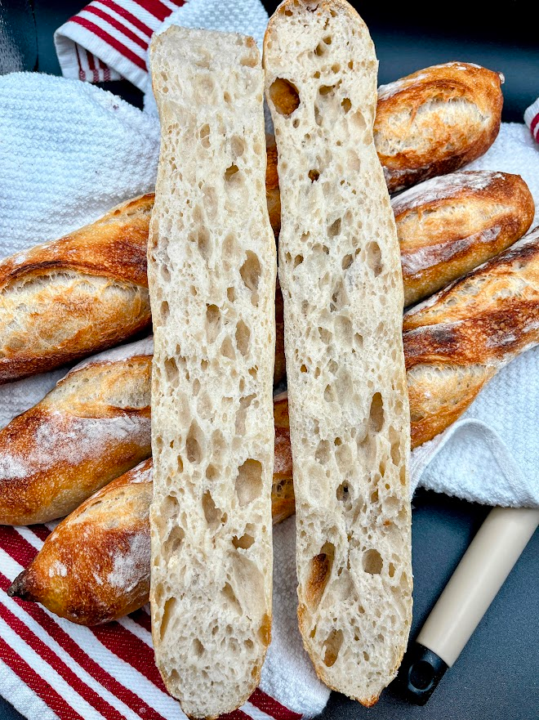
Today we're baking baguettes. If you've been waiting for the right week to try them, this is it. Here's how the working thread runs: drop in throughout the day, share where you are in the process, post photos, ask questions as they come up. I'll be in and out answering. The whole point is that nobody bakes alone today. A few things to keep in mind before you start: Hydration matters. Baguette dough is wetter than a sandwich loaf and that's on purpose. Don't fight it with extra flour. Trust the folds. Shape with intention. The pre-shape sets up the final shape. Rushing the pre-shape is the number one reason baguettes come out lumpy or uneven. Score with confidence. One quick motion, blade angled almost flat to the dough. Hesitation gives you a torn loaf instead of a clean ear. Steam is non-negotiable. Whatever method you use, get steam in that oven for the first 10 minutes. No steam, no crust, no shine. If you need the recipe, here it is: https://pantry.bakinggreatbread.com/ Drop your starting time below so we can see who's mixing when. Photos welcome at every stage. Floury counters, ugly pre-shapes, perfect oven spring, all of it. Let's bake. Perfection is not required. Progress is. Henry ⭐🔥

Pinned
⭐
🔥
5d •
This Weekend We're Baking Baguettes (Building on What We Just Learned)
This weekend we're going to baguettes. And there's a reason we're getting to them now. Look at what we've done the past two weeks. We learned the couche on ciabatta. We built a poolish for that same ciabatta and watched what an overnight pre-ferment does to flavor and extensibility. Both of those skills carry straight over to baguettes. We're not learning new things this weekend. We're putting the same tools to work in a new shape. That's the method. Each bake builds on the last one. Nothing wasted. Three recipes in the Recipe Pantry. Pick the one that matches where you are. 🥖 New to baguettes? Start here. Classic French Bread Baguette — four ingredients, overnight cold ferment, 72% hydration. Two loaves, cleanest entry point in the pantry. No pre-ferment, no starter. Just dough, time, and shape. https://pantry.bakinggreatbread.com/recipes/french-bread-baguette?utm_source=skool&utm_medium=community&utm_campaign=recipe-share 🥖 Liked the poolish ciabatta? Run it back. Classic Poolish Baguette — same poolish you just built, in a new shape. 12 to 16 hour pre-ferment, 75% hydration, three baguettes. If you nailed the ciabatta, you already know how this dough is going to feel. https://pantry.bakinggreatbread.com/recipes/classic-poolish-baguette?utm_source=skool&utm_medium=community&utm_campaign=recipe-share 🥖 Sourdough bakers, this one's yours. Sourdough Baguettes — overnight levain, 75% hydration, three baguettes at 265g. Same shaping rhythm we practiced on the ciabatta couche. https://pantry.bakinggreatbread.com/recipes/sourdough-baguettes?utm_source=skool&utm_medium=community&utm_campaign=recipe-share
Pinned
⭐
🔥
4d •
Yeasted vs Poolish vs Sourdough Baguettes. Which One Should You Bake?
There are three ways to make a baguette at home. Yeasted, poolish, and sourdough. They all end up looking like the same loaf, but the journeys are completely different. In this video I walk you through all three. Who each one is for, when it makes sense to pick which path, and the three things that matter more than the recipe itself. If you've ever stood in your kitchen wondering which baguette you should actually start with, this is the breakdown you've been looking for. Pick yours for this weekend's bake-along: 🥖 No starter? Start here. https://pantry.bakinggreatbread.com/recipes/french-bread-baguette?utm_source=skool&utm_medium=community&utm_campaign=recipe-share 🥖 Want bakery flavor without managing a starter? https://pantry.bakinggreatbread.com/recipes/classic-poolish-baguette?utm_source=skool&utm_medium=community&utm_campaign=recipe-share 🥖 Active starter ready to go? https://pantry.bakinggreatbread.com/recipes/sourdough-baguettes?utm_source=skool&utm_medium=community&utm_campaign=recipe-share We've been climbing this staircase for three weeks. Couche on the ciabatta. Poolish on the ciabatta. Now scoring and the roll-out shape on the baguettes. Nothing wasted. Watch the video. Pick your path. Drop questions before you bake. Easier to fix dough than crust. Perfection is not required. Progress is. Come bake with us. — Henry ⭐🔥

58m •
Open Baking Question
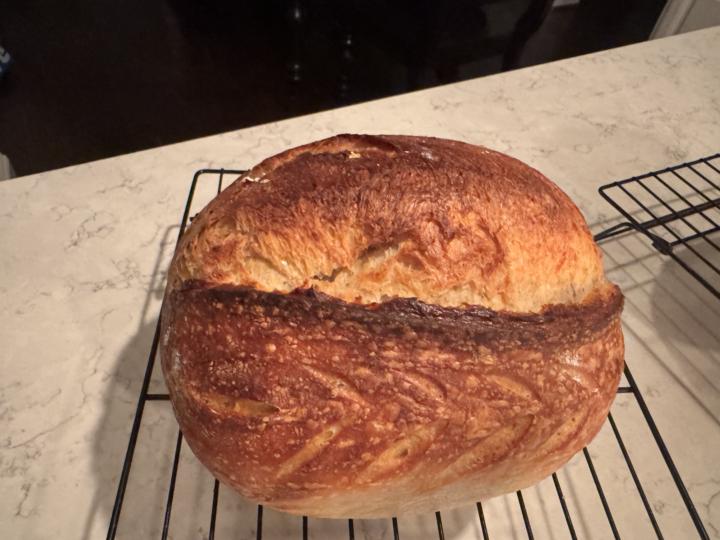
Hi amazing bakers! As I keep experimenting with open baking, I notice when I place 4 loaves in my oven on my baking steel it takes forever for my loaves to brown. I’m guessing that two things are happening. First, the temperature of the steel naturally lowers with more cold dough in the oven. Second, there is extra steam with more loaves. Would it help if I turned my oven up to 475 for the initial bake with steam? Do I still need both the lava rocks, and water soaked kitchen towels in a pan with the additional loaves??

15h •
More Tartine testing…
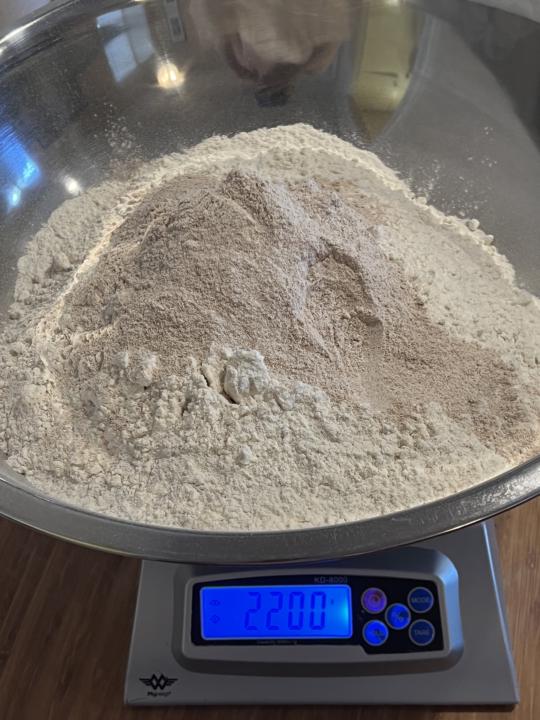
May 2nd experiment… 2 batch’s of dough mixed and gluten developed together but split into separate bulk fermentation vessels after gluten development was complete. Batch #1 will be risen to 35% and batch #2 will rise 45%. The flour is King Arthur bread flour and King Arthur whole wheat flour. King Arthur is not as strong of flour compared to the High Gluten flour I’ve been using. I think the high gluten flour is giving me a tighter crumb than King Arthur bread flour will give me at the same hydration. Formula: 100/75/2/20 DDT: 78°~82°f Recipe… 4 loaves 2000g bread flour 200g whole flour 1600g warm water… 100g held back to dissolve salt to be added after Fermentolyse 400g Hank 48g Total weight: 4248g 4:53pm: Hank met the flour. Mixed all flour, 1500g warm water and 400g Hank to a shaggy mass. Bench rest until 6:00pm. 6:00pm: added the 48g salt and 100g of water. Incorporating them using the Rubaud mixing method… just enough to fully mix everything in properly. Bench rest 30 minutes. 6:30pm: slap and folds until the dough became a smooth, shiny cohesive mass. Divided the dough into 2 equal portions and put them into separate bulk fermentation vessels. Both are 82°f. Moved both vessels to the heating pad thats set at 80°f. I tried to work the dough as little as possible to get it to the point of passing the windowpane test. This dough will not need any further gluten development folds during bulk fermentation. The fermentation process will take care of everything else while it’s raising the dough to 35% for batch #1 and 45% for batch #2. I’m expecting the 35% loaf to get a higher oven spring but a little tighter crumb than the 45% loaf. That I’m suspecting will be a little wider but have a more open crumb. I will bake 1 loaf from each batch today… same day loaves. I’ll put the other loaf from each batch in the fridge for overnight cold proofing. I like to see and taste the difference of same day loafs vs overnight cold proofed loafs.
1-30 of 1,497
powered by
skool.com/crust-crumb-academy-7621
#1 Rated Bread Community on Skool
Coaching, not judgment. Sourdough, yeasted, enriched & every bread in between.
✔ ProveWorth Certified ⭐⭐⭐⭐⭐
Suggested communities
Powered by