
Write something
Pinned

⭐
🔥
19h •
SATURDAY BAKE-ALONG: Brown Butter Peach Cobbler Cinnamon Rolls
This is it. Today we bake together. This thread right here is home base. Post your progress in the comments as you go, your mixing, your rolling, your cutting, the pretty ones and the ugly ones, all of it. Ask your questions here too. I’ll be in and out of this thread all day, coaching, cheering, and answering. You are not baking alone today. Here’s the recipe, yeasted and sourdough, whichever road you’re on: https://pantry.bakinggreatbread.com/recipes/brown-butter-peach-cobbler-cinnamon-rolls THE FLOW FOR TODAY Get your pieces ready. Cold dough. Cooled peach jam with no free liquid. Your cinnamon smear. Streusel out of the fridge and into the freezer 30 minutes before you need it. And a few raw peach pieces set aside for the garnish. Roll it out. Long side facing you, into a rectangle. Leave the bottom inch bare so you can seal the seam. Fill it. Dollop the smear and spread it gentle with your hand, not a tool. Then the peach jam, thin and even. Remember, drain the water, respect the water. Roll and cut. Snug, even log. Pinch the seam and set it seam side down. Trim the ends, then cut 12 rolls with unflavored dental floss. Pan and proof. Big rolls on the outside edges and corners, small ones in the middle. Proof until puffy and just touching. Streusel and bake. Cold streusel on top. If you’re running the heavy cream trick, pour the cream first, then the streusel. Bake at 350F until the middle of the dough reads 190 to 195F, and temp the dough, not a peach pocket. Foil tent if the tops race ahead. Finish. Cool a bit, drizzle the frosting instead of smearing it, and crown it with that raw peach, red side pointing up. Sourdough crowd, if your dough is still finishing its proof, take your time and jump in whenever you’re ready. No rush. We’ll be right here. Now let’s make a mess and make it beautiful. Post those first photos. Show me where you’re starting. I’m in the kitchen with you.
Pinned
⭐
🔥
4d •
Brown Butter Peach Cobbler Cinnamon Rolls.
Let me tell you what that means. Pillowy dough, rolled soft and slow. Inside, peaches roasted down till they’re sweet and jammy, folded through with warm cinnamon. Brown butter running under all of it, nutty and deep, the kind of smell that pulls the whole house into the kitchen before you even call anybody. A brown butter cinnamon crumble baked crisp and golden across the top. Then ribbons of buttercream frosting drizzled over the warm rolls, settling down into every fold. And fresh peaches, scattered right on top, bright and juicy against all that spice. Peach cobbler and a cinnamon roll, together. A piece of Carolina summer you pull apart with your hands. I’m a Southern boy. Down here, peach cobbler is a staple and a delicacy both at once, and taking something I grew up on and folding it into a cinnamon roll we all know by heart, well, that’s my prerogative. That’s what we’re baking this week inside Crust & Crumb Academy. If your mouth is watering right now, good. That’s the whole point. Pull up a chair. ~Henry⭐️🔥

Pinned
⭐
🔥
5d •
🍑 This Week’s Bake: Brown Butter Peach Cobbler Cinnamon Rolls 🇺🇸
Well, we survived Croissant Week. 🥐👏 All that lamination, all those butter layers, all that patience. You all showed up and did the hard thing, and I couldn’t be prouder of the folds that came through this kitchen. Now it’s time to let summer all the way in. ☀️🍑 This week we’re baking Brown Butter Peach Cobbler Cinnamon Rolls, and this one’s personal. I’m a South Carolina boy. Down here in the Deep South, peach cobbler isn’t just dessert. It’s a staple and a delicacy both at once. It’s the thing that shows up at the church supper, the Sunday table, and the family reunion, and everybody’s grandmother swears hers is the best. That cobbler is in my bones. 🧡 So I did what I always end up doing. I took something I grew up loving and turned it into something we all already know by heart, the cinnamon roll. Peach cobbler on the inside. Pillowy roll on the outside. Brown butter running through the whole thing. And a streusel top that’ll have your house smelling like a Carolina summer. 🔥🍑 And I’ll be honest, this one came out of my daughter Payton. She’s always challenging me, always poking at me to take it one step further. Don’t play it safe, Dad. So here we are. Cobbler in a cinnamon roll. That’s a Payton bake if I ever made one. ⭐ No fresh peaches where you are yet? Don’t worry. Frozen and canned work great, and I’ll walk you through every swap this week so nobody gets left out. Here’s the recipe so you can look it over before Saturday: https://pantry.bakinggreatbread.com/recipes/brown-butter-peach-cobbler-cinnamon-rolls The sourdough version: https://pantry.bakinggreatbread.com/recipes/sourdough-brown-butter-peach-cobbler-cinnamon-rolls?utm_source=skool&utm_medium=community&utm_campaign=recipe-share We bake together Saturday morning. 🇺🇸🍑


5d •
Bread for a party
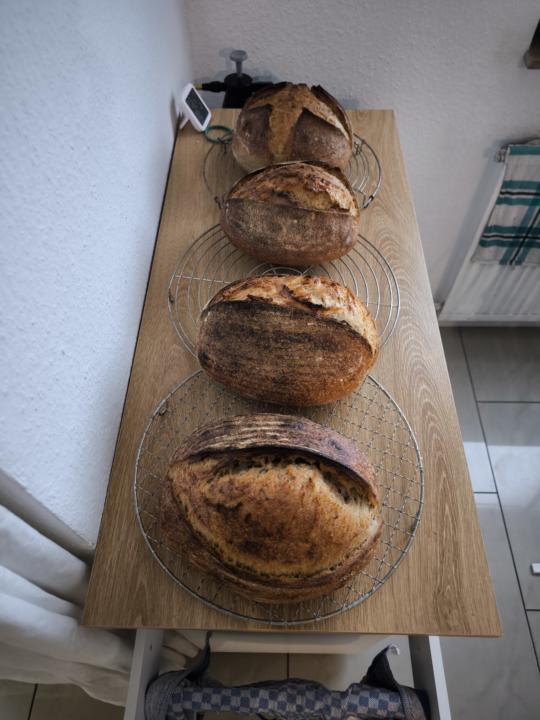
So we celebrated my babies first birthday last weekend and I of course made the bread for that event. I made 2 loafs of pure spelt flour and 2 loafs were a mix of spelt and rye. They turned our beautiful and tasted soo good!! I don't use any recipes for my bread, I simply create my own 🙊🫶🏼 I'd be happy if you checked out my other work on Instagram. I'm @sourdinkeldough there ❤️ Have a wonderful day ☀️ 🫶🏼

🔥
6h •
Tangzhong soft white sandwich loaf
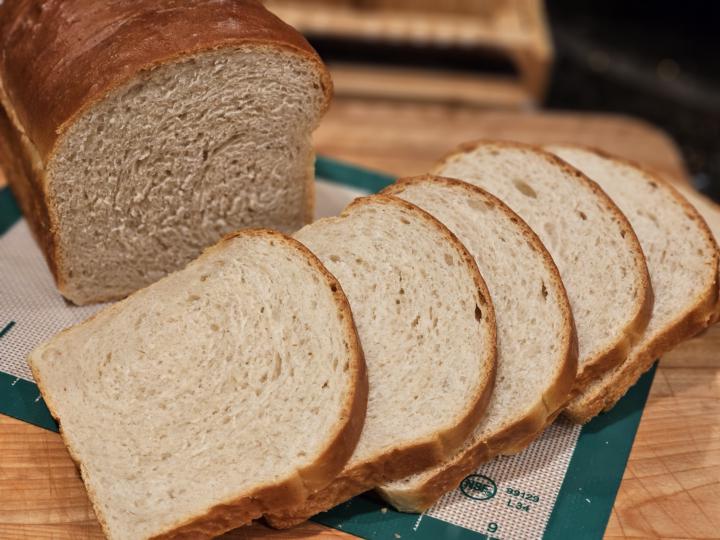
This is a hybrid loaf. 200g of fresher discard and 1/2 tspn of yeast. This nice soft white sandwich crumb with it stark golden brown crust is a beautiful contrast. She did 20 hours cold proofing. I find it fun that even in such a pillowy tight crumb you can see the swirl from my shaping. Great way to use discard. I was supposed to take out of the oven at about the upper 190°'s - 200°f but it reached 205°
1-30 of 2,245
powered by
skool.com/crust-crumb-academy-7621
#1 Sourdough Community on Skool 🍞
Coaching, not judgment. Sourdough, starter, yeasted, enriched & every bread between.
✅ ProveWorth Certified ⭐⭐⭐⭐⭐
Suggested communities
Powered by