
Pinned

Sep 8 •
How many people are in your LinkedIn network that you have not spoken to in a year?
Most people do not know the number. I did not either until I actually looked. Mine was over ten thousand, and about fifteen hundred of those I had never exchanged a single message with. Connected, and then nothing. Here is the thing. When business is slow the instinct is to go find more people. More connections, more content, more outreach to strangers. And the whole time there is a list sitting in your account of people who already said yes to knowing you. So do this today, it is free and it takes about ten minutes. Go to LinkedIn, Settings, Data Privacy, Get a copy of your data. Ask for the full archive. It shows up in your email in a day or so. Open the connections file and look at the number. Then come back and tell me what it was. On 1 October I am running a ninety minute session called The Conversation Engine, where you take that file, run a set of Claude skills on it, and leave having sent ten real messages to people you already know. Not a list you will get to later. Ten messages, sent, before we get off the call. It is built. What I have not settled is where the weight goes, and there are four parts to it. Vote below, whether or not you are coming, because I would rather build it around what this room actually needs. One thing so nobody is surprised later. Twenty people in this group already have that session included in what they already paid for. If you are not one of them it is $99 on its own. I will lay the whole thing out in a couple of days.
Poll
Cast your vote
0
0
Pinned
Aug '25 •
👋 Welcome! Introduce Yourself HERE
Jump in and introduce yourself below - just tell us: (copy/paste template 👇) - Where you're from - What you're building - What's driving you crazy right now That's it. Let's fix this content thing together.
Sep 20 •
Shutting Down Content & Conversion
I am consolidating into one community instead of running two. Every course from here has already been moved to The Authority Boardroom, and your invitation is already in your inbox. Check your email, including spam, and accept it. Your access comes with you. If you are here on the free tier, you stay free over there with the same courses. If you paid for Best Kept Secret, your Best Kept Secret access moves across exactly as it is. Nobody loses anything and nobody has to buy anything. This community closes on Oct 31st. After that, the posts and the classroom here go away, so accept the invite before then. If you want more than the free tier, the do-it-yourself plan is $697 a month with an optional sprint to get you built faster. That is there if you want it and easy to ignore if you do not. Don Davis D3 Digital Media Marketing
0
0
Aug 25 •
Five Decisions, One Week, Starting Monday Aug 31st
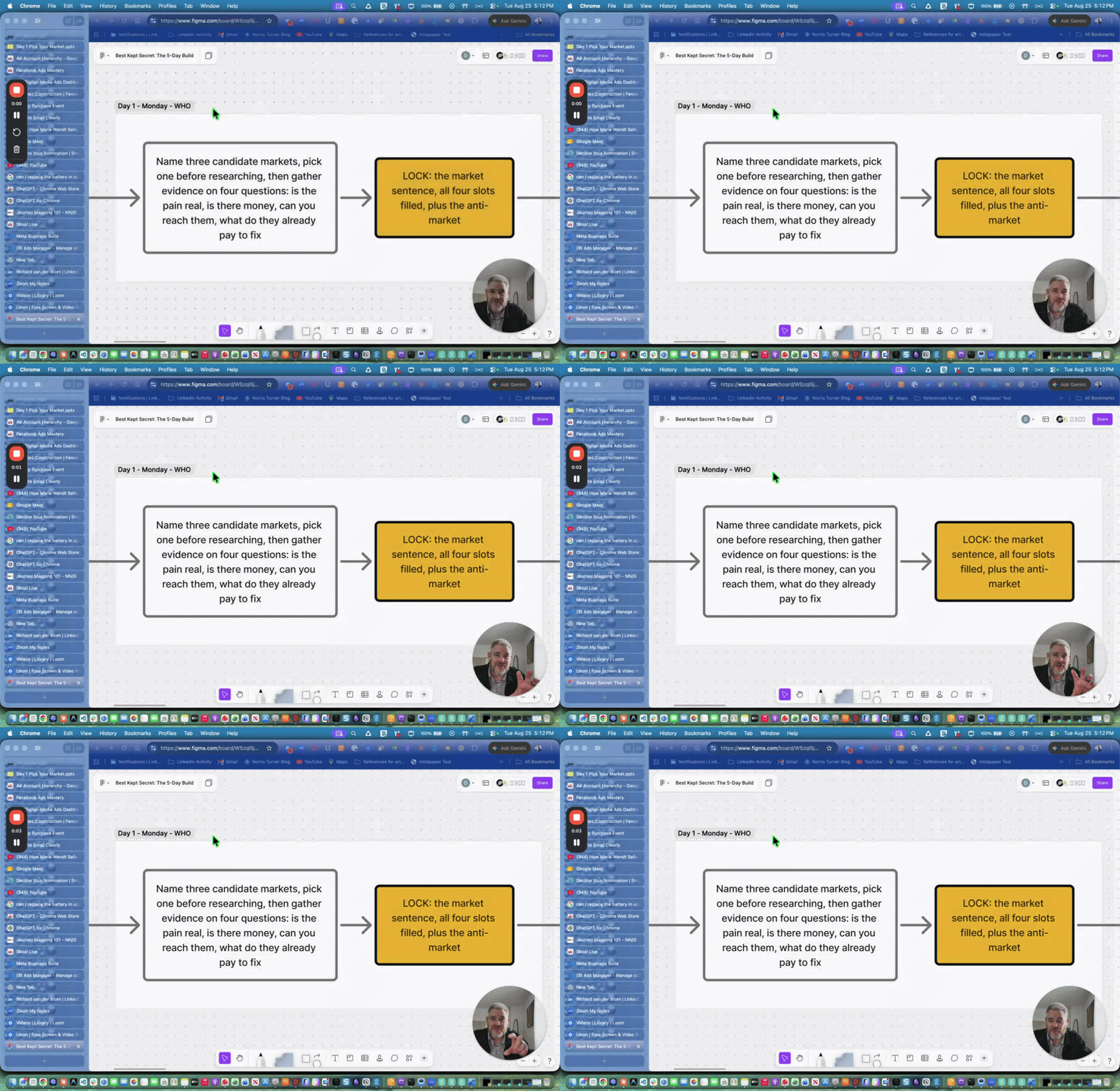
Hey, look, some of you have been in here a while. You've worked through the classroom, saved the posts, run a few of the prompts. And if I asked you right now to tell me in one sentence who you serve and who you have decided not to serve, most of you couldn't do it cleanly. That's not a knock on anybody. It's the most common place to be stuck, and it's the reason more posting hasn't moved your calendar. There's nothing to aim at yet. Next week is built to end that. Monday through Friday, 3:30 PM Mountain, one decision a day. Monday you pick the market and name the anti-market. Tuesday you take the words your buyers actually use in public and retire the ones you've been using instead. Wednesday you list every reason someone says no and remove them one at a time until there's an entry offer people can walk into. Thursday you get it down to one sentence and put it live. Friday you cut everything you're not going to keep doing and build the one weekly loop that runs in under an hour. The difference between this and the material sitting in the classroom is that you leave with the maps built rather than assigned. We do the work in the room. Note: if you're a current D3 Digital Media Marketing client, or you bought into a Best Kept Secret session at any point before this one, you're already enrolled. Nothing to buy. Just show up Monday at 3:30 Mountain. One logistics note for everybody. You'll need a paid Claude account to work along, so get that sorted before Monday if you don't have one. For everyone else, registration closes Sunday at 5 PM Mountain, and Platinum is capped at 10 seats. If you've been waiting for the right week to actually make these decisions instead of reading about them, this is it.
1
0
Jul 21 •
Live today: a look inside Thursday's "Get Seen by AI" workshop
We're live in the community today at 5 EST, and I'm using the session to walk you through everything we're packing into Thursday's Best Kept Secret No More workshop, the one on getting seen by AI. Here's the thing that's worth your time. When a buyer asks ChatGPT who they should hire in your space, your name either comes up or it doesn't. For most people it doesn't, and not because they aren't good at what they do. The AI just has nothing to pull from. No clear point of view on record, no proof it can quote back. Today I'll show you exactly what closes that gap. So in this session I'm going to preview the whole thing. The AI Visibility Audit we open with, the three-move shortlist you build, the one move we install live on Thursday, and what you actually walk out holding at the end. You get to see the full value before you decide whether to grab a seat. (If you are in the session already and want to sneak in for a quick look feel free to hop on as well) And everyone who shows up today gets access to my visibility GPT, so you can start diagnosing where you stand right now, before Thursday even gets here. The workshop itself is Thursday. Seats are capped at 25, and this is the last time it runs at $27 before it moves to $100. Today's session is where you find out if it's for you. If you can make it, jump in by going to https://www.skool.com/content-conversion-system-9386 and click on the link at the top and it will take you into the live session. Don
0
0
1-30 of 39

skool.com/content-conversion-system-9386
Stop being the best-kept secret in your industry. The free WAVES system that turns content into pipeline for founder-led B2B companies.
Powered by