
Pinned

👑
⭐
15d •
Welcome to Clief Notes. Here's where to start.
1. Go check out 📚Navigating The Course to see how to get around and what's here. 2. Start with The Foundation. Concepts, folder architecture, prompting framework. Everything else builds on this. 3. Check in at the bottom of each lesson. Polls, discussion posts, other members working through the same stuff. Use them. 4. When you're ready to build real things join in on our Biweekly competitions and win some real cash. ⭐ Competitions Mega Thread 5. If you are wanting to dive into the masterminds, grab all the past templates, artifacts and resources. Upgrade and head into the The Vault for Premium and The Drawing Room (VIP) for VIP 6. Post your work. Ask questions. Help others when you can. What are you here to build?
Pinned
👑
⭐
6h •
🚀 Ledger is live — alpha, go kick the tires
We just shipped the alpha of Ledger 📋 —https://ledger.eduba.io the talent platform we've been building on top of this community. Free for VIP and Premium Members. Here's the idea, plain: every other job board matches on a resume. Ledger matches on ICM. Every candidate in there has been through the methodology you're already using here — that's the whole point. Companies aren't guessing whether someone "gets it." They know it going in. 🎯 It works kind of like a job board, but more anonymous — right? 🕶️ Employers see an anonymized profile: skills, bio, portfolio, a short video intro if you want one. No last name, no email, no current employer. Every conversation runs through the platform's relay instead of real inboxes, so nobody's exposing contact info before they're ready. Two doors in: - 🏢 Company hiring — freelance or full-time — sign up and get access to a pool of people who already speak ICM fluently. - - 🙋 Candidate looking for work — freelance or full-time — list yourself. Takes a few minutes: profile, skills, a short video if you've got one. We're vetting both sides before anyone gets full access — companies and candidates — so the quality holds up on both ends. ✅ That means it's not instant approval; you might wait a beat while we look at it. Bear with us there. It's alpha 🧪, so: things might be rough around the edges, we're watching it closely, and if something breaks or feels off, tell us — that's exactly what this stage is for. Be nice to us and we'll be fast about fixing it. 🙏 Sign up: https://ledger.eduba.io 👇
Pinned

12h •
🏆 WEEKLY COMP #9: THE EDITOR 🏆
🎟️ PRIZE: FREE SEAT IN THE LYCEUM 🎟️ Pick your cohort. Technical, Business, or Creator. Your call. 🎯 PICK YOUR DOMAIN The domain is yours. Pick something specific. Pick something you'd actually use. A few sparks to get you thinking: - 💻 Code review editor for a specific language and level (junior TypeScript, senior Python) - 📊 Pitch deck editor for pre-seed founders - 🎨 Grant application editor for arts nonprofits - 📄 Resume editor for career switchers into tech - 📰 Op-ed editor for policy publications - 🎙️ Podcast script editor for interview shows - ⚖️ Legal brief editor for civil litigation - 📋 Product spec editor for early-stage PMs - 🎓 Academic paper editor for one specific field The more specific, the better. "Writing editor" is too broad. "Op-ed editor for tech policy publications targeting a policy audience" is right. 🗂️ THE METHODOLOGY If this is your first comp, welcome. Here's what you need to know: This week (and every week) you're learning interpretable context methodology. Folders as architecture. Each file does one job well. Your editor is a folder with five things: - 📄 identity.md (who the editor is, what work they review) - 📐 rules.md (how they critique) - 💬 examples.md (what good critique looks like) - 📚 reference/ (style guides, checklists, frameworks the editor uses) - 📖 README.md (how to use it) Drop the folder into a Claude project. Claude becomes the editor. Reusable. Shareable. Portable. 🔥 THE ANGLE THIS WEEK An editor is NOT a rewriter. An editor doesn't do the work for you. An editor surfaces what's weak and pushes you to fix it. That distinction is the whole assignment this week. When someone hands the editor a draft, the editor shouldn't produce a "fixed" version. The editor should point at the three lines that don't work, explain why, and hand it back to the writer to solve. ✍️ Generic feedback like "consider strengthening your intro" is a fail. Specific feedback like "your intro assumes the reader already knows what a Series A is, but this pub is read by generalists, so lead with the stakes instead of the jargon" is what a real editor does.
1d •
I Just Sold my first ICM Folder system!
Last month I was speaking with a friend who works for an engineering firm in Australia about ai, and all the cool things we can do with it these days, and he mentioned that he was trying to push to get a monthly newsletter out to their team to inform them of upcoming professional development courses and workshops. Of course it takes a lot of time to manually search the relevant websites, and put together a newsletter, etc. so no one has done it. I asked a few more questions about the tools they use, and then went and built out a small, structured ICM folder system, with the exact same blueprint that we have been learning in here and using for the competition building. I then made a loom video showing how it worked, and then emailed it to him along with the fully company branded email that it output. It was near the end of financial year at the time, so they were a bit busy, and he said he'd get back to me. Today, 1 month later, he came back and accepted my quote of $600, which includes 2 rounds of revision. To get the draft up and tested, it took me probably about 4 hours, and then there will be another few hrs in finalising it (with the revisions). In reality I probably undersold myself, but this is a side project at the moment (I run a cafe, not an ai consulting business...yet!), and I was excited to have the opportunity at a real client to test against. Let me be clear, I'm not selling a fancy Ai loaded website or app or anything... It is literally 5 folders, with a top level claude.md file, instructing claude co-work (or claude ai or code - or any other Ai tool that can follow structured instructions with a renaming of the claude.md file) on exactly what to do. This is exactly what Jake has been teaching here, and it will stand the test of time. As Anthropic updates their interface, and Open Ai starts to take over claude or another better tool comes along, this ICM folder system will continue to do its thing. It may need some tweaks along the way, but it's not going to need it's whole codebase updated or anything, because it's all plain language, english instructions.

20h •
Designing For AI As A Physical Good
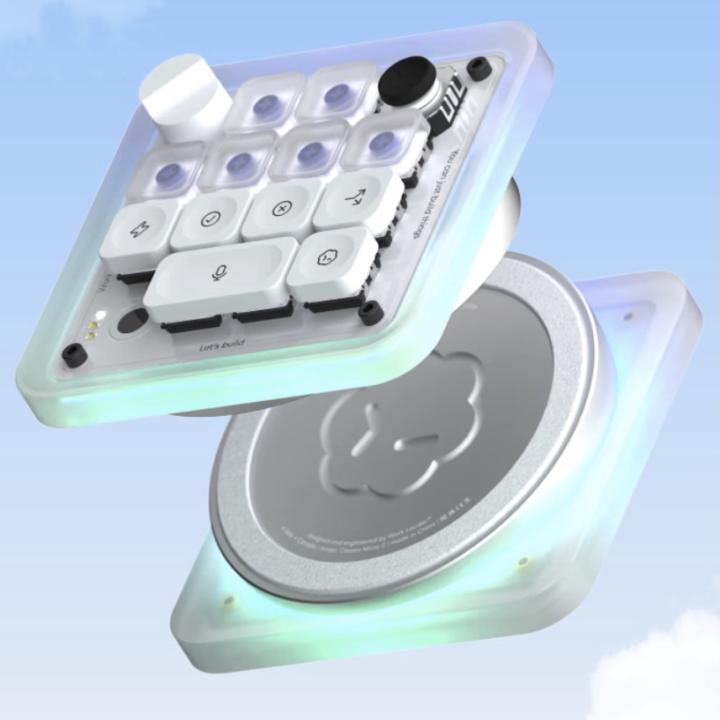
Codex Micro is a small product with a large design implication. It does not treat AI as another application to open. It gives the agent a physical interface. A dial for reasoning depth. Keys for commands and agent states. A joystick for skills. Lighting for feedback. Layers for different workflows. The invisible parts of working with AI become tactile. That is the interesting bit. The design question is no longer: Where can we add AI? It becomes: - What should be physical? - What should be visible? - What should be adjustable? - What should happen without a screen? - Where should the human intervene? - What does the AI need to communicate back? The product is designed around the behaviour of the AI, not just the existing shape of a keyboard. That is a useful test for any physical product built for this next phase of computing: If you removed the AI, would the object still make sense in exactly the same form? If the answer is yes, perhaps the AI was added to the product. It was not designed around the AI. The future of physical product design will not be about putting an AI button on familiar objects. It will be about designing around delegation, feedback, memory, autonomy, and human intervention. The result might look like a keyboard, a camera, a notebook, or something completely new. But the design logic will begin with a different question: What does the AI do, and what should the human be able to feel, see, or change? That is the shift. Not AI added to objects. Objects designed around AI. https://worklouder.cc/codex-micro //A<3
1-30 of 2,537

skool.com/cliefnotes
What we give away free beats most paid courses. Build durable AI systems with a Marine vet and Edinburgh researcher. 40+ lessons, growing.
Leaderboard (30-day)
1

🔥
+1745
2

+1209
3

+1040
4

+837
5

+767
Powered by