
🔥
10d (edited) • Q&A 🙋🏻♂️
Fragrance Buying Patterns
How Fragrance Buyers Really Buy: Clones, Designers, Niche, and Artisan
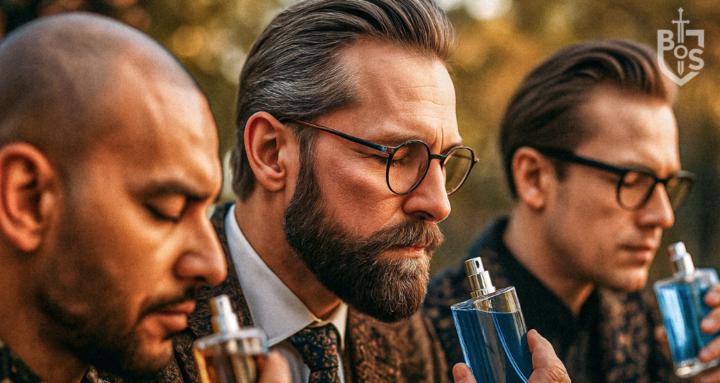
One thing I have noticed after being around fragrances for a long time is that people do not all buy fragrances for the same reason.
There actually is some factual support for this. The fragrance market has different types of buyers, and price, value, brand recognition, exclusivity, craftsmanship, and discovery all play a part in what people purchase.
What I do not think works is simply saying, "clone buyers are cheap buyers" or "niche buyers have better taste." It is much more complicated than that.
You have one group that I would call the value and variety buyer.
This is where a lot of Middle Eastern fragrance brands, clone houses, inexpensive designers and discounter fragrances fit.
This buyer may look at a $200 fragrance and think, "Why would I spend $200 on one bottle when I can get three or four fragrances for the same money?"
For them, value matters. Performance matters. Variety matters.
That helps explain the popularity of houses like Lattafa, Armaf, Paris Corner and similar brands. It also explains why many of these same buyers will pick up inexpensive designers, rack-store fragrances and discounted older designer releases.
They are not necessarily chasing the perfumer, the raw materials or the artistic story behind the fragrance. They are often chasing how good it smells, how well it performs, and how much fragrance they can get for their money.
Then you have the more traditional designer buyer.
This person may stick with Dior, Chanel, Armani, YSL, Prada, Givenchy, JPG and the other major designer houses.
They want something recognizable, easy to find and generally dependable.
They may not necessarily care about going deep into niche or artisan perfumery. They know the brands, they trust the brands, and they like what they are getting.
Then there is another group that I think is especially interesting: the niche and luxury buyer.
This is the person buying Amouage, Ex Nihilo, Roja, Xerjoff, Memo, Bortnikoff, independent houses and artisan fragrances.
But these people also very often make perfect sense as buyers of designer private collections.
That means lines like:
Dior La Collection Privée
Guerlain L'Art & La Matière
Armani Privé
Chanel Les Exclusifs
YSL Le Vestiaire des Parfums
To me, those buyers overlap much more naturally with the niche customer than they do with someone simply buying the regular designer release at a department store.
Why?
Because the motivation is similar.
They are looking for something more exclusive, more unusual, better presented, more refined, or simply different from what everybody else is wearing.
At that point, the name on the bottle matters less than the experience.
A Guerlain L'Art & La Matière fragrance may technically come from a designer house. Still, the person buying it is often shopping with the same mentality as somebody looking at Amouage, Roja, or an independent niche house.
Then you have what I think is becoming one of the biggest groups in fragrance today:
The cross-shopping collector.
This person does not care about staying in one lane.
They might own a $30 Middle Eastern fragrance, a $100 Mancera, a $160 designer, a $300 Amouage, and a $450 Guerlain private-line fragrance.
And there is nothing contradictory about that.
People today are building fragrance wardrobes. Example
They want something for hot weather, cold weather, work, dinner, casual wear, dates, special occasions, and sometimes just because they want to smell something different.
That is why I do not really believe the fragrance market works like a simple ladder anymore:
Cheap fragrance → designer → niche → artisan
People move backward and forward between all of them.
I certainly think there are two very visible ends of the fragrance community.
On one side:
Middle Eastern fragrances → clones → inexpensive designers → value purchases
On the other:
Designer → designer private collections → niche → luxury niche → independent/artisan
But there is a huge group sitting right in the middle buying from both sides.
And I think the biggest difference between buyers is not necessarily how much money they spend.
It is why they spend it.
One buyer asks:
"How much fragrance can I get for my money?"
Another asks:
"What kind of smell or experience can I find that I have not experienced before?"
Those are two completely different buying motivations.
Neither one automatically makes somebody more knowledgeable than the other.
Someone can have a tremendous understanding of fragrance and still enjoy a $30 Middle Eastern fragrance.
And somebody can own twenty $400 bottles and know absolutely nothing about perfumery beyond the fact that the bottles are expensive.
That is why I think we make a mistake when we judge fragrance buyers strictly by what category they purchase.
The better question is:
What are they looking for when they buy?
Value?
Performance?
Brand recognition?
Compliments?
Luxury?
Exclusivity?
Originality?
Craftsmanship?
Discovery?
Collecting?
Once you start looking at fragrance buyers that way, the entire market makes a lot more sense.
And it also explains why somebody who starts out buying inexpensive clones can eventually move into designer fragrances, niche and artisan perfumery—while another person may happily stay with Middle Eastern fragrances forever.
Different buyers are simply looking for different things.
And increasingly, a lot of us are looking for all of them.
28
15 comments
Fragrance Buying Patterns
skool.com/bos
#1 Fragrance Community 🏆
Our mission is to help YOU leverage the power of scent to become the man you know yourself to be.
Leaderboard (30-day)
1
🔥
+2863
2
🔥
+1619
3

+1509
4

+1238
5

+1130
Powered by