
Pinned

Mar 23 •
Nobody Understands Peptide Dosing Until This Simple Trick
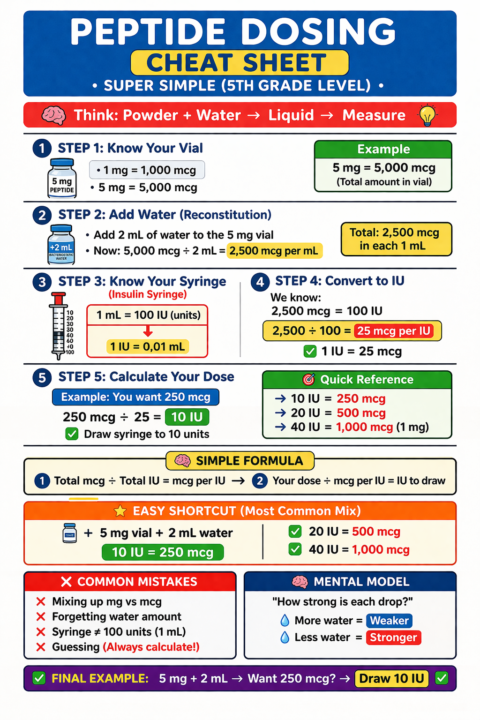
Peptides start as a powder that must be mixed with water so you can measure them in a syringe. Once mixed, you divide the total amount into the syringe units to know how many micrograms are in each unit, which tells you exactly how much to draw for your dose. Bio-Opt Tracking/Reconstitution Calculator: https://peak-bio-path.base44.app
Pinned
Feb 6 •
A Practical Guide to Reconstituting Peptides/Calculator (Educational Use Only)
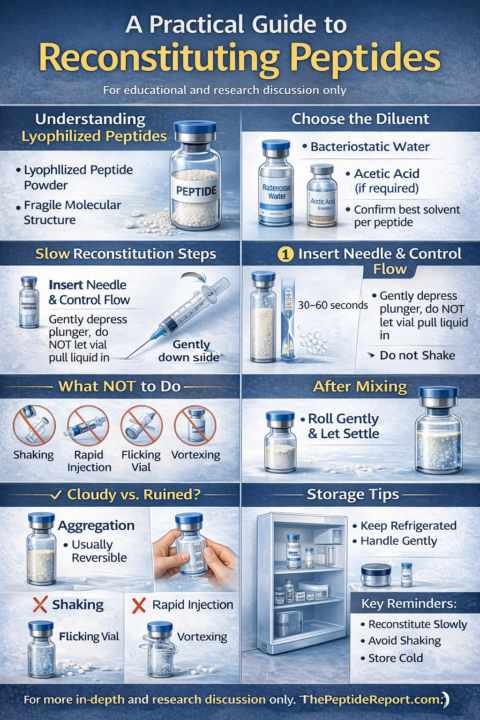
Proper peptide reconstitution is one of the most overlooked—and most important—steps in peptide research handling. Many issues people encounter (cloudiness, clumping, reduced effectiveness) are not product defects, but reconstitution errors related to speed, agitation, or solvent choice. Bio-Opt Tracking Calculator: https://peak-bio-path.base44.app This article outlines best-practice principles for reconstituting lyophilized peptides for educational and research discussion only. 1. Understanding Lyophilized Peptides Most peptides are supplied as a lyophilized (freeze-dried) powder. This form improves stability during storage and transport but makes the peptide mechanically sensitive once liquid is introduced. Key point: Peptides are fragile molecular chains, not resilient compounds. How liquid is introduced matters. 2. Choosing the Correct Diluent The most commonly used diluent for research peptides is: - Bacteriostatic water (contains 0.9% benzyl alcohol) In specific cases (e.g., certain fat-loss or acidic peptides), acetic acid may be used in combination, but this depends on peptide characteristics. General educational guidance: - Most peptides tolerate bacteriostatic water well - Always confirm compatibility for the specific peptide being studied 3. Step-by-Step Reconstitution Technique Step 1: Prepare the vial - Allow the peptide vial to reach room temperature briefly if stored cold - Swab the stopper with alcohol Step 2: Control the vacuum - Many vials have a strong vacuum seal - Do not allow the vial to pull liquid in rapidly Instead: - Insert the needle - Gently depress the plunger to control the flow Step 3: Introduce liquid slowly - Aim the needle toward the inside wall of the vial - Let the liquid run down the side - Take 30–60 seconds if needed Rapid force = turbulence = aggregation risk. 4. What Not to Do Avoid the most common mistakes: - ❌ Shaking the vial - ❌ Rapid injection of diluent - ❌ Flicking or vertexing - ❌ Repeated aggressive handling
Pinned
Nov '25 •
Welcome to Skool Games!
Hey everyone!! Welcome to the Skool Games community! We’ve officially moved from Facebook to Skool, creating a more focused, interactive space centered on learning, growth, and connection. Click the link below to watch a quick tutorial on this platform to learn how to use it most effectively. https://www.loom.com/share/dfeb21de2c544ad78753b267dff07f75 Here you’ll find everything you need to: ✅ Learn about peptides — what they do and how they work ✅ Build confidence in applying and understanding protocols ✅ Connect with others who are committed to optimization and performance ✅ Ask questions, share results, and grow together Take a moment to explore the modules, introduce yourself in the comments, and start earning XP by engaging and sharing your journey. If you're looking for a trusted source to purchase peptides, you can create an account with: https://ascensionaminos.com All members in this community get 20% off each order. Use code: bioopt20% Let’s build something powerful together.
12d •
Important Announcement: Bio Optimization Collective Is Closing October 31
Hey everyone, We wanted to give you all an important update about the future of our Bio Optimization Collective community here on Skool. Due to the evolving compliance rules and regulations surrounding the research peptide industry, we've made the decision to officially close the Bio Optimization Collective at the end of October. First and foremost, we want to thank every single one of you who has been part of this community. Bill and I have truly enjoyed sharing our knowledge, answering your questions, and helping you along your health and optimization journey. But just because this group is closing doesn't mean we're going anywhere! We're continuing to build and expand Ascension Aminos, and we'd love for you to stay connected with us. Here's how you can continue to follow us: Head over to https://ascensionaminos.com and create your free account. Through our website, you'll be able to stay connected with us, access available educational resources, and find information and support to help you better understand peptide research and optimization. We're committed to continuing to provide valuable education, resources, and support while adapting to the changing regulatory environment. Our last day here on Skool will be October 31, 2026. Again, thank you all for being part of this community. We appreciate each and every one of you, and we look forward to continuing this journey together through Ascension Aminos. Travis and Bill Ascension Aminos
Sep 24 •
Your Metabolism Has an Age… What’s Yours? 👀
You know your age… but how old is your metabolism? Take the quiz here 👇 https://biocoachbill.com You might be 40, 45, 50 or 60 on paper. But that doesn’t necessarily mean your body is functioning at that same age. We put together a quick Metabolic Age Quiz that helps give you a better look at where you currently stand based on factors that can influence your metabolic health. The interesting part? Your metabolic age could come back younger than you are… or older than you are. And if it comes back older, the point isn’t just to give you a number. It’s to help you start identifying the areas you can actually work on to improve your health, body composition, energy, and longevity. Take the quiz here 👇 https://biocoachbill.com It only takes a few minutes. Then come back to this post and tell us: What’s your actual age vs. your metabolic age? Let’s see who in this group is aging backward. 🔥
1-30 of 289
skool.com/bioopt
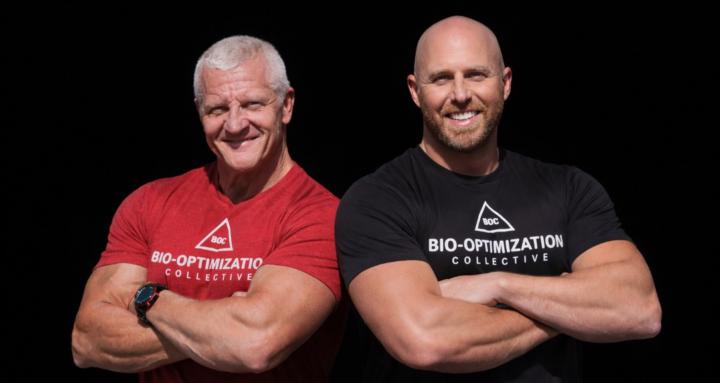
For adults 35+ ready to build muscle, burn fat, and optimize hormones. Aging is inevitable. Decline isn’t. Train smarter. Optimize everything.
Leaderboard (30-day)
1

+3
2

+3
3

+2
4

+1
Powered by