
Write something
Pinned


Feb 17 •
You don’t need to be in the gym for more than an hour
A lot of people think results come from spending hours in the gym. Truth is: results come from structure + consistency. As a lab scientist and someone who competes in races, I keep my training efficient and intentional—hypertrophy-focused work that compounds over time. In this video, I’m sharing the exact upper-body sessions I use to build strength and muscle while still training for performance under an hour.

Jan 12 •
A painful reminder that training smart beats training hard
I almost got myself injured today… over something stupid. Sunday is my long run day. 10 miles. No excuses. I showed up ready. Legs felt good. Weather was perfect. The only problem? My regular running shoes are cooked — 300+ miles on them — so I grabbed my trail shoes instead. And if you know anything about running, you already know that trail shoes on pavement are a terrible idea. I knew it. I did it anyway. I got to the trail, stretched like always, took off… and everything felt fine. Smooth. Easy. Locked in. Until mile 3. Out of nowhere, my left calf tightened up. Sharp. Deep. The kind of pain that makes you instantly slow down. I tried to shake it out. One more step and I knew — this wasn’t soreness. This was my body saying, “Stop.” So I did. And walking back to my car, I was pissed. I wanted the miles. I wanted the win. Instead I got a reminder. That pain wasn’t bad luck. It was feedback. Different shoes. Different stress. Different load on my muscles and tendons. If I had ignored it, I wouldn’t just miss today’s run — I’d miss weeks. That’s the real lesson: Progress isn’t about pushing through everything. It’s about knowing when to listen. Your body always tells you what it needs. Most people just don’t stop long enough to hear it
Jan 29 •
If you want strength, load matter. For size, not so much.
We have learned over time that high reps + low weight = hypertrophy and low reps + heavy weight = strength This study challenges that A 2025 study followed 17 active men for 9 weeks. One group lifted heavy weights, and the other lifted much lighter weights. Both groups worked out their whole body three times a week during the study. What happened: • Muscle thickness increased across nearly all measured muscles in both groups • No meaningful differences in hypertrophy between high- and low-load training • Triceps hypertrophy occurred earlier and more consistently with high loads • 1-RM strength increased more in the high-load group While heavier weights may lead to improvements in strength performance, it looks like hypertrophy can be achieved through multiple rep ranges as long as the final set is taken close to failure. Recommendation: When resistance training, take final sets within 2 reps of failure. Use heavier loads if strength performance is the primary goal. Read the study here: Muscle Hypertrophy
Jan 27 •
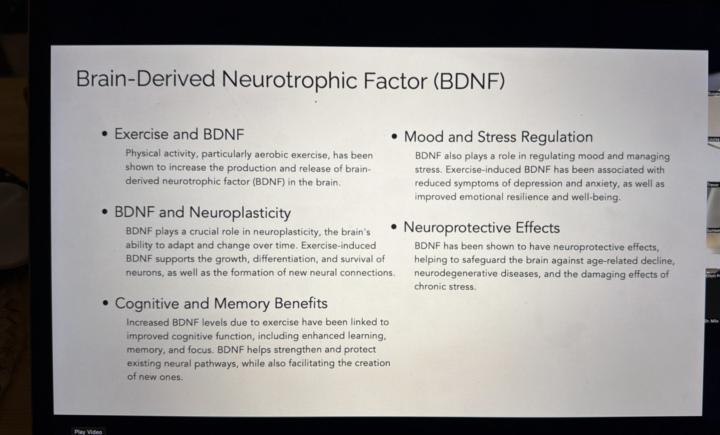
I was on a recent call with my team
and we covered how BDNF is so good for your brain! Its amazing to see how effective exercise can be and the benefits one receives. So if you ever "feel" slugggish or "not in the mood" keep reading, ingoring those thought can go away after just an exercise. The main topics we covered was BDNF. BDNF stands for Brain-Derived Neurotrophic Factor. The easiest way to think about it: BDNF helps your brain grow, adapt, and stay healthy. Exercise—especially aerobic movement like running, cycling, or fast walking—has been shown to increase BDNF in the brain. When you move your body: - Blood flow increases - Brain activity increases - BDNF gets released This is one reason exercise improves how you feel and how you think. BDNF plays a major role in neuroplasticity, which means: - Your brain can change - Your brain can adapt - Your brain can build new connections BDNF helps: - Strengthen existing connections - Keep neurons alive and healthy Higher BDNF levels are linked to: - Better memory - Faster learning - Improved focus BDNF also helps regulate: - Mood - Stress response - Emotional resilience 🧠 Simple Takeaway Exercise doesn’t just change your body. It changes your brain chemistry. When you move, your brain releases BDNF—and that helps you think clearer, feel better, and stay mentally resilient.
2
0
1-17 of 17
powered by

skool.com/bebetterathletics-8322
📊 Better health = better performance = better physique.
🔥 2026 Is Your Year.
Suggested communities
Powered by