
Write something

Dec '25 •
🤝 Turning Intentions Into Execution — Together
Over the past few days, you’ve shared your anchors, your goals, and the areas you want to improve heading into 2026. Now I want to connect the dots. Most people don’t struggle because they don’t know what to do. They struggle because it’s hard to follow through alone. This community exists to help close that gap. 💬 Which parts of this group help you execute best — and where could we support you more next year?Think in terms of: - accountability - structure - consistency - encouragement - reminders - challenges - education - community energy Even small insights are helpful here.Your feedback helps shape what we build together in 2026 so it actually supports your goals and not just sounds good on paper. Drop a comment and let me know what’s been most helpful so far and what you’d like more of next year.

Oct '25 •
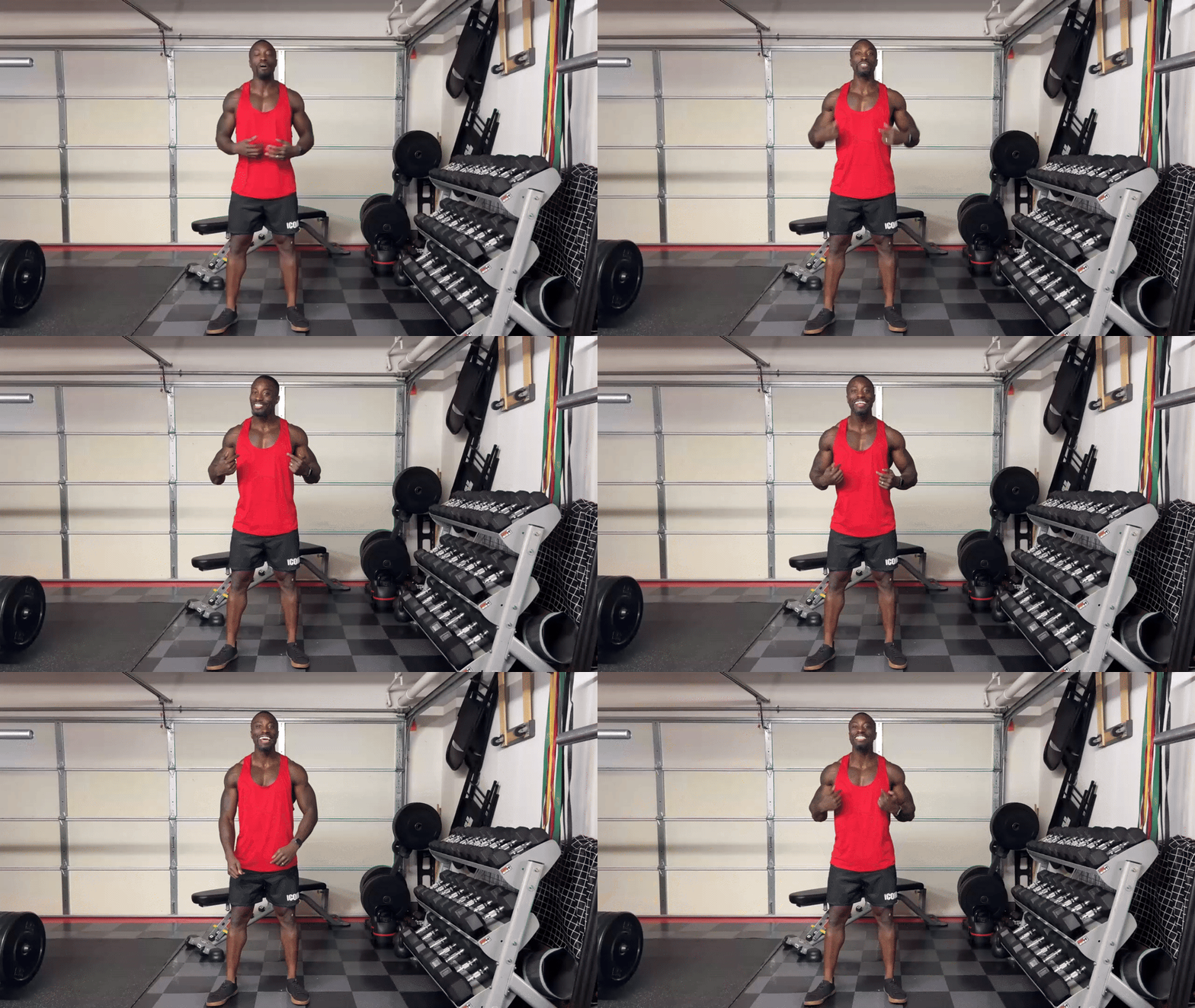
💪 Chest Training Basics: Form, Safety & Strength
In this Learning Lab, we break down how to train your chest safely, effectively, and without wrecking your shoulders — whether you’re doing push-ups at home or dumbbell presses in the gym. This session focuses on mastering hand and elbow placement, understanding what not to do, and learning how to scale intensity up or down depending on your level. It’s not about bodybuilding or chasing max weights — it’s about building strong, functional chest muscles while keeping your shoulders healthy. 🔑 What You’ll Learn ✅ The biggest hand and elbow placement mistakes that cause shoulder pain ✅ How to find the sweet spot between safety and activation (45°–60° angle) ✅ How to scale push-ups from beginner to advanced (incline → flat → decline) ✅ Proper dumbbell press setup, grip variations, and bench angles ✅ How to perform a safe and effective dumbbell fly ✅ How to press for your chest — not your shoulders 📘 Key Takeaways - High elbows = shoulder danger zone 🚫 - Elbows tight = safest for shoulders ✅ but more triceps work - 45°–60° elbow angle = the “Goldilocks zone” 🟢 - Hands slightly wider than shoulders; press inward toward midline - Flat bench = mid-chest focus - Incline bench (30°–45°) = upper chest focus - Grip the ground or dumbbells actively — don’t just go through the motions 📄 Download the Chest Training Basics Companion Guide HERE
Oct '25 •
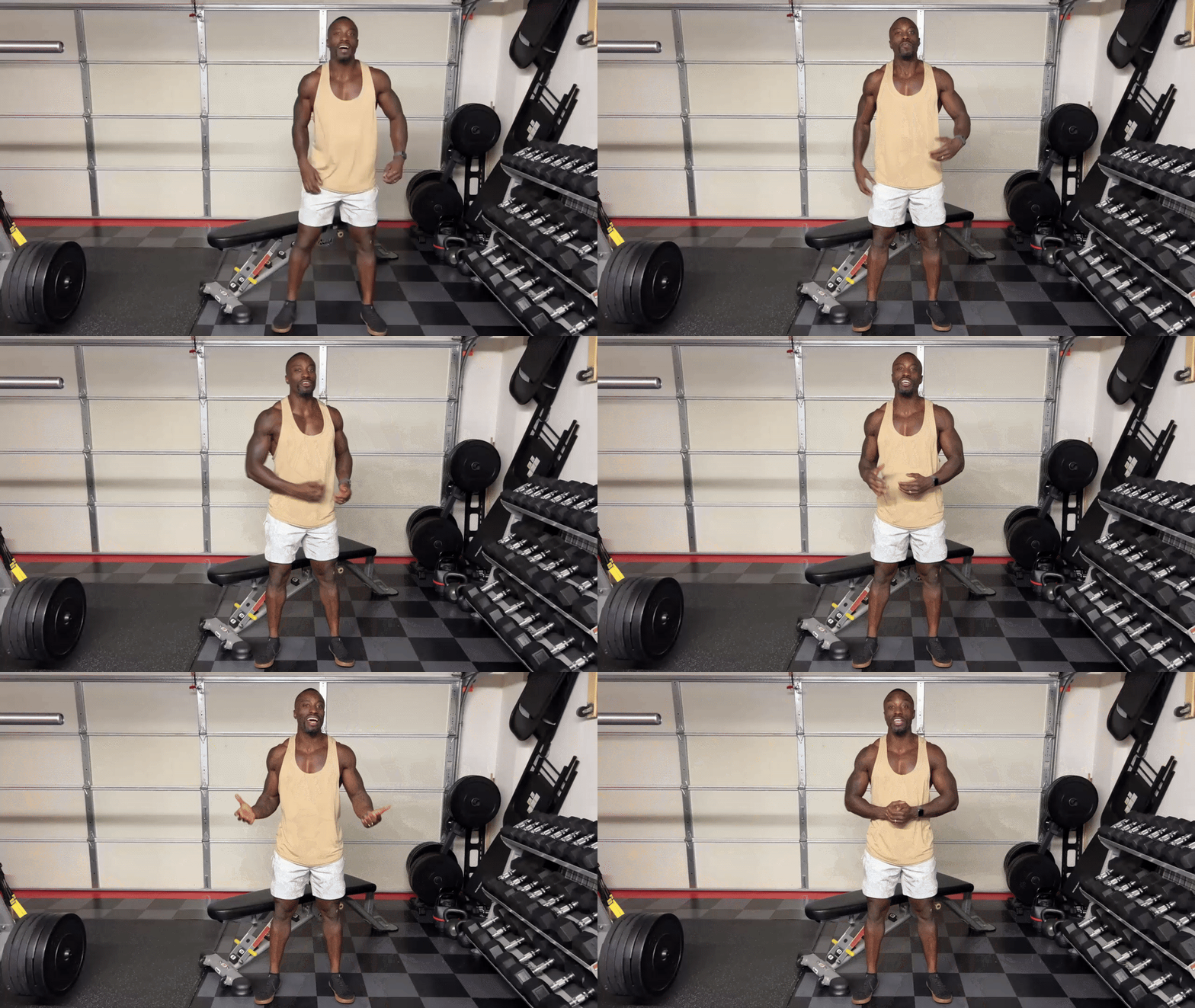
💪 Learning Lab: Back Training Basics — Dumbbells, Bench & Bands
In this week’s Learning Lab, we broke down the fundamentals of training your back using just dumbbells, a bench, and a few resistance bands. Most people love training what they can see in the mirror, but your back is just as important. It’s the second largest muscle group in the body and plays a huge role in posture, shoulder health, and overall strength. When you train your back the right way, you’ll: ✅ Improve posture and reduce shoulder or lower-back pain ✅ Build muscle that supports faster metabolism ✅ Create balance between your front and back muscles ✅ Look stronger and more athletic from every angle In this session, we covered: - The difference between horizontal pulls (rows) and vertical pulls (pulldowns) - How to keep your shoulders down and activate your lats properly - Why pulling with your elbows instead of your hands changes everything - How your elbow angle and grip width control what part of the back you hit - Foundational moves with dumbbells, bands, and the bench to train the entire back 🗂️ Resource: Get your Back Workout HERE
Sep '25 •
Weight Loss Coaching: Small Tweaks, Big Wins
Chris has dropped 13 lbs (246→233) with ~1 hr/day walking, solid protein (~170g) and ~2,000–2,100 kcal. He feels better but hit a plateau. We cover four fixes: add weighted leg work, balance with back/pulling, track simple progressive overload, and add one short interval session weekly. We also hit knee-friendly lunge tweaks, whether to cut calories (don’t—for now), and why mood/journaling keeps him consistent. Ends with next week’s garage-gym leg basics teaser. Key Moments - 00:18 Warm-up & intro - 04:56 Chris recap (weight, steps, diet, home setup) - 08:14 Wins + current plateau - 09:12 Pillar 1: Legs—add weight + reverse-lunge demo (knee friendly) - 14:42 Pillar 2: Balance—more back/pulling (rows, bands) - 16:15 Pillar 3: Progressive overload + consider gym access - 18:36 Pillar 4: Cardio variety—20s fast / 40s easy - 23:19 Q&A: Calories? Keep steady; build before cutting - 28:41 Wrap & teaser for next week’s garage-gym leg basics NEXT WEEK: Our next Learning Lab kicks off a new exercise basics series. First up: legs! 🦵 I’ll walk you through squats, lunges, and deadlifts with tips for form, progression, and avoiding pain. If legs have ever been a weak spot for you, you don’t want to miss this one. Bring your questions and let’s make leg day less intimidating

Sep '25 •
Tracking Mistakes & Scale Mind Games
In this week’s Learning Lab we dug into two issues almost everyone faces at some point: scale frustration and protein tracking. Michael shared how he’s dropped from 216 to 174 pounds while doing everything right—sleep, steps, workouts, tracking—yet still saw the scale tick up a pound. The reminder here is that a single pound doesn’t equal fat gain. Christie asked if she could track protein without weighing food, and the answer is yes. Cups, spoons, photos, and the hand-portion method can all work if you use them consistently. The real win isn’t perfection—it’s consistency in whatever method you’ll actually stick with. If Michael’s and Christie’s situations hit home, consider volunteering your own questions for a future Learning Lab. These sessions are most valuable when we break down real scenarios from members, because everyone gets to learn from them. If you’re open to on-air coaching—whether it’s about nutrition, training, or mindset—reach out to me directly or post in the discussion board. We’ll line up your topic for a future session so the whole community can benefit from your experience. And as always, keep sharing your wins, struggles, and questions in the group so we can continue building momentum together. Timestamps - 00:02:57 — Welcome + today’s topics - 00:04:00 — Michael’s story & scale fluctuations explained - 00:09:00 — Why weight ranges matter more than one number - 00:10:02 — Calorie tracking accuracy & sustainability check - 00:12:51 — Christie’s question: protein tracking without a scale - 00:22:26 — Final takeaways + invitation to on-air coaching

1-27 of 27

skool.com/achidis-inner-circle-7459
No more extremes. Just real coaching, better habits, and a supportive space to get fit, eat smart, and feel in control again — for life.
Leaderboard (30-day)
1
+57
2

+40
Powered by