Activity
Mon
Wed
Fri
Sun
May
Jun
Jul
Aug
Sep
Oct
Nov
Dec
Jan
Feb
Mar
Apr
What is this?
Less
More
Owned by Theron
The goal: STRIVE TO BE BETTER THAN YESTERDAY! The SKOOL group for those who strive to be better than themselves of yesterday. Day by day, 1% at a time
Memberships
Lifestyle Founders Group™
11.8k members • Free
🏛️ Coaching Academy
2.9k members • Free
FitdadCollective
59 members • Free
Dopamine Digital
6.5k members • Free
Skoolers
194.3k members • Free
33 contributions to Better Than Yesterday

Mar 6 •
Consistency Isn't Your Problem. Chaos Is.
You already know what to do. You know you need more protein, better sleep, consistent training. You've read the articles. Downloaded the programs. Started and restarted more times than you want to admit. Then life happens. Brutal work stretch. Kids get sick. Travel. Weekend chaos. And without a plan built for real life, health gets pushed to the back of the line. Again. Here's what the fitness industry won't tell you: most programs are designed for people with unlimited time and zero obligations. They weren't built for high-performing dads managing careers, kids, and everything in between. What changed everything for me, and the men I coach, wasn't finding a perfect program. It was building a system with three non-negotiables that work when everything is on fire. Non-Negotiable #1: Your Repeatable Meals 2-3 high-protein meals you can put on autopilot. Same meals, day after day. Not because you lack creativity, but because you've stopped treating mealtime like a performance and started treating it like a system. Decision fatigue is real. Automate the meals, protect the energy. Non-Negotiable #2: Your Minimum Floor The absolute lowest level of effort you'll accept from yourself, no matter what's happening. Not your goal. Your floor. Can't get 5 training sessions? You get 3. Can't do 60 minutes? You do 20 at home. You refuse to go below your floor. This breaks the all-or-nothing cycle that keeps you yo-yoing. Non-Negotiable #3: Five Minutes Daily Toward the Man You're Becoming Most men who struggle long-term don't have a behavior problem, they have an identity problem. Five focused minutes each morning, asking yourself: Who is the man I'm becoming? What does he do each day? What does he model for his kids? This shifts your internal narrative from "I'm someone who struggles with this" to "I'm someone who simply does these things." The Truth: None of this is sexy. No 30-day transformation. No magic hack. What I'm offering is a framework for staying in the game through chaos, because the men who win long-term aren't the ones with the best plan for easy weeks. They're the ones who had a plan for when everything fell apart.
1
0
Feb 17 •
You've Conquered the Boardroom. Why Are You Losing the Battle With Your Own Body?
Let me be direct: You're winning everywhere except the one place that should be most controllable, your own health. You know better. You've mastered complex challenges at work. You've built something meaningful in your career. Yet every morning in the mirror, you see the gap between who you are and who you know you could be. Your kids aren't listening to your lectures about discipline and commitment. They're watching your patterns. And right now, you're teaching them that success means sacrificing yourself. That stops today. The Truth Most Coaches Won't Tell You: You don't need another 6-week transformation program. You need a system built for the life you actually live, not some perfect life that doesn't exist. Here's what that looks like: Three Non-Negotiable Anchors (even on your most chaotic weeks): - 3x per week, 30-45 minutes - Foundational movements: push, pull, hinge, squat - Built around YOUR schedule, not a cookie-cutter template Awareness Through Tracking: Tracking your nutrition on messy days—because guessing keeps you stuck while awareness creates change. It's not supposed to be easy. But it works. The "Better Than Yesterday" Standard: Not perfection. Not flawless execution. Just consistently better than you were yesterday. Most programs teach you nothing about maintenance. They give you unsustainable intensity, then you collapse when life gets chaotic (which it always does). We do the opposite. We build systems that last because we teach you the what, why, and how behind sustainable change through identity transformation. Your kids are watching. The question isn't whether you have time to prioritize your health—it's whether you can afford not to. This isn't a quick fix. This is the last time you'll need to hire someone like us, because we're teaching you to maintain it for life. Strive to be better than yesterday.
1
0
Jan 31 •
Fat Loss Feels Impossible? You're Eating at the Wrong Time.
You're may not be eating too much. You're might be eating it at exactly the wrong time for your actual life. Here's what I see constantly: You skip breakfast, grab something quick for lunch because you're slammed, then get home exhausted and demolish 1,500 calories between dinner and bedtime. Sound familiar? You're not lacking discipline. Your hunger hormones are working against you because you've been starving yourself all day. The shift that can change everything: Front-load your calories and protein earlier in the day instead of backloading them at night. Same total calories. Completely different experience. Why this works (the real reasons, not the BS): - You have energy when you actually need it during the day with your kids and at work, not at 9pm on your couch - You break the restrict-binge cycle that makes you raid the kitchen every night - You make better food choices when you're not desperate and depleted - Evening snacking becomes optional, not inevitable I've watched clients lose pounds with this one timing shift because they stopped fighting their biology. Here's the truth most coaches won't tell you: This doesn't work for everyone. But if you're currently undereating all day and overeating every evening? This will feel like a revelation. The full article breaks down exactly how to implement this over 4 weeks, what problems you'll actually face, and when this strategy is completely wrong for you. Want the complete breakdown? Read the full article here: gymratcoaching.com/blog/shiftintiming
0 likes • Jan 31
https://gymratcoaching.com/blog/shiftintiming
Jan 15 •
Does “protein first” actually work? And if so, for who?
You’ve probably heard: “Just eat protein first and the fat will melt off.” Yeah… no. 😅 But there is a way protein first actually helps—especially for busy parents who are tired of starting over. Here’s the truth about the Protein-First Strategy (and why it works) Eating chicken before your rice isn’t a magic fat-loss hack. It won’t “fix your hormones” or override a chaotic diet. What it does do is make eating less… way easier. Protein helps fat loss because it: ✅ keeps you fuller longer (less mindless snacking) ✅ slows digestion (more satiety, fewer cravings) ✅ helps preserve muscle in a calorie deficit (so you look tighter, not just smaller) ✅ has a higher thermic effect than carbs/fats (you burn a bit more digesting it) And the real reason the protein first rule works for a lot of busy dads/moms? It’s stupid simple: 👉🏽 Eat your protein first. Then decide if you still want the carbs/fats. Do that most meals and you’ll naturally: - get more protein without obsessing - feel full sooner - eat fewer total calories without feeling punished - stay more consistent without tracking apps No macro math. No weird rules. Just a small upgrade that compounds. Who “Protein First” is perfect for If you’re a busy parent trying to lose fat and you keep getting wrecked by hunger, cravings, and late-night pantry trips… this is for you. Who it’s NOT for If you already hit high protein daily and you’re still not losing fat, protein first isn’t your missing piece—your weekly consistency and calorie average are. If you want the full breakdown—hormones, thermic effect, real client scenarios, and exactly who should use this and who shouldn’t—I wrote an in-depth guide. You can find it at https://gymratcoaching.com/blog/proteinfirst
1
0

Dec '25 •
The D.A.D. Strong Standard (Read This Like You Mean It)
Being a dad is not an excuse to give up on your body. And it’s not a reason to destroy yourself trying to “get it back.” D.A.D. Strong exists because fathers need a standard that respects strength + responsibility… not “dad bod cope” or “six-week psycho mode.” Strength Is a Responsibility Strength isn’t abs. Strength is capacity. It’s: - energy left after work - the ability to play, lift, carry, and protect - resilience when life gets stressful (because it will) A D.A.D. Strong father trains for function and leadership, not vanity. “Dad Bod” Isn’t the End of the Story Empathy should never become permission to quit. Yes, life is harder now. Yes, time is limited. Yes, progress is slower. Cool. We adjust the plan — we don’t lower the standard. We Don’t Do Extremes No starving. No punishing workouts. No “I’ll suffer for 42 days then rebound for 6 months.” We do what works in real life: Consistency > Intensity Structure > Motivation Sustainability > Speed Always. We Train With Intention Every session has a purpose. We prioritize: - strength that carries into daily life - joints that still work when your kids are teenagers (and still want to wrestle) - recovery like it actually matters Missed workouts don’t define you. Quitting does. We Eat Like Adults (Not Bodybuilders) We don’t moralize food. We don’t fear carbs. We don’t turn family dinner into a spreadsheet and a meltdown. We eat for: - fat loss that sticks - energy that lasts - habits you can repeat for years Perfection isn’t required. Consistency is. We Play the Long Game We measure success in months and years, not “why didn’t I lose 7 pounds since Tuesday.” Dads lose fat slower sometimes. That’s normal. Stress and sleep matter. Progress is rarely linear. We don’t panic. We adjust and move forward. We Lead By Example (Not Obsession) Your kids don’t need you shredded. They need you to model: - discipline without self-punishment - balance without excuses - confidence without ego
0
0
1-10 of 33
@theron-merrick-2812
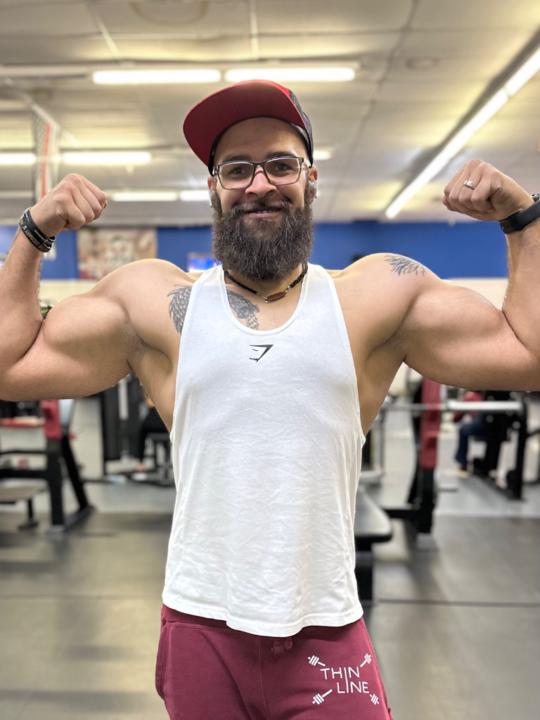
Helping build strong, capable moms and dads who have the energy to keep up with their kids for life.
Strive to be Better Than Yesterday!
Active 28d ago
Joined Aug 19, 2025