Activity
Mon
Wed
Fri
Sun
Aug
Sep
Oct
Nov
Dec
Jan
Feb
Mar
Apr
May
Jun
What is this?
Less
More
Owned by Sissy
I help overwhelmed humans untangle ideas and build rhythms that actually fit real life. I know this chaos well — I’m a mom of seven.
Memberships
THRIVE After 40: Get Sexy Back
40 members • Free
Cooking with Ollie
251 members • Free
Recurring Revenue Lab
807 members • Free
HomeSkool Help Desk
62 members • Free
wee
28 members • Free
Boss Mastermind™
31 members • Free
Parenting Support Skool
202 members • Free
Cult of Psyche
3 members • Free
Upcycled Sewing Rebels
2.1k members • Free
25 contributions to Oasis Builders
🔥
Jan 26 •
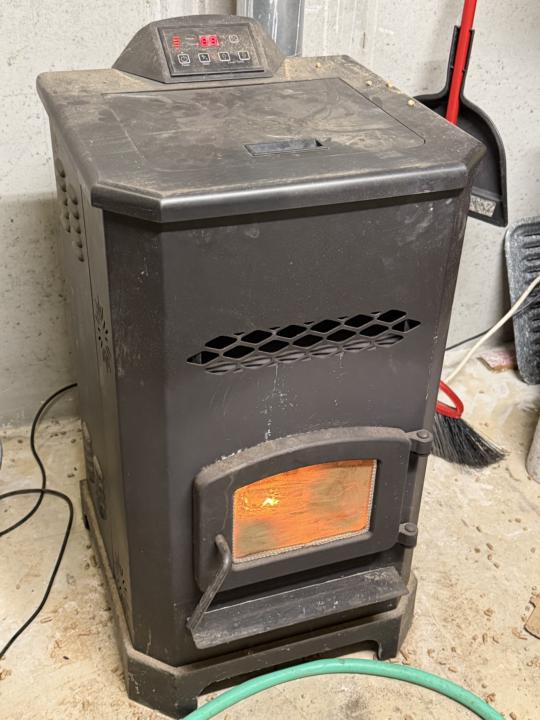
Does anyone use a pellet stove?
This unit is in the garage on the lower level. It keeps the garage warm and flows heat up the steps. 40F outside cost about $6 a day, when under 20 outside it counts about $10 a day.

5 likes • Jan 26
@Jim Flach we also read that they only need 5 inches of clearance from a wall
4 likes • Jan 26
@Jim Flach he was talking about venting it.
3 likes • Jan 24
@Evelene Sterling thank you
3 likes • Jan 24
@Jim Flach I need to get better at SMART goals. Thanks for the reminder.
🔥
Jan 23 •
Winter Weather
For the folks in US climate zone 7 - 3, what do you use for heat when the power goes out?
1 like • Jan 24
Mr Buddy heater
1 like • Jan 24
@Jim Flach not bad. So far this year our low has been 7 degrees. This weekend it’s supposed to get down to 16. I saw a vidoe from Malta, MT (where I was born) this morning and it was -39 and blizzarding.
🔥
Jan 23 •
Lets have some fun
1️⃣ Post 4 GIFs in the same post that indicate: 1. Where are you from? 2. What's your favorite food? 3. What is your business? 4. What do you love to do? Respond back to at least 3 people guessing their answers. I'll pin the winner Sunday.
3 likes • Jan 24
[attachments]
🔥
Jan 18 •
Weed Summary at Jim's Oasis
Weeds: Walking Alongside Nature A weed is simply a plant growing where we, as gardeners, do not want it. That definition alone changes how we see the land. When I first started my Oasis, I stopped mowing my front yard. The neighbors were not excited about my new relationship with soil. 🙂 But I did it intentionally, for two reasons. First, I wanted to observe what was actually growing in a lawn that had been mowed for years after the house was built. Once I stopped mowing, the space transformed into a forager’s dream. Medicinal herb after medicinal herb emerged. Plants long dismissed as weeds were suddenly offering nourishment and healing. What had been labeled an unkempt lawn became a source of health, simply because I allowed nature to grow what it knew how to grow. There’s something important here: nature often provides what we need when we need it. For most of human history, we were foragers, eating what the land offered in that place and time. Second, I wanted to move the land toward food production. The soil was solid clay, especially after rain, with almost no water infiltration. Years of mowing had kept the plants in a constant state of stress, always replacing green growth for survival, and never given time to build deep roots. Shallow roots meant compacted soil and lifeless ground. When I allowed the plants to grow fully, their roots responded by reaching deep into the clay. This is nature’s way of healing compacted soil. Deep roots fracture clay, create channels for air and water, and begin the slow transition from mineral heavy ground toward living soil. At the end of the season, after harvest, I cut the growth low, covered the area with cardboard, and added mulch to prepare the ground to move further along in soil succession toward a forest floor type system. Nature always wants to move land toward becoming a forest. That’s the default trajectory. The plants we choose to grow every year simply need to align with different stages along that path. In year two, I still won’t plant my final crops. Instead, I’ll continue growing deep rooted plants although this time ones more socially acceptable to the neighbors. This season, I’ll plant a yard of sunflowers, adding color and joy while still serving nature’s goal of converting clay into healthy soil. Alongside and under the sunflower canopy, I’ll plant daikon radishes and mangel beets, for both myself and the chickens, along with chicory and other deep-rooted plants. Each chop-and-drop cycle will protect the soil surface with foliage, feeds, decomposition, leaves above ground as the roots die back underground adding channels of organic matter, energy and housing for soil life. This system will steadily transform high nutrient clay into a humic smorgasbord, ultimately a living ecosystem. This is what it means to walk alongside nature. Ask: What does nature want here? Give it more of that. And nature will give you more of what you want.
1 like • Jan 18
I love your approach to gardening. I was so pissed when my husband bought a tiller.
1 like • Jan 18
@Jim Flach Luckily, it didn’t fit when we moved so he sold it. I use the cardboard method you mentioned.
1-10 of 25
@susan-eaton-4548
Not quite a domestic goddess,a little feral and more than a little chaotic.Owner of The Cozy Chaos Rebellion: a hangout for overwhelmed creatives.
Active 148d ago
Joined Dec 22, 2025
New Mexico