Activity
Mon
Wed
Fri
Sun
Aug
Sep
Oct
Nov
Dec
Jan
Feb
Mar
Apr
May
Jun
Jul
What is this?
Less
More
Owned by Stew
Veteran - Stew Smith (former Navy SEAL) helps military, law enforcement, and firefighter candidates and recruits succeed with coaching and programs.
Memberships
Men Living For Greatness
14 members • Free
Skoolers
166.9k members • Free
86 contributions to Stew Smith Tactical Fitness
4d •
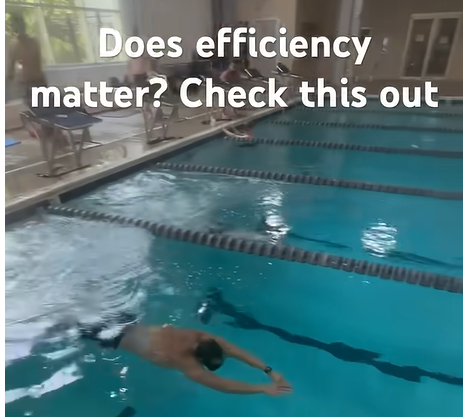
Running Faster is Different Than Swimming Faster in Effort
You Cannot Pull More / Kick More to go Faster with the Combat Side Stroke (CSS) Recently, I had a coaching ah-ha moment while explaining to a few land athletes why swimming faster isn't the same as running faster. I was watching them take the PST swim portion of the 500 yd in a pool. I had taught them the stroke process (pull-breathe-kick-glide), and both were doing 50 seconds, 50 yards in 5-6 strokes to get across the pool. That is what I try to get people to do (or even fewer strokes). But when they were being tested, the adrenaline and the sense of speed they knew on land took over, and the glide phase was ignored. It now takes them 10-11 strokes to cross the pool, doubling their effort and reducing their goal pace after 200yds. They were too tired to maintain the pace of a yard/second. See full article here: https://www.stewsmithfitness.com/blogs/news/running-faster-is-different-than-swimming-faster-in-effort
2
0

8d •
Re: Cardio & Calisthenics
@Stew Smith in the 30 day beginner plan (Day 5) You have listed crunches & plank poses for 5 minutes. Is that correct? My apologies if this is not the place to ask this question.
1 like • 7d
Well you can mix it up with core work, crunches, plank poses (Left/right/regular) and variety for 5 minutes. Do them slowly too with isometric holds. Easy to eat up 5 minutes
7d •
The Never Quit Stretching Video
@Stew Smith that is a brilliant series of stretches. I’m familiar with most of them from having done yoga, but that particular series you’ve put together is great because it focuses on: - Thoracic mobility - Hip mobility - Ankle mobility - Range of motion and muscle tightness I hope everyone that is in here realizes how great of a series of stretches that video walks one through.
1 like • 7d
Thanks - we do these across a basketball court after doing the 5 sets of 5 min bike + 5 min stretch/foam roll/massage tool workout - We call is Mobility Day
10d •
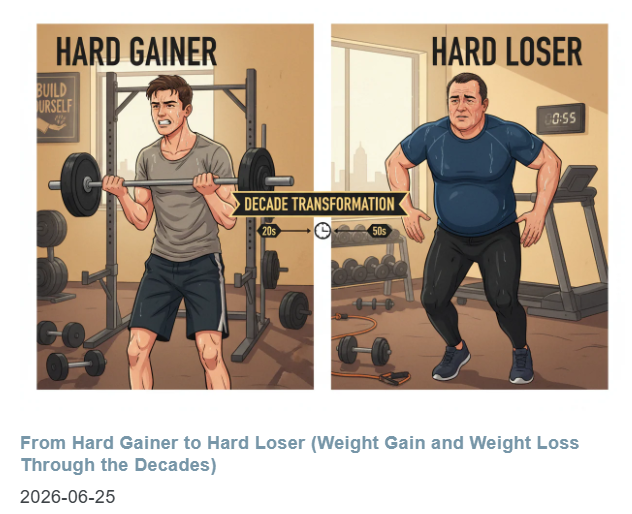
From Hard Gainer to Hard Loser (Weight Gain and Weight Loss Through the Decades)
June 25, 2026 • Stew Smith When Losing Weight Is a Little Harder to Do Than It Used to Be It can feel unfair. You go from being able to eat an entire pizza in your twenties without gaining an ounce to feeling like you gain weight just by looking at a pizza in your forties. Here is the question I have been trying to figure out for the last 20+ years: What gives and how do we help make this inevitable process more of a gentle slope through middle age and beyond? See full article at https://www.stewsmithfitness.com/blogs/news/from-hard-gainer-to-hard-loser-weight-gain-and-weight-loss-through-the-decades
12d •
Looking at General Fitness Tests in the Military
Watching the evolution of military fitness tests has been a lesson in patience, but the end result is much better than it every was in previous generations. While there are dozens more fitness tests throughout the tactical professions, these are the 10 basic exercises of every branch of the military. You can see the similarities, subtle differences, and vast differences between the branches of our military: Army – AFT: hex bar dead lift, HR pushups, Sprint-Drag-carry, plank pose, 2 mile run Navy: PRT - Pushups, Plank pose, 1.5 mile run Air Force: PFA - 2 mile run, waist-to-height ratio, pushups (HR optional), choice – situp, crunches, or plank pose. Marines: PFT - Pullups or Pushups, Plank pose, 3 mile run Coast Guard: PFT - Pushups, plank pose, 1.5 mile run, or 12 min swim, or 2000m row Space Force: 2 mile run or Beep Test (20m shuttle), pushups, choice – situp, crunches, plank pose. 10 Total exercises: dead lift, pushups/HR pushups, sprint-drag-carry, situps, crunches, plank pose, 1.5-3 mile run, shuttle run, 12 min swim, 2000m row, and waist-to-height measurement (not really an exercise). *Not mentioned are the Combat Fitness Tests of the Marines and Army - these will add another 10 exercises: (see below) The combat arms, special operations fitness tests, and the active duty special ops fitness tests add another dozen exercises to the list the shared exercises tested throughout the branches of service. 15-20 years ago there were little differences as the tests were pushup, situps, and run for each of the groups (add pullups for Marines). You can see the changes are conforming to the physical challenges of the job of each of the branches of service. Marine Combat Fitness Test: Movement to Contact A timed 880-yard (two laps) sprint designed to simulate the physical exertion of rapidly moving toward an objective under combat conditions. Ammunition Can Lift A test of upper body muscular endurance where Marines must lift a 30-pound ammo can from shoulder height to full overhead extension repeatedly for 2 minutes.
5
0

1-10 of 86
@stew-smith-2464
Stew Smith Tactical is a fitness training company focused on programing for success in military, special ops, police, and firefighting communities.
Online now
Joined Nov 17, 2025
Severna Park MD