User
Write something
Sunday Night Swim + LIVE QA is happening in 7 days
Fatigue or Failure? How Do You Train?
For nearly 45 years of training, I have heard conflicting information about reaching failure when lifting weights or even doing calisthenics. Either you push until you fail, or you avoid failure by leaving that last rep undone. Throughout my years of being coached and training on my own, the subject of pushing to failure (or beyond) with heavier weights or higher reps has been either the goal to achieve or something to avoid. This study helps us settle the debate, but there is still a place for both options in training. Depending on what decade you started training, the concept of fatigue during strength training often carries a negative connotation or is encouraged. Many lifters worry that pushing themselves too hard will hinder their progress, or that they won’t see progress until they fail on their last rep of a set. However, this fear of failure may be holding them back from maximizing gains, or pushing failure could be affecting energy levels for later tactical applications. Athletes involved in multiple sports or tactical training for various physical activities do need to pay careful attention to fatigue, as it can affect their overall performance and ability to juggle different training demands. For these individuals, missing out on some muscle growth is a reasonable trade-off for broader tactical athletic development. The Role of Fatigue in Maximizing Muscle Growth Many start to lift weights to get stronger and bigger muscles. If your primary goal is to build muscle, steering clear of training methods just because they generate more fatigue is counterproductive. The idea that fatigue is the main limiting factor in muscle growth is not supported by research. In fact, studies consistently show that higher training volumes and sets performed close to failure lead to greater gains. Avoiding these effective strategies out of fear of fatigue could mean missing out on significant progress. Success when dealing with failure in workouts requires the active pursuit of recovery. This means that how you eat, drink, sleep, and rest the remainder of your day will matter, as the stress you create in the gym, in life, and at work all need to be managed through proper recovery methods. In other words, the gym may not be the stress ruining your gains; your overall lack of recovery may be.
3
0
Fitness standard for 50+
Hi Stew love the Skool page so easy to navigate 👍 What kind of fitness standards would you recommend for 50+ population? None of us are former military just people who want to be ready for life😅 Thank you
From Lifespan to ‘Health-span’: Use the New Year to Focus on Both Health and Fitness
Fitness includes several components such as cardiovascular endurance, strength training, and mobility/flexibility. These are non-negotiables for continuing to live throughout your later years with your independence and ability to move and socialize still operating normally. Instead of just thinking about living longer, let’s use the start of a new year to focus on getting healthier, so we live better. More than any other time each year, the New Year is a popular time to focus on a “start fresh.” Temporal landmarks like New Year's Day, Mondays, birthdays, or the change of seasons are standard starting lines for many of us when we have a goal to work towards and bad habits to break. A New Focus on Fitness – Science Says Fitness Matters (Even More than Weight) A recent study published in the British Journal of Medicine, Cardiorespiratory Fitness, BMI, and Mortality: A Systematic Review and Meta-Analysis, shows that, regardless of body weight (obese, overweight, or normal), fitness matters more for all-cause mortality. They measured weight, BMI, and fitness of six groups: normal weight – fit, normal weight – unfit, overweight-fit and overweight-unfit, and obese-fit and obese-unfit. Their findings: The analyses revealed that individuals classified as fit, regardless of their BMI, did not have a statistically significantly higher risk of cardiovascular disease or all-cause mortality compared to normal weight-fit people. At the same time, all unfit groups across different BMI categories exhibited a two- to threefold higher risk of cardiovascular disease and all-cause mortality compared to their regular weight-fit counterparts. About Body Mass Index (BMI) – Now, you may be saying, but BMI is flawed! Sure. BMI is not the best indicator for distinguishing normal weight, overweight, and obesity because it is simply a height-to-weight ratio that does not account for differences in body fat/muscle composition, age, sex, or other factors. Before you discredit this entire study because of the BMI issue, remember that it measured fitness levels among people of different sizes. Some had more muscle and were considered fit in the overweight/obese group, while others were deemed unfit in the normal weight group. Still, BMI helps place people of differing sizes (height and weight groups) and focuses on measuring each group's fitness. In the end, fitness matters more than BMI, so the goal is to exercise, get in shape, build muscle, and lose fat.
Never Quit Stretching Video (in Classroom) FREE this week!
After a stressful month of the Holiday Season, one of the most important things to do is hit the RECOVER button and relax and de-stress. Instead of going hardcore into January goal-setting, take a week or two to de-load, sleep better, eat better, and pull back from the hardcore. OR if you are not into training and want to be, start this week with easy walking, stretching, and the same recovery from the prior month of craziness. You will be better equipped to chase a fitness goal after some de-load, de-stress, and recovery time. That is why I am giving away my Never Quit Stretching Video. Trust me - it is more difficult than it sounds. You will find out just how badly you need to add flexibility and mobility to your life after watching this video! Enjoy - Click the Classroom link above, and you will be able to download the video. https://www.skool.com/stew-smith-tactical-fitness-1847/classroom
Question - Bakers Cyst
Just curious if anyone else has ever had to deal with this issue. It’s behind my left knee. Not painful, not causing any mobility issues. Just noticeable when I’m stretching. Also curious if you’ve found any remedies for it besides having to have it drained.
0
0
1-17 of 17
powered by
Stew Smith Tactical Fitness
skool.com/stew-smith-tactical-fitness-1847
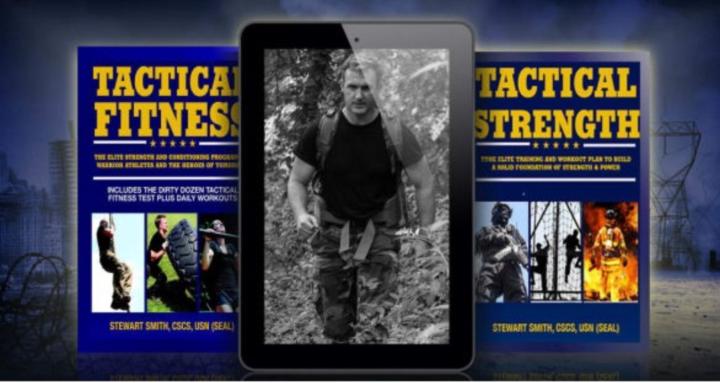
Veteran - Stew Smith (former Navy SEAL) helps military, law enforcement, and firefighter candidates and recruits succeed with coaching and programs.
Build your own community
Bring people together around your passion and get paid.
Powered by