
Write something
12d •
Running Faster is Different Than Swimming Faster in Effort
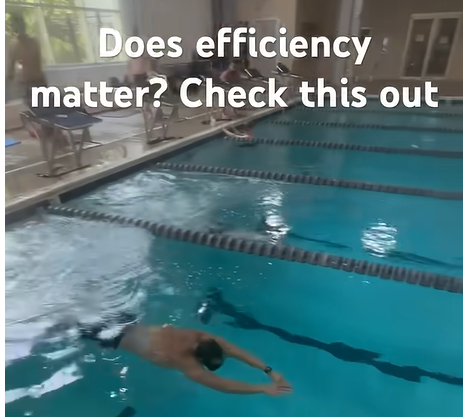
You Cannot Pull More / Kick More to go Faster with the Combat Side Stroke (CSS) Recently, I had a coaching ah-ha moment while explaining to a few land athletes why swimming faster isn't the same as running faster. I was watching them take the PST swim portion of the 500 yd in a pool. I had taught them the stroke process (pull-breathe-kick-glide), and both were doing 50 seconds, 50 yards in 5-6 strokes to get across the pool. That is what I try to get people to do (or even fewer strokes). But when they were being tested, the adrenaline and the sense of speed they knew on land took over, and the glide phase was ignored. It now takes them 10-11 strokes to cross the pool, doubling their effort and reducing their goal pace after 200yds. They were too tired to maintain the pace of a yard/second. See full article here: https://www.stewsmithfitness.com/blogs/news/running-faster-is-different-than-swimming-faster-in-effort
2
0
May 30 •
Nobody Smiles During Hell Week:
The Importance of Smiling and Laughing During Stressful Times While there are moments to be serious and focused on getting things done, there will be times when laughter and smiling can help you mitigate the hormonal effects of high physical and mental stress. Here is a video intro I did the other day prior to a LIVE QA session about the topic, as Hellweek was getting underway: CLICK VIDEO BELOW Could a Smile Be the Simplest Biohack for Feeling Better? It sounds almost too easy to be true, but science suggests that even a deliberate smile can give your brain and body a small boost. What if one of the fastest ways to shift your mood was already built into your face? Smiling may seem trivial, even cheesy, in a world obsessed with supplements, cold plunges, and high-performance wellness rituals. But this simple human reflex may be one of the most underrated mind-body tools we have. Research suggests that smiling, even when it’s intentional rather than spontaneous, can gently nudge the brain toward a more positive emotional state. The effect isn’t massive, and it’s not a cure-all, but it may be real enough to count as a legitimate micro-biohack. It may be the difference between quitting or keep on going when tired, stressed, and in a difficult situation. The idea is rooted in something scientists call the facial feedback hypothesis: the notion that facial expressions don’t just reflect how we feel, they can also help shape it. In other words, the act of smiling may send signals back to the brain that subtly reinforce happiness, reduce stress, or help the body recover more quickly from tension. Add laughter to the mix, and the effect may extend beyond mood into stress regulation, social bonding, and overall resilience. That doesn’t mean you should grin your way through burnout or pretend serious emotional pain can be fixed with a cheesy smile. But if you’re looking for a low-effort, no-cost way to support your mental and physical state, smiling may deserve more respect than it gets.
5
0
Apr 24 •
Uncover the Power of Identifying Your 'Why' Before Training - How Do You Find Your Why?
Finding your "why" for long-term, high-intensity goals like special operations training involves connecting with a deeply personal, service-oriented purpose beyond just earning a title. While titles are nice, they are not enough to sustain you through the long days and nights of challenges you will face. You may have a passion and desire you cannot yet verbalize. That is fine to be drawn to something for unknown reasons, but you need to dig deep to figure it out. Here are several ways to consider when you are trying to bring out your why: Key Strategies to Find Your "Why" (and Develop It) (See more - click here for full article)

Apr 15 •
Soft Sand Running Workouts and Alternatives When No Beach is Available
At BUD/S, running in the sand at the beach is one of the toughest things to get used to, especially if you are working on a running weakness. The student body of each BUD/S class comes from all over the United States, and most do not have the ability to train on the beach like some will. This requires additional running ability (not just average) and plenty of practice with other types of running that make it harder. The good news is that the 4-mile timed runs that are tested each week are on a hard-packed, low-tide beach. However, many of the class runs will be done directly on the soft sand, over dunes, and on very soft dirt roads, which they call the Demo-Pits road. Depending on what phase you are in, you may find rucking on this terrain ever more challenging. It pays to do both in your BUD/S prep running/rucking program. For more ideas check out: https://www.stewsmithfitness.com/blogs/news/soft-sand-running-workouts-and-alternatives-when-no-beach-is-available
6
0

Apr 2 •
New Article on SEAL Training Success
Identify as a BUD/S Student Who Never Quits - It is Not Even a Thought The Evolution of Success When Challenged with Hard Goals Recent studies on U.S. Navy SEAL training - Basic Underwater Demolition/SEAL (BUD/S) reveal that psychological, mental, and identity traits often serve as better indicators of success than physical strength alone. Research shows that candidates who cultivate a new identity as a successful BUD/S student quickly, maintain their humor, and practice a "never quit" mindset are less likely to give up, even in the face of pain, cold, or exhaustion of the day-to-day grind that is SEAL training, thereby significantly increasing their chances of completing the training. READ MORE... https://www.stewsmithfitness.com/blogs/news/identify-as-a-bud-s-student-who-never-quits-it-is-not-even-a-thought
5
0
1-9 of 9
powered by
skool.com/stew-smith-tactical-fitness-1847
Veteran - Stew Smith (former Navy SEAL) helps military, law enforcement, and firefighter candidates and recruits succeed with coaching and programs.
Suggested communities
Powered by