Activity
Mon
Wed
Fri
Sun
Jan
Feb
Mar
Apr
May
Jun
Jul
Aug
Sep
Oct
Nov
Dec
What is this?
Less
More
Memberships
Creative 3D Community
6.1k members • Free
8 contributions to Creative 3D Community

Jul '23 •
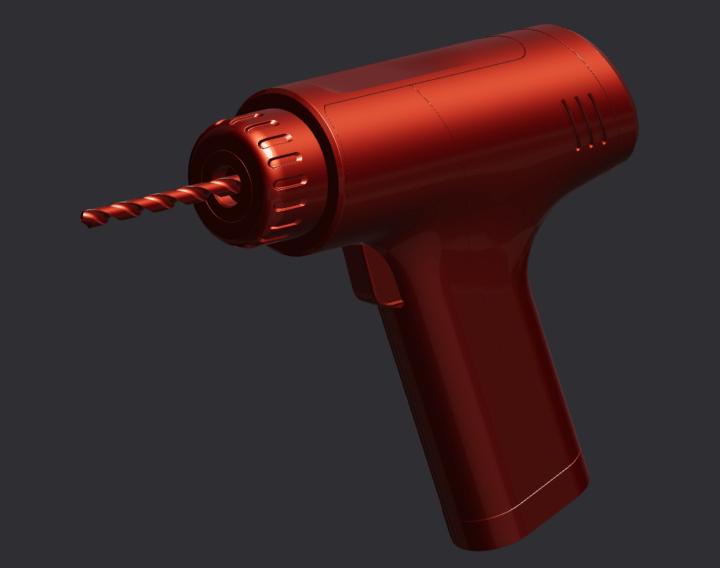
New Industrial Design Tutorials incoming.. 🚀
I will show you some really cool & interesting surface techniques and also how to create that drill + all the cuts. Stay tuned...)

1 like • Jul '23
@Kevin Sutherland what a great site
Jun '23 •
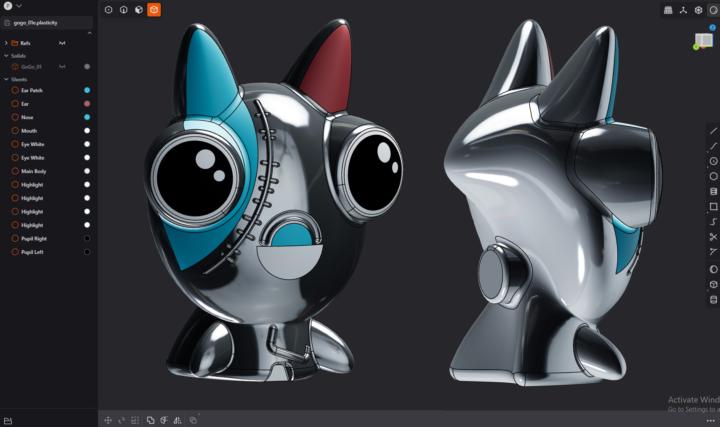
lofting practice
one of my sons mini figures that they used to collect when they were kids (GoGo's)
1 like • Jul '23
@William Vaughan thanks William 👍

Jun '23 •
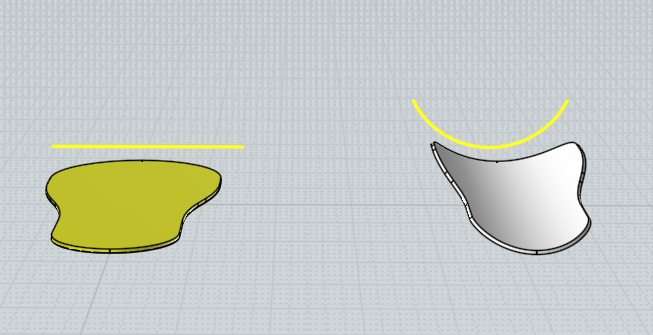
Call for help! Plasticity feature request
Let's give some love to this request! for me and I think for other professionals who use free form modeling, I think it is an indispensable feature! https://plasticity.canny.io/feature-requests/p/a-deform-tool @Nikita Kapustin maybe through your following as an industry expert and influencer you can help us push the development of this feature What do you think? do you agree? would you use this feature to help you in free form modeling In the screenshot there is an example of the function, present on Moi3D
2 likes • Jun '23
looks similar to the project curve curve command https://www.youtube.com/watch?v=pcMneHEskfU

Jun '23 •
Some Positive 3D Writings
The below was stolen from Andrew Prices' newsletter. I though it would be good to share a positive opinion after reading too much doom and gloom about AI technology disrupting and reimagining the creative industry. Andrew Price is 'Bender Guru' and I think the owner or one of the owners of Poliigon. He seems to know his 3D and I think its worth subscribing to his newsletter for 3d tech updates and news etc. Anyway, here's his latest...... G’day 3D aficionados, The big news for this week in 3D was Apple’s announcement of the Vision Pro. Or to put it another way, the tech company with the most proven track record for disrupting the tech we use everyday, has said “VR is finally ready for the masses.” So rather than my usual roundup of assorted stories from the week, I’ll focus solely on the topic of “spatial computing”, and what it might mean for the future of 3D. The idea of headsets dethroning mobile sounds pretty far fetched (especially if you’ve used any of the janky headsets of yesteryears). But it’s not that much of a leap in logic to assume that A: headsets will get smaller, lighter, more capable and more affordable and B: a screen built for your eyes might be more comfortable than a small vertical screen in your hand. If A and B are true, headsets can and probably will replace mobile. Which means a massive shift in the content we consume and create. When Jobs unveiled the iPhone in 2007, nobody predicted it would lead to the demise of the taxi industry by enabling ridesharing apps. Our forecasting headlights only illuminate so much of the road in front of us. But we can extrapolate some pretty logical conclusions. 5 Ways VR Might Change 3D Some short and long-term predictions (I’ll let you decide which is which). 1. 3D movies come back for good - if the public start enjoying movies via headset, 3D movies will finally be appealing to consumers. 2. Nerfs and 3D models replace photos - Sounds hyperbolic, but I really believe this. If ecommerce moves from mobile to headsets, customers will want to “see” their food in front of them before ordering, stand in their hotel room or choose their airplane seat virtually. Anywhere a photo is used on mobile today would be better served as a 3D representation. 3. 3D software goes VR - A no brainer, considering Gravity Sketch is already used in concept pipelines. Given the UX challenges of VR, I’d bet more strongly on native apps like Substance Modeler converting users, rather than legacy apps (like Blender or Maya) creating a decent VR experience (especially in the short term). 4. Volumetric video surges in development - If audiences want the freedom to explore a recording (rather than view it from a stationary camera) volumetric recordings will become a massive industry (with technological breakthroughs and acquisitions). 5. “Realtime” becomes the standard - Pre-rendered content will be strictly for “old media” like movies. When everything interactive needs to be realtime, it will be the default form of 3D.
1 like • Jun '23
"Bender Guru" ? 😂
0 likes • Jun '23
@Jason Wilde it's 'Blender' not 'Bender' - I think he's 18+ 😎

Jun '23 •
Surface imperfections
How important is it to add surface imperfections to product rendering? Is it necessary? What is the ideal condition to put surface imperfections to the render?
2 likes • Jun '23
always found it interesting that cg artists will add imperfections for realism whilst photographers will do the exact opposite to produce the cleanest images possible (where commercial product imagery is concerned). I think trying to recreate those natural flaws and variations inherent to a particular real world material are the things to focus on (instead of finger prints and dust). Try examining and emulating real world examples of product photography
1-8 of 8