Activity
Mon
Wed
Fri
Sun
Aug
Sep
Oct
Nov
Dec
Jan
Feb
Mar
Apr
May
Jun
Jul
What is this?
Less
More
Owned by Sofia
For people tired of thinking about the same goal without moving it forward.
Memberships
GOOSIFY: Skool Made Fun
13.1k members • Free
The Rooted Life Collective
10 members • $9/month
AI Online Educators & Coaches
3k members • Free
Panda for Skool CRM +
425 members • $36/month
Living Soil Community
1.3k members • Free
Career Professionals Network
97 members • Free
Health Upgrader-
111 members • Free
Skool Growth Free Training Hub
8.8k members • Free
New Season
76 members • Free
34 contributions to Inspired Life, Empowered Being
28d •
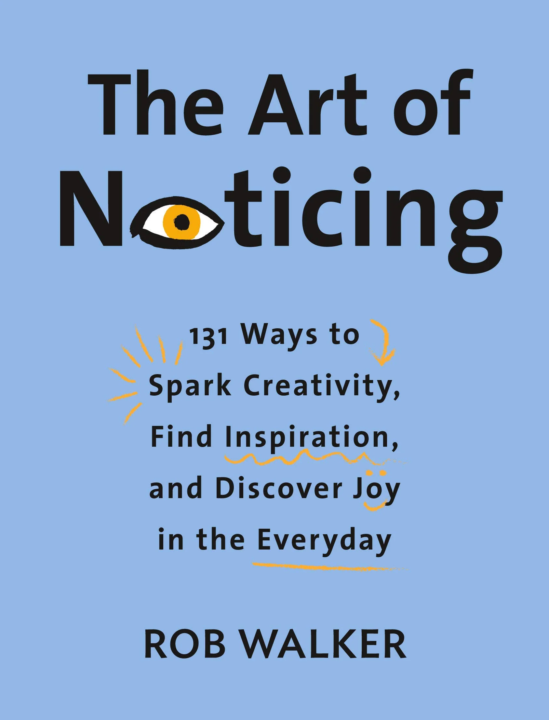
The Art of Noticing (Day 1: Conduct a Scavenger Hunt)
𝐃𝐀𝐘 1 𝐂𝐇𝐀𝐋𝐋𝐄𝐍𝐆𝐄: 𝐂𝐎𝐍𝐃𝐔𝐂𝐓 𝐀 𝐒𝐂𝐀𝐕𝐄𝐍𝐆𝐄𝐑 𝐇𝐔𝐍𝐓 Most of us move through our days on autopilot, noticing only what's familiar or immediately relevant. This scavenger hunt is designed to interrupt that pattern. By intentionally searching for specific objects, colors, shapes, textures, or experiences, you'll train your attention to pick up details that would normally go unnoticed. So...pick a goal and tell us what you've found! Super plus if you can take a picture! Some examples: - Something yellow - A heart shape - A reflection - Something older than you - Something handmade - A plant growing in an unexpected place - Observation-Focused - Evidence that a human was here - Evidence that an animal was here - Something that has changed over time - A pattern that repeats - Something you have passed by many times but never really noticed - Creative - Something that looks like a face - Something that reminds you of your childhood - Something that symbolizes hope - Something that represents resilience - Something beautiful that most people would overlook - An object that could inspire a story - Something that seems out of place - A "hidden treasure" in an ordinary setting - People & Community - An act of kindness - Evidence of creativity - Something that tells a story about your community - A sign of hard work - Something that makes you smile What were you on the lookout for today and what did you notice? Thanks to @Steve Webb and his group 30daychallengers for introducing me to the book The Art of Noticing. His community offers one live 30-day challenge every month. It provides a space where we can turn good intentions into action and each day there is a daily prompt/action related to the month's challenge. This month's challenge is 30 days of sunlight, movement, and remembering what the real world feels like. There's access to previous challenges as well and the community is great about support!

🔥
1 like • 25d
@Bruno Militz I do try different things with my left. For me right now, with all the renovation work, I switch hands when my right hand or arm start to feel tired, so I paint with both hands, clean up with both hands, use the scraper with both hands... But as a way to remind yourself I would suggest using a trigger and an anchor. The anchor is a way for you to "make a contract" with yourself, you agree that you will do certain new habit right after a current routine you have. For example, if you brush your teeth after dinner, after getting to the bathroom, switch the light on, and putting the toothpaste on your brush, you can anchor using the left hand by stating "every night after I finish dinner and I put the toothpaste in my toothbrush I will brush my teeth with my left hand". That's your anchor. And then you set a trigger, something that will remind you of the new behaviour. Let's say you always keep your toothbrush on a cup in the right side of the bathroom sink. Your trigger could be that you move your cup and toothbrush to a different spot, to the left for example. So you tie your new behaviour to a current routine with your anchor, and you remind yourself about it with the chosen trigger.
🔥
1 like • 23d
@Bruno Militz you are welcome :)
Jun 13 •
Truth has consequences. So do lies/hiddenness/omission/self denial
This is part of a real life journal entry from this past week. A small glimpse (but not the full picture) of part of my thinking world. Good times. ha! But here are some questions for YOU: What's something that you held back on or postponed due to not wanting to face the truth earlier on? What were the factors at play and what were the effects? Is there something you're holding back on now? AND Have you ever faced a difficult truth that ultimately improved your life once you accepted it? _______ part of entry_____________ "There is nothing covered that shall not be revealed and nothing hidden that shall not be known". "Until you make the unconscious conscious, it will direct your life and you will call it fate." We hide because we're ashamed, because we're afraid of consequences, because we're afraid of how others may react, because we're afraid of loss, because we're afraid we'll finally have to face ourselves and own our own desires and wants and needs and so we end up sitting in darkness feeling lost, feeling the weight of our own prison. We fear that the thing that we're hiding about ourselves says something irredeemable and puts us in a less than perfect light or a less than expected light. We fear that exposure would lead to such drastic change that we won't know how to handle it. But the reality is that the truth exists, whether we hide it or not. We just end up complicating it more-ensnaring it in chains of our own doing without giving it room to actually breathe. To actually breathe...Breathe. When it has breathing room it can be looked at for what it is and we can also get curious about what's underlying it. We often only take a look at the lie or the undesired behavior and are so ashamed by it that we try to shut it down...but underneath that there can be something that's making it grow further (be there to begin with). If we're wasting so much energy on keeping things hidden from ourselves and others, we're denying ourselves the opportunity to see what's really there and that's denying our potential for growth, our potential for healing, our potential for real life transformation. Buying into our own bullshit. Ain't that some bullshit? Lord help us all. But me especially. Obvs.
Poll
8 members have voted
🔥
3 likes • 29d
Great journal entry @Georgiana D 🙂 Every decision comes with a cost, whether we decide to tell the truth or we decide to lie/hide/shut up...there is always a cost. Sometimes we see the cost right away, sometimes the cost shows up in the future and we cannot see it. No matter what we decide, we just need to evaluate if the cost is worth paying. And that is the tricky thing, do we fully understand the cost of what we are choosing?
Jun 11 •
Our brain is not a muscle (nerding out alert)
Our brains/bodies are SOOOOOO frickin' cool!!! I woke up at my usual time this morning (4a.m.), got ready for the gym and read and journaled until about 6a.m.. This is the usual routine. Although fully caffeinated, at 6a.m. a wave of tiredness hit me and I decided to not go to the gym and take a nap before work instead and slept until 8. (this is unusual--I usually force myself to go even if I'm tired)...(side thought: In college I used to have redbull and it would be funny because within an hour of having it, I'd still be able to go to bed...good times). Anyways, this whole situation got me wondering about the why and I think that the mental load of the activities (and the CONTENT and EMOTIONAL LOAD/MANAGEMENT of what I was thinking/writing about) this morning kind of depleted me just a bit. And this made me think of the lower amount of energy investment I've been putting into things as of late. (I was writing about truth which took me down a cool path but at the end (and it's not really the end), I started digging into things more and that ended up being it's own journey that I know will be going on for a long time. But, I knocked myself out in the process. ha. So, I woke up and started looking up things about the brain because I'm often energized by learning new things and engaging in conversations (my whole job is dependent on me being alert/engaged) but this time it wiped me so I wanted to know the science behind what was happening....nerding it out ). The video talks about HOW to address/ manage energy! :) So here are some fun facts for you (that you may have already known, but they're interesting anyway). It's okay if you don't read it all....I'll be using this moving forward so I and my clients will be benefitting! :) BUT, it might be worth reading to gain an even deeper understanding of what's happening if you feel depleted! :) (Thanks to notebooklm for condensing a bunch of different articles and spitting out some cool facts about the 𝐧𝐞𝐮𝐫𝐨𝐛𝐢𝐨𝐥𝐨𝐠𝐲 𝐨𝐟 𝐰𝐢𝐥𝐥𝐩𝐨𝐰𝐞𝐫 𝐚𝐧𝐝 𝐧𝐞𝐮𝐫𝐚𝐥 𝐫𝐞𝐠𝐮𝐥𝐚𝐭𝐢𝐨𝐧)
Poll
6 members have voted
🔥
2 likes • Jun 12
I love this nerdy stuff @Georgiana D ! :) What stood out to me is how often we treat energy as if it's only physical, when emotional and mental load can be just as draining. I've seen this come up a lot with people who are frustrated with their consistency. They think they need more discipline, motivation, or a better system, when sometimes they're carrying around a heavy decision, unresolved stress, or an emotional load that's quietly consuming energy in the background. That's one of the reasons I'm not a big fan of one-size-fits-all productivity advice. The principles are universal, but the application is individual. Some people do their best work at 6 a.m. Others hit their stride in the evening. Some are drained by constant decision-making, while others are more affected by emotional stress or context switching. The more I learn about energy, the more I see that understanding what drains and restores it is often more useful than trying to force yourself into someone else's routine.
Jun 10 •
Peaceful moments
Nature is perhaps one of the more externally calming forces for me. The "pauses" that I take often involve nature in some way. I also have my daily 4a.m. quiet time that helps with grounding the day in gratitude and reflection but nature is usually where I feel the most present. Deep conversations with people that I connect with can also have some similar (but different)effects. These photos/video are all from this past week.. (While I'd recommend just sitting in nature and just taking it in and not thinking about documenting it as there are so many benefits to just being present in nature, this tedtalk talks about some of the cool things that have been discovered as a result of taking pictures) What are the things (internal or external) that are most peaceful for you?
🔥
3 likes • Jun 11
Nature is big for me too, seeing and listening to the ocean always calms me down, walking in the forest, walking alone, sitting in my sofa reading a book listening to jazz relaxes me, drawing, and I have to get back to more consistent meditation and yoga, now with all the house work and moving is a challenge but I'll get there!
Apr 11 •
"I'll start when I'm ready"
Saw this quote in another community and it was such a good reminder as it applies to soooooo many areas of life. :) "I"ll start when I'm ready" sounds responsible. Thoughtful. Maybe even wise. But often times it's more likely to be self-protection which then leads to procrastination and timidity in action. This 'waiting' for the perfect moment can actually erode self trust over time if we don't take action. And that's a disappointing feeling. We rarely feel 100% ready (but that doesn't mean that we're not ready)..Feelings, while valid, are not facts...They inform, but they don't need to drive. Motivation research shows us that action is often the thing that creates clarity and confidence (not the other way around). Growth almost always requires movement (rather than perfect preparation). Something to consider: There’s also a 𝗰𝗼𝗴𝗻𝗶𝘁𝗶𝘃𝗲 𝗱𝗶𝘀𝘁𝗼𝗿𝘁𝗶𝗼𝗻 at play: the belief that future-you will be braver, more disciplined, or more prepared than present-you. BUT!!!! Avoidance reinforces anxiety which makes us LESS likely to engage in the behavior. This is that erosion of self trust I mentioned earlier! (Check out @Sofia Martinez 's post that very much relates to this erosion of self trust: the-agreement-you-keep-breaking-with-yourself) Sometimes “I’m not ready” is valid, but I think that we need to be honest with ourselves and identify if /when that's actually the case. (Check out @Kate Galli 's post that is related--points out to some things that may get in the way of us taking steps towards goals!!: 6-aversion-factors-that-quietly-kill-your-progress) (The video is related to how to make stress your friend. Figured it would be helpful to put us in better positions for taking on positive risks! :) )
Poll
9 members have voted
🔥
3 likes • Apr 12
Thanks for the shout out @Georgiana D , I appreciate it! I agree with this a lot. “I’ll start when I’m ready” sounds reasonable, but in practice it’s one of the easiest ways progress gets delayed. That’s how a lot of meaningful goals end up stuck, because we keep waiting for a moment that never really comes. The problem I see with that is that over time it creates a pattern. We don’t move, so starting feels heavier the next time. And without realizing it, we’ve built a way of operating that favors pause instead of forward movement. And what we repeat, we reinforce. At the same time, I think it's also important to recognize the nuance because sometimes we’re not ready because something is genuinely missing. But a lot of the time it’s doubt showing up as caution. What helps us move forward is being able to tell the difference. If you can answer why you are not ready, you probably have a real constraint.
🔥
2 likes • Apr 13
@Wesley Penner thank you! Glad you found the hidden nugget 😀
1-10 of 34

🔥
@sofia-martinez-6614
I help people finally do the thing they've been putting off for way too long, so they don't get to the end wondering why they never tried.
Active 7h ago
Joined Jan 14, 2026
Spain