Activity
Mon
Wed
Fri
Sun
Mar
Apr
May
Jun
Jul
Aug
Sep
Oct
Nov
Dec
Jan
Feb
What is this?
Less
More
Memberships
Synthesizer
35.2k members • Free
KDP Publishing
555 members • Free
Royalty Guild. Amazon KDP Kit
217 members • Free
Publisher Sea - KDP & ADS
329 members • Free
Driven Publishers
3.9k members • Free
The Profit Formula Academy
84 members • Free
Publish & Profit Challenge
3.5k members • Free
All-In Etsy Master Community
1k members • $97/m
OPM Secrets
283 members • Free
10 contributions to KDP Publishing

🔥
13h •
Amazon Ads Costing You Too Much?
If your Amazon Ads spend feels out of control, the issue usually isn’t ads themselves—it’s not knowing your ACOS and your break-even point. Once you know this number, you can make smarter decisions instead of guessing. 🔢 How to Calculate Your Break-Even ACOS Start with two numbers: - Book price - Royalty per sale Example: - Book price: $9.99 - Royalty: $4.00 Calculation: - 4 ÷ 9.99 = 0.40 - 0.40 × 100 = 40% ✅ Your break-even ACOS is 40% This means: - Below 40% → profitable - At 40% → break-even - Above 40% → losing money on that sale 🎯 What To Do With This Number Once you know your break-even ACOS: - This is the number you should aim to stay under in each campaign - It becomes your decision-making filter for scaling or pausing ads ⚖️ Being Over Break-Even Isn’t Always Bad An ACOS above your break-even point isn’t automatically a failure. Higher ACOS can still make sense if: - Ads are increasing visibility - You’re seeing organic sales lift - The book leads to series, bundles, or audiobooks The key question to ask: Is my goal pure ad profitability, or am I okay investing in ads if total sales (ads + organic) are profitable? Intent matters. 🔧 How I Tighten My Ad Campaigns To avoid wasting money, I rely on campaign budget rules. My approach: - Set a low daily budget per campaign (typically $10–$15) - Create a rule that: This tells Amazon: - “Sell my book aggressively when I’m not losing money” - “Stop immediately when performance slips” ✅ Final Takeaway If you’re running ads without knowing your: - Royalty - Break-even ACOS - Clear campaign goal You’re letting Amazon decide how much you spend. Control the numbers, and the ads start working for you instead of against you.


3 likes • 11h
Thank you for clarifying this.
🔥
14d •
What Kept You Stuck Before You Started?
Most people in here are building (or planning to build) an online business. But let’s be honest—almost none of us started right away. 😱 Was it: - Fear of failing (or being judged)? - Not enough money? - Feeling like you didn’t know enough yet? - Being way outside your comfort zone? Now here’s the interesting part 👀 When you started thinking about writing your book… did the same thing show up again? Fear, overthinking, waiting for the “right time,” second-guessing yourself? 👉 Drop a comment: - What held you back then? - And did you notice any overlap when it came to starting your book? No wrong answers—patterns are where the breakthroughs usually start. **Funny side note I searched "stuck" in the GIFs and saw this image pop up and this is exactly why my son has a fear of the BIG POTTY. I'm actively in a potty training process and he only insists on using the kids potty**

2 likes • 5d
@Richard Dylan Hey Richard! Thank you for the kind words of encouragement! We're all in this together!
1 like • 2d
@Richard Dylan Would love to connect.
🔥
7d •
Think In Themes = More Books More Money 🤑
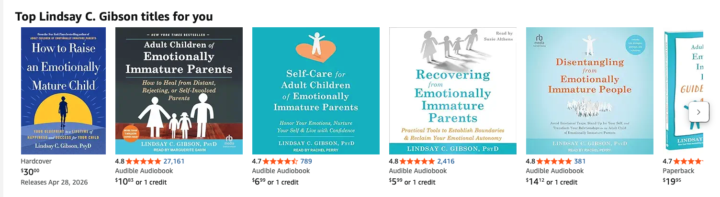
**Think In Themes** One of the biggest shifts successful self-published authors make is this: they stop thinking in *single books* and start thinking in *themes*.✨ A theme is the bigger problem your reader is trying to solve. Your first book is just the entry point. From there, you create supporting content that overlaps, deepens, or solves the next logical problem your reader will have. ✨It looks like this... - Book #1 solves the core problem - Book #2 supports it from a different angle - Book #3 goes deeper or more specific ✨ Eventually, books get **bundled** - Two existing books - One new title - New positioning - Same content, new asset This is how authors build **series**, **bundles**, and **long-term income**, instead of starting from scratch every time. 🤔 Think like this: - What does my reader struggle with *before* this book? - What do they still need *after* they finish it? - What related problem keeps showing up? Those answers become future books. You’ll notice in the examples shared (see images) that authors aren’t random. Everything connects. Same reader. Same theme. Different angles. **Your turn:** 1. Write down your first book idea. 2. List 3–5 branch-off ideas that could support the same reader. 3. Circle any two that could eventually be bundled into a new book with a fresh title. This is how you turn one idea into a publishing journey instead of a one-off book.
3 likes • 6d
I love this. Don't think about just publishing, but think about it long term, what value can you bring in the form of not solving one problem, but many. Love it.
0 likes • 5d
@Angel Conway How are you creating your journals Angel? I have a brand and a journal/planner is the way to go to add more value. I have Book Bolt but I'm not a designer at all.
🔥
7d •
500 Amazing Members - Let's Celebrate 🎉
I just want to pause for a moment and say thank you. Reaching 500 members is a huge milestone, and I’m truly grateful you chose to be here and learn more about Amazon KDP with me. This community keeps growing because of you, and I don’t take that lightly. If you’re new here and have never self-published before, your first step is the Future Author Energy mini course in the classroom. It’s short, action-oriented, and designed to help you get clear on your book idea before you overthink or get stuck. The goal is simple: when you finish, you’ll know exactly what book you’re moving forward with. If you already have an idea and you’re ready to take action, this is where Premium really shines. Premium members get instant access to the Book Challenge, which walks you step by step through the full DIY process of listing your first book for sale on Amazon—outlining, cover creation, formatting, and uploading your assets the right way. 👉👉 UPGRADE TO PREMIUM HERE Premium also includes access to weekly live workshops plus all replays, so you can learn at your own pace and never fall behind. If you’re looking for guidance, accountability, and momentum, this is where it happens—for $40/month. Again, thank you for being here and for helping make this community what it is. I’m excited about what we’re building together, and I can’t wait to see the books that come out of this group. 💛

1 like • 5d
Congratulations on this amazing milestone! All the best and lots more to come!
🔥
13d •
🔍 How to Spy on Competitor Books
Before you write, study what’s already selling. This is research, not copying. DO THIS: 1️⃣ Review Competitor Books Table of Contents Find the listing on Amazon and click the "Read Sample" option ... this will be available for most books and sometimes you can even get to peek at some chapter content. - How the topic is structured - What problems they lead with - What feels missing or weak - See what you could add to your book outline 2️⃣ Check the BSR Find the Best Seller Rank on Amazon and plug it in here: 👉 https://kindlepreneur.com/amazon-kdp-sales-rank-calculator/ This gives you a rough idea of demand and sales. 3️⃣ Read 3-star reviews That’s where readers say what they didn’t like. These reviews are the most valuable to get takeaways from. Those gaps are your opportunity. I'm sure @Bradley Deacon or @Gemma Coles could probably give pro tips on how to feed all 3 star reviews in AI and have it analyze the findings 😉 4️⃣ Scan the book description & A+ content Read this like a buyer, not an author. Notice the exact language they use to describe the problem, the emotional trigger they’re tapping into, and the transformation they’re promising on the other side. Pay attention to who the book is clearly written for (beginner, overwhelmed, burned out, stuck) and what outcome they’re really selling beyond the content itself. 5️⃣ Click the author name - If they have multiple books selling in the same niche, that’s a strong market signal. I use this as a quick way to spot additional topics worth pursuing—especially when an author is doing well across related subjects. Those overlaps often turn into perfect bundle opportunities later, which can increase visibility, value, and sales.

1 like • 7d
Thank you so much for this! Amazing advice here. I do like to read the 3 star reviews and it gives me insight on how I can do something better if I'm in that niche.
1 like • 5d
@Krista Brea You're absolutely right!
1-10 of 10

@sal-barbera-8135
Spicy Sal! Insurance/Financial Agent and Real Estate Investor!
Active 1h ago
Joined Jan 23, 2026
Powered by