Activity
Mon
Wed
Fri
Sun
May
Jun
Jul
Aug
Sep
Oct
Nov
Dec
Jan
Feb
Mar
Apr
What is this?
Less
More
Owned by Rosmari
Boundaries, communication & emotional intelligence—where clarity hits, patterns show, and the bullshit finally makes sense.
Memberships
Laughter Clinic
30 members • Free
the skool CLASSIFIEDS
1.7k members • Free
🇺🇸 Skool IRL: LA
320 members • Free
Making Cinema | Art & Craft
38 members • $9/month
Run By AI
13 members • $27/month
The Wheel, Full Stop.
8 members • $1/month
OnlyDansAI
18 members • $1/month
Direct Sales Mastery
18 members • Free
The Meta Control Room
102 members • $47/month
7 contributions to The AI Advantage
Jan 24 •
Hi everyone, I know I'm not the only one who's been banging my head against the wall trying to fix re-asking the same questions to different AIs and getting different answers every time.
After a lot of trial and error, I think I've finally found a simple fix. I wanted to share it in case it's helpful for anyone else (it should cost less than $10/m): Here's the simple guide: 1. First, create a quick Google Sheet with 5 columns: "Question," "ChatGPT," "Claude," "Gemini," "Winner + Why." 2. Next, whenever you get conflicting answers, paste all three responses and mark which one was actually right or most useful. 3. Finally, after 2 weeks, you'll start seeing clear patterns—like "Claude wins for creative writing," "GPT wins for code debugging," "Gemini wins for research summaries." The problem I kept hitting: asking ChatGPT something, not loving the answer, asking Claude the same thing, getting a different answer, then asking Gemini, and having NO SYSTEM to remember which one was actually better. Wasted hours re-testing the same questions because I had no memory of what worked last time. This tiny tracker changed everything. Now I just check the sheet before I even ask—saves me from the "which AI should I use?" paralysis. Anybody have thoughts on this? I really hope this helps save someone the headache! 🙏 Happy to chat more if you need a walkthrough. Thanks!

🔥
1 like • Jan 24
@Rehan Pathan Rehan, this is solid. I do something similar, but inside ChatGPT: I built 3 custom GPTs, test/retest based on the task, then keep the winning answer as my “standard.” I’ll also cross-check with Grok sometimes. What helped me most is treating memory like part of the workflow—I literally tell ChatGPT “save this” / “lock this in” so it carries decisions forward and stops re-asking me the same setup. Do you do anything similar—like prompting it to remember templates, rules, or “this is the new standard going forward”? Last thing: AI’s a tool, not a compass. No conscience—just output. I’ll use it all day… but I don’t outsource my judgment.
Jan 17 •
Hi everyone, I know I'm not the only one who's been banging my head against the wall trying to fix scattered AI project context and lost decisions.
After a lot of trial and error, I think I've finally found a simple fix. I wanted to share it in case it's helpful for anyone else (it should cost less than $10/m): Here's the simple guide: 1. First, set up a Notion database with 4 columns: "Project," "Decision," "Why It Worked," "Date." 2. Next, after each AI session (ChatGPT, Claude, etc.), spend 2 minutes logging what you decided and why. 3. Finally, tag each entry by project so you can search it when you come back weeks later. The problem I kept hitting: coming back to projects after a few weeks and having NO IDEA why I made certain decisions or which prompts actually worked. Felt like starting from scratch every time. This tiny system is helping me keep context without burning hours re-learning my own work. I really hope this helps save someone the headache! 🙏 Happy to chat more if you need a walkthrough.
🔥
2 likes • Jan 17
@Rehan Pathan thanks for the info😊

Jan 4 •
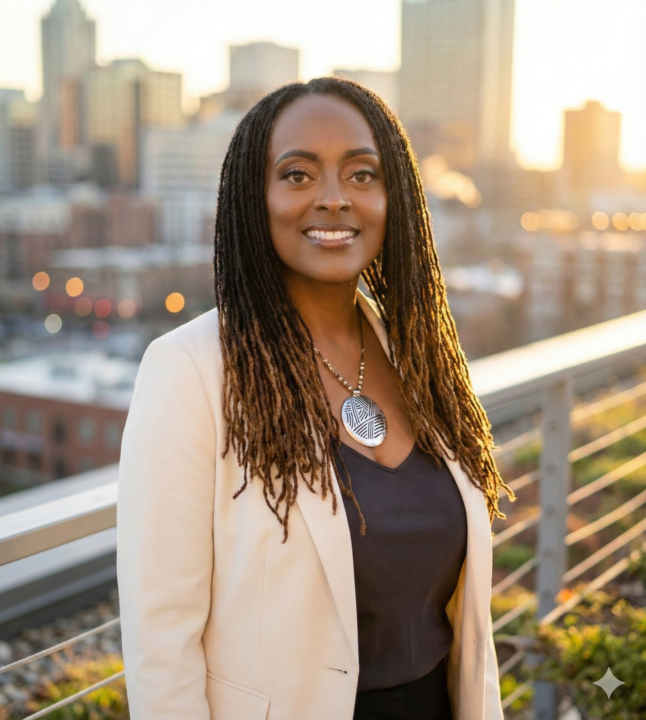
Prompt of the Day 💻✍🏾 Golden Hour Confidence
If you have a picture to upload, you can try this prompt of the day. You can use in ChatGPT, Gemini or any other image generation tool. If you use this prompt, please share your images below. Happy Prompting! Using this reference photo, keep the face and hair exactly the same. Create a clean outdoor portrait on a city rooftop at golden hour. The person stands near a low railing with a skyline in the distance. Mood feels confident, calm, and ready for success. Warm sunlight hits the face from the side, soft highlights on skin, gentle shadows for depth. Shot on a Canon EOS R6, 85mm lens, eye-level angle, shallow depth of field, sharp focus on the eyes. Background is softly blurred. Style is modern lifestyle photography with natural colors and a polished, realistic look.
🔥
5 likes • Jan 4
@Lenora Hughes Really cool prompt. 😊
🔥
2 likes • Jan 15
@David Darran 🙏😊

🔥
Jan 5 •
📊 Prompting Is Not a Trick, It Is a Thinking Skill
Prompting is often treated like a hack, a clever phrase that unlocks better answers.But this framing misses the point entirely. Prompting is not about manipulating AI. It is about making our thinking explicit. As AI becomes embedded in everyday work, prompting reveals itself as a core cognitive skill. It surfaces how clearly we understand a problem, how well we communicate intent, and how thoughtfully we reason through uncertainty. ---------- WHY PROMPTING IS MISUNDERSTOOD ---------- Many people approach prompting as a technical exercise. They look for formulas, templates, or magic words that guarantee better outputs. This mindset assumes the tool is the problem and the solution lies in learning how to control it. This leads to shallow engagement. When results disappoint, the response is often to tweak wording rather than examine assumptions. The prompt becomes a workaround instead of a reflection. AI does not reward clever phrasing nearly as much as it rewards clear thinking. When the underlying intent is vague, no amount of prompt engineering can fully compensate. Prompting feels difficult not because it is complex, but because it requires us to slow down and articulate what we actually mean. ---------- PROMPTING MAKES THINKING VISIBLE ---------- A good prompt externalizes thought. It forces us to define goals, constraints, context, and success criteria. In doing so, it exposes gaps that were previously hidden in our heads. When we struggle to write a prompt, it is often because we are unclear ourselves. The friction we feel is not with AI, but with our own ambiguity. This is why prompting can feel uncomfortable at first. It removes the illusion of understanding. AI reflects back exactly what we put in, without filling in missing logic on our behalf. Over time, this becomes a strength. Prompting trains precision. It sharpens reasoning. It turns vague ideas into structured inputs. ---------- FROM COMMANDS TO COLLABORATION ---------- Another common mistake is treating prompts as commands. Do this. Generate that. Fix this. While AI can respond to instructions, this approach limits its usefulness.
🔥
0 likes • Jan 5
👍🤖
🔥
Jan 5 •
Lenora’s Prompt
Upload your photo and copy and paste this prompt. ChatGPT Prompt: Using this reference photo, keep the face and hair exactly the same. Create a clean outdoor portrait on a city rooftop at golden hour. The person stands near a low railing with a skyline in the distance. Mood feels confident, calm, and ready for success. Warm sunlight hits the face from the side, soft highlights on skin, gentle shadows for depth. Shot on a Canon EOS R6, 85mm lens, eye-level angle, shallow depth of field, sharp focus on the eyes. Background is softly blurred. Style is modern lifestyle photography with natural colors and a polished, realistic look. GROK Prompt: Animate this image with subtle, realistic motion only. Keep the face, facial features, hair, and identity exactly the same — no changes, no stylization, no morphing. Add very gentle natural movement: • slight head micro-movement (almost imperceptible) • natural blinking • soft breathing motion in shoulders/chest • minimal hair movement as if from a light rooftop breeze Lighting remains golden hour, warm and directional from the side, with soft highlights and gentle shadows. Camera is locked and steady (no zoom, no pan, no shake). Background shows softly blurred city skyline, with faint atmospheric motion only (subtle light shift or distant blur movement). Style is photorealistic, modern lifestyle video — cinematic but natural. Motion should feel calm, confident, grounded, and timeless. Avoid: • exaggerated movement • facial distortion • AI artifacts • changes to age, expression, or proportions Output should feel like a high-end portrait coming gently to life. ⸻ 🔒 OPTIONAL (IF GROK HAS A “NEGATIVE PROMPT” FIELD) Paste this in Negative Prompt if available: No face warping, no eye shifting, no smile changes, no age changes, no stylization, no cartoon effects, no camera movement, no lighting changes, no identity drift. 🎬 RUNWAY ANIMATION PROMPT (FACE-SAFE) Prompt: Subtle, realistic animation of a photorealistic portrait.

🔥
3 likes • Jan 5
@Lenora Hughes beautiful. 💗
🔥
3 likes • Jan 5
@Lenora Hughes if you want to download without sound, just hit the volume icon before downloading at that way you can add your own music or VO if you like. Sometimes Grok tends to get over zealous and put some wonky sounds in there. 🤖
1-7 of 7

🔥
@rosmari-tinus-4807
AI Filmmaker | SWEARABULARY™
Sharp humor. Hard truths. Soft heart. linktr.ee/rosmaritinus
Online now
Joined Nov 6, 2025
Windsor, Ontario. Canada
Powered by