Activity
Mon
Wed
Fri
Sun
May
Jun
Jul
Aug
Sep
Oct
Nov
Dec
Jan
Feb
Mar
Apr
What is this?
Less
More
Memberships
Ruth Performance Lab
331 members • Free
1 contribution to Ruth Performance Lab

Mar 4 •
Density Progressions: The Missing Programming Variable
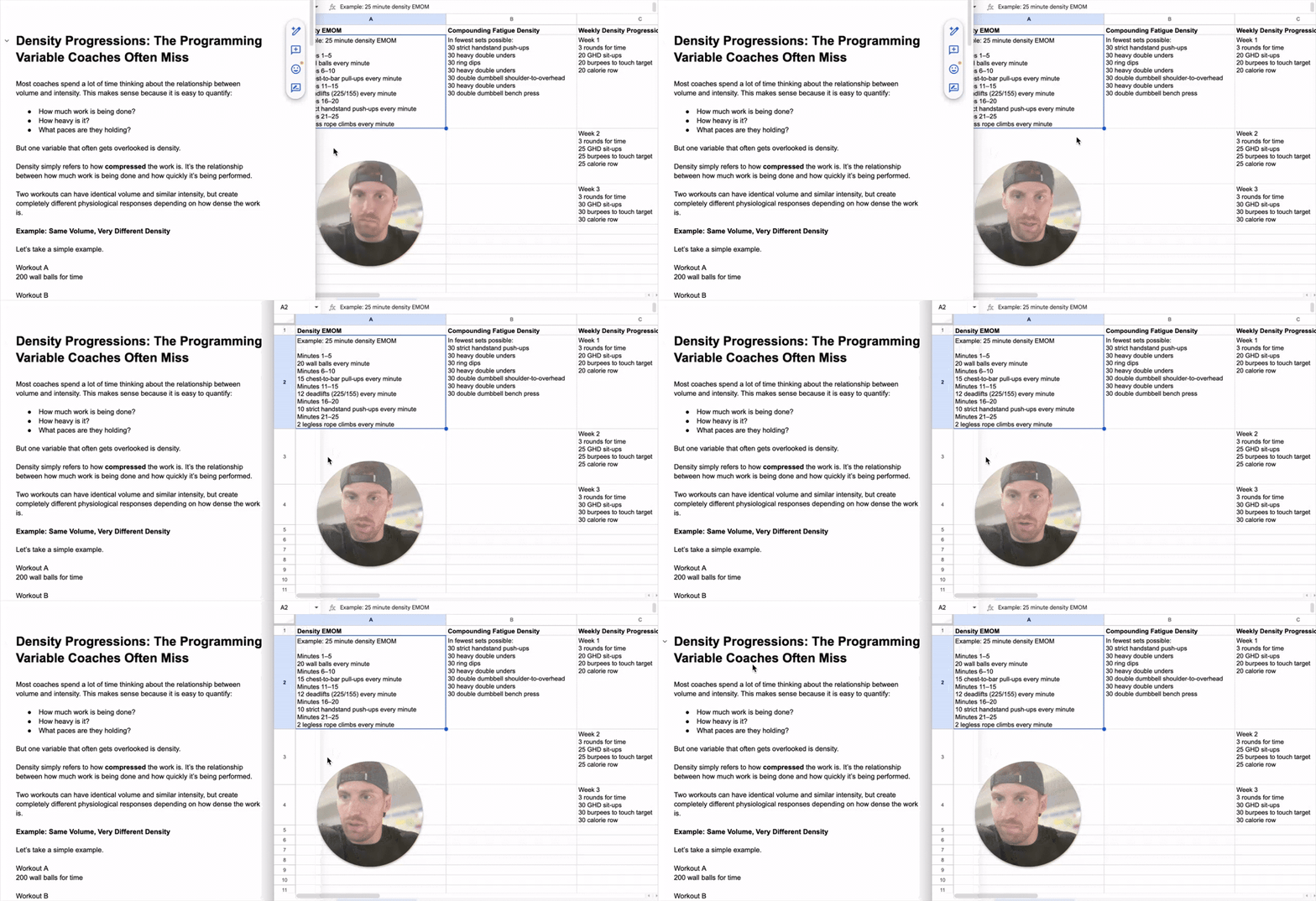
Density Progressions: The Programming Variable Coaches Often Miss Most coaches spend a lot of time thinking about the relationship between volume and intensity. This makes sense because it is easy to quantify: - How much work is being done? - How heavy is it? - What paces are they holding? But one variable that often gets overlooked is density. Density simply refers to how compressed the work is. It’s the relationship between how much work is being done and how quickly it’s being performed. Two workouts can have identical volume and similar intensity, but create completely different physiological responses depending on how dense the work is. Example: Same Volume, Very Different Density Let’s take a simple example. Workout A 200 wall balls for time Workout B 10 wall balls every minute on the minute for 20 minutes In both cases, the athlete is doing 200 wall balls. But the experience and the physiological response are completely different. In the “for time” version, the work is much more dense. Fatigue accumulates continuously. Metabolites build up. Intramuscular pressure increases. Perfusion drops. Tension under fatigue increases as the athlete tries to maintain movement speed. All of this creates a much more stressful internal physiological environment. You get: • More accumulated fatigue • Less metabolite clearance • More ischemia inside the working muscles • More tension being produced while the muscle is already fatigued That combination dramatically increases the amount of muscular damage and soreness that athletes experience. In the EMOM version, every minute includes a built-in rest period. That rest allows partial clearance of metabolites, restoration of blood flow, and recovery of force production. The volume is the same, but the density is much lower, so the physiological cost is very different. Why Density Matters in CrossFit Density becomes even more important when we consider the nature of the sport. CrossFit workouts tend to be very dense especially formats like:

0 likes • 7d
What about weekly frequency programming in regards to density training? And specifically to general muscle groups versus nervous system fatigue? I would assume probably not more than twice in a week for the same muscle group. But what about multiple density training sessions in a week that use differing muscle groups?
1 like • 7d
Super helpful thank you
1-1 of 1

@robert-oswald-2757
Strength and conditioning and CrossFit coach. Real estate and house flipper.
Active 6d ago
Joined Mar 1, 2026
Powered by