Activity
Mon
Wed
Fri
Sun
Jan
Feb
Mar
Apr
May
Jun
Jul
Aug
Sep
Oct
Nov
What is this?
Less
More
Memberships
Theory of Man
138 members • Free
2 contributions to Theory of Man
Sep 12 •
RECOVERY Supplements: What Actually Works (and What Doesn’t)
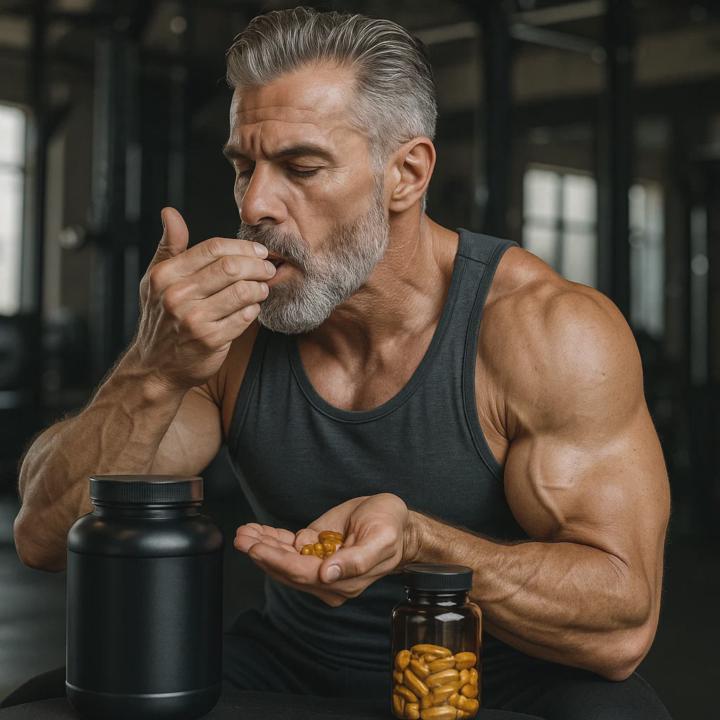
Many of us train hard enough that soreness, fatigue, or slow recovery gets in the way at some point. You smash a tough session, feel good in the moment, and then the next day your body reminds you you’re not 20 anymore. That’s when people start reaching for powders and pills that promise to “fix” recovery. The truth is: very few supplements actually help. Most of what the industry sells is just expensive hype. The newest research points to a small handful that are truly worth considering: - Creatine Monohydrate – Not just for strength. A 2025 trial showed that lifters who used 5-20g day for 28 days recovered faster after hard eccentric sessions: less soreness, faster return of strength, and better range of motion. The Effects of Creatine Monohydrate Supplementation on Recovery from EIMD (2025) by Yamaguchi et al. In 40 healthy men, 28 days of creatine monohydrate significantly sped up recovery after eccentric (muscle-damaging) exercise. Improvements were measured in range of motion, maximum voluntary contraction, reduced muscle soreness and stiffness. This research also looked at inflammation-related genes and found reduced expression in those with creatine. - Omega-3 Fatty Acids (EPA/DHA) – Known for lowering inflammation and helping joints, but here’s the underrated part: omega-3s also support brain health and mood. Studies show they can help reduce symptoms of anxiety and improve overall emotional resilience. For men balancing training, work, and life stress, this can be just as valuable as the physical recovery side. If you’re not eating fatty fish 2–3 times a week, supplementation is worth it. - Vitamin D & Sunlight – This one is huge. Low vitamin D is linked to slower recovery, weaker immunity, and reduced training adaptation. But here’s the key: supplements should be a backup, not the foundation. Daily sunlight exposure, 10–20 minutes on skin and eyes in the morning or midday, is the most powerful way to boost vitamin D and reset your circadian rhythm for better sleep (which is recovery’s #1 tool). If your lifestyle or location keeps you indoors, then a vitamin D supplement is a smart fallback.

1 like • Sep 13
Was mir immer hilft ist Salz und Natriumhydrogencarbonat. Es hilft die Milchsäure abzubauen und bringt Sauerstoff in die Zellen.
Sep 4 •
Share your workout program, goal and biggest struggle right now.
What’s your current workout program looking like right now? Share the details- how many days a week you train? what type of workouts you do? ... and what you’re focusing on most? Also, what’s been the biggest struggle for you lately (time, recovery, motivation, progress, injuries…)? And what’s the main goal you’re chasing - strength, muscle, fat loss, performance, or just staying healthy long-term? The more we share, the more we can trade ideas and push each other forward.
0 likes • Sep 5
Hi, mein Training sieht zur Zeit wie folgt aus 4 Tage pro Woche 2x den ganzen Körper trainieren 2-3 Übungen pro Muskel mit folgendem chema 10-8-6-15 Wh. Meine Ziele ....gesund Muskulatur aufbauen ohne Verletzung. Grüße Rene
1 like • Sep 5
@Jay Heathley I try to do the exercises very slowly and consciously so as not to put too much strain on the joints. To increase the intensity, I occasionally take short breaks but then consciously lower the weight.
1-2 of 2

Active 15d ago
Joined Sep 5, 2025