
Write something


17d •
Quick one for the dads in here - something I’ve been seeing a lot lately, and maybe it’ll help someone.
Quick one for the dads in here - something I’ve been seeing a lot lately, and maybe it’ll help someone. Men always talk about wanting to “get fitter,” “lose the belly,” or “sort themselves out”…but when you’re a dad, it’s not really about a six pack. it’s about having the energy to play with your kids without feeling wrecked,being able to handle stress without snapping,and setting the example you want your kids to follow one day. Over the last few years, something clicked for me:It’s much easier to stay consistent when you stop trying to train like your 20-year-old, free-time version of yourself…and start training like a dad with limited time, responsibilities, and a real life. Here are the 3 things that made the biggest difference for me: 1️⃣ Keep it simple - full body 3x per week beats any “bro split.”Short, efficient sessions with the main movements (push, pull, squat, hinge, carry).You stay stronger, fitter, and more consistent with less time. 2️⃣ Protein & steps are the dad cheat codes.If you do nothing else…eat protein with each meal and hit 7-10k steps a day. Energy goes up, hunger goes down, stress improves. 3️⃣ Don’t chase motivation. Build habits that don’t rely on it. Kids get sick. Work gets busy. Sleep gets broken.Motivation disappears fast - habits keep you moving.Even 15 minutes counts. If this helps even one dad here get moving again, class.We’re all trying to be better for our families, and sometimes the smallest changes make the biggest impact. Curious - what’s the one thing you struggle with most when it comes to staying consistent as a dad?Drop it below… might help someone else reading too.
0
0
28d •
Grounding: How Earth Resets Stress and Sleep
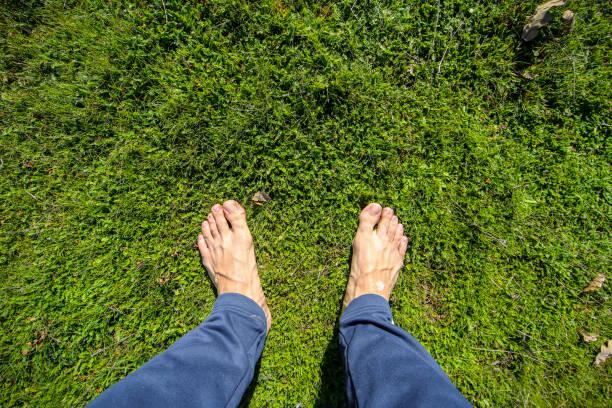
You’ve probably felt it before, that quiet calm that hits you when your bare feet touch the ground. Maybe it’s after walking on wet grass, standing at the edge of the ocean, or lying in the sand after a long swim. Your mind slows down, your breathing evens out, and for a moment, you feel connected to something bigger than yourself. That’s not imagination. That’s physiology. For thousands of years, humans lived in direct contact with the earth’s surface. We slept on the ground, moved barefoot, hunted, and worked outdoors. Our skin was constantly conducting small electrical exchanges with the planet a subtle but powerful connection that helped regulate stress, inflammation, and sleep cycles. Then came shoes, concrete, high-rises, and Wi-Fi. We insulated ourselves from the ground and called it progress. Now science is starting to catch up with what our ancestors already knew: the human body is an electrical system, and the earth is its grounding wire. What Happens When You Touch the Earth The earth carries a natural negative charge. When you make direct skin contact, feet, hands, or any part of your body — electrons flow into your tissues and help neutralize excess positive charge (free radicals) created by stress, pollution, and modern living. This isn’t spiritual; it’s measurable physics. Studies published in The Journal of Environmental and Public Health have shown that grounding reduces inflammation markers, lower cortisol, improve sleep, and even normalize circadian rhythms. Why Modern Life Disrupts the Charge Everything around us now creates electrical noise, phones, routers, artificial lighting, air conditioning, even the flooring beneath our feet. Combine that with constant stress and poor sleep, and you have a nervous system that’s permanently “charged up,” always in fight or flight. When your body stays electrically isolated for too long, oxidative stress and inflammation accumulate. You may not feel it right away, but over time it shows up as tightness in the shoulders, irritability, shallow breathing, poor recovery, and restless sleep. Grounding acts as a discharge point, literally helping your body reset to a calmer, more balanced state.
Poll
2 members have voted
Oct 9 •
Alcohol and Aging: How Much Is Too Much If You Want to Stay Strong?
If your goal is to stay strong, sharp, and capable as you age, alcohol is one of the first things you should reconsider. Not because it’s “bad” in a moral sense, but because of what it actually does inside your body. For decades, we’ve been told that a glass of wine a day is harmless, maybe even “heart-healthy.” But multiple newest data tells a very different story. Alcohol interferes with your sleep, hormones, muscle recovery, and brain chemistry in ways that directly accelerate aging and harms mental health, even at doses most people still call moderate. What Alcohol Really Does Inside You: When you drink, the liver metabolizes ethanol into acetaldehyde, a toxic compound that damages cells and DNA. Your body prioritizes getting rid of it, meaning it pauses muscle repair, fat oxidation, and hormone synthesis until the toxin is cleared. This metabolic shift is one of the main reasons alcohol blunts recovery, no matter how “clean” your training or diet are. Even small doses trigger inflammation and oxidative stress in the brain, particularly in regions tied to memory, motivation, and impulse control. That’s why alcohol doesn’t just make you tired, it can make you less consistent, less disciplined, and less likely to train with intent the next day. The Sleep Trap One of alcohol’s most deceptive effects is on sleep. It can make you fall asleep faster, but it fragments sleep architecture, reducing deep sleep (slow-wave) and REM. Those are the exact phases where testosterone and growth hormone are produced and tissue repair happens. Studies show that even two standard drinks can reduce deep sleep by 20–40%. And I'm sure many of you noticed this. The result, you wake up feeling foggy, weaker, and unmotivated, even if you “slept eight hours.” Over time, this compounds into lower testosterone, slower recovery, and increased fat storage, all markers of accelerated aging. Hormones and Strength For men, alcohol directly undermines the hormonal environment that keeps strength and energy high.
Poll
13 members have voted

Oct 25 •
Why Discipline FAILS Without Recovery (MUST READ for Men over 50)
When was the last time you paused to notice the weight of your own exhaustion—not just the tiredness in your muscles, but the heaviness that sits behind your eyes? Most of us mistake that feeling for laziness or weakness, convincing ourselves that we simply need more discipline. Yet the truth is more complex, and far more human. What we often call “a lack of motivation” is not the absence of willpower, but the body’s quiet signal that it has reached its limit. The Biology of Burnout In moments of constant pressure, the nervous system stays in a prolonged state of alert. Cortisol rises, adrenaline lingers, and dopamine—the chemical that gives us drive and purpose—begins to lose its impact. The mind may still want to move forward, but the body no longer responds with the same spark. This is not failure; it is physiology. Chronic stress narrows our capacity for reward, dulling the brain’s dopamine receptors until even small achievements feel empty. When Discipline Turns Against You When this happens, men often try to compensate by pushing harder. We double our efforts in the gym, increase our workload, and fill our schedules with constant activity, believing that action will restore energy. But discipline, when separated from recovery, becomes a form of internal resistance. It turns strength into strain. True discipline was never meant to be an endless act of force; it was designed to work in rhythm with renewal—just as muscles strengthen not during training, but in the stillness that follows. Recovery as Biological Intelligence Recovery is not a retreat from progress; it is the biological foundation that allows progress to continue. When we allow space for genuine rest—through deep sleep, sunlight, nature, and unhurried movement—the parasympathetic nervous system reclaims control. This shift lowers cortisol, restores dopamine sensitivity, and quietly rebuilds the sense of motivation we thought we had lost. The body does not require constant effort to perform well; it requires balance between stress and ease, tension and release.
Poll
Cast your vote

1-15 of 15
powered by
skool.com/theory-of-man-5968
The #1 men’s community for strength, fitness & longevity. Ask questions, share knowledge, and get support to stay strong for life.
Suggested communities
Powered by