Activity
Mon
Wed
Fri
Sun
Jan
Feb
Mar
Apr
May
Jun
Jul
Aug
Sep
Oct
Nov
What is this?
Less
More
Owned by Jay
The #1 men’s community for strength, fitness & longevity. Ask questions, share knowledge, and get support to stay strong for life.
Memberships
35 contributions to Theory of Man
24d •
How Heat (saunas, firelight, sunlight) Shapes Hormones, Recovery, and Longevity
For most of human history, heat wasn’t optional. It was survival. Firecooked our food, warded off the cold, sterilized water, and gathered communities together at the end of each day. The body learned to adapt to its intensity — to rise with the heat, to endure it, to use it. Today, fire still shapes us, though often in quieter ways: the warmth of sunlight on skin, the dry air of a sauna, the rhythmic heat of movement. What our ancestors experienced by necessity, we now rediscover by choice. And it turns out, the body still remembers exactly what to do. Heat as Hormetic Stress The human body thrives on balance between challenge and recovery. Exposure to heat is a form of hormetic stress — a mild, controlled dose of discomfort that triggers adaptation and repair. When you enter a sauna or spend time in sunlight, the rise in core temperature activates a cascade of responses designed to protect and strengthen you. Studies from the University of Eastern Finland, where sauna use is a cultural tradition, show remarkable correlations between regular heat exposure and longevity. Men who used the sauna two to four times a week reduced their risk of cardiovascular disease by up to 50%, and dementia by nearly 60%. The mechanism is beautifully simple: heat increases heart rate, circulation, and nitric oxide production, mimicking the effects of moderate exercise. At the same time, it triggers heat shock proteins (HSPs) — specialized molecules that repair damaged proteins, reduce inflammation, and help cells survive stress. Over time, this process makes your body more resilient to both physical and emotional strain. The Hormonal Shift Heat exposure also influences the endocrine system. Brief sauna sessions or heat therapy can boost growth hormone — the hormone responsible for repair, metabolism, and muscle maintenance — by two- to five-fold. Testosterone levels, while not directly increased by heat, benefit indirectly through improved recovery, lower cortisol, and better sleep quality.
4
0

26d •
Kettlebell Swings: Unforeseen Impact on Overall Wellness
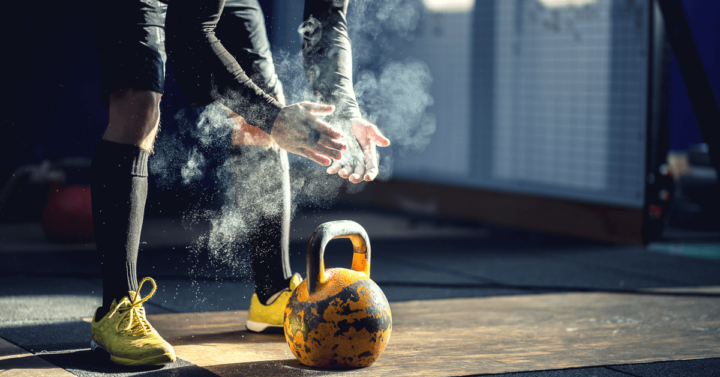
Kettlebell swings have surged in popularity among fitness enthusiasts, and it’s easy to see why. This dynamic exercise not only builds strength and endurance but also supports mental health. Engaging in kettlebell swings can enhance focus and provide stress relief. Let's explore how kettlebell swings can transform your overall wellness. Exploring the Impact of Kettlebell Swings on Strength and Endurance Kettlebell swings offer far more than traditional weight-lifting exercises. The unique swinging motion creates a full-body workout that engages multiple muscle groups at once. When executed correctly, kettlebell swings boost both strength and cardiovascular endurance. The explosive movement activates the posterior chain, focusing on key muscles like the glutes, hamstrings, and lower back. For instance, research indicates that practitioners can enhance their hip extension power by up to 20% after a few weeks of consistent training. Incorporating kettlebell swings into your workouts can lead to remarkable strength gains. One study found that participants who trained with kettlebells increased overall strength by 15% after a six-week regimen. Since kettlebell swings primarily engage anaerobic pathways, they also elevate heart rates, promoting improved cardiovascular health. This powerful combination of strength and endurance makes kettlebell swings an essential component of any fitness program. A kettlebell resting on a gym floor, ready for a workout. The Benefits of Kettlebell Swings for Core Stability A strong core is vital for good posture, balance, and functional movement. Kettlebell swings excel at building core strength because they engage your abdominal and oblique muscles during the swinging motion. As you perform each swing, your core works to stabilize your body, helping to control the movement and generate power. This essential engagement not only strengthens your core but also fosters better alignment, which reduces the risk of injuries during daily activities.
0 likes • 26d
@Neil Massie There’s no perfect answer for that but I will do my best. Kettlebell movements are highly technical, but a useful range for most beginner/intermediate lifters is about 20–35% of bodyweight. In general, 20–25% of your bodyweight works well for snatches, long-cycle work, Turkish get-ups, high-rep complexes, and conditioning work. The 25–35% range is more appropriate for swings, cleans, squats, pressing, and loaded carries. As an example, if you weigh 80 kg, a practical working range would be roughly 16–28 kg kettlebells. In real training, most intermediate men use 16–24 kg for technique and conditioning and 24–32 kg for heavier strength and power work. If you’re using double kettlebells, a common approach is choosing a pair that is each around 15–25% of bodyweight, which again falls near 16–24 kg each for an 80-kg athlete. To simplify - swings typically fall in the 25–35% bodyweight range, clean and presses usually use 20–30%, goblet squats often take 25–35%, snatches usually work best at 15–25%, Turkish get-ups are around 20–30% depending on skill and carries commonly run at 30–40% total, sometimes more with two bells. These ranges are flexible because unlike barbells, kettlebells challenge grip, shoulder stability, core endurance, and power timing, so technique can be as important as strength when selecting weight. For most intermediate trainees, a helpful framework is to keep two bells - one lighter for skill and conditioning and one heavier for strength work. For example, a 16–20 kg bell is ideal for snatching, flow, and technical practice, while a 24–32 kg bell is better for swings, squats, and pressing. When you can swing for 10–15 solid reps without losing posture, press cleanly without leaning, and perform controlled Turkish get-ups, you’re ready to move up. If you want, tell me your bodyweight, what lifts you’re doing, and your goals, and I can recommend specific weights for you 👍🏻
Oct 9 •
Alcohol and Aging: How Much Is Too Much If You Want to Stay Strong?
If your goal is to stay strong, sharp, and capable as you age, alcohol is one of the first things you should reconsider. Not because it’s “bad” in a moral sense, but because of what it actually does inside your body. For decades, we’ve been told that a glass of wine a day is harmless, maybe even “heart-healthy.” But multiple newest data tells a very different story. Alcohol interferes with your sleep, hormones, muscle recovery, and brain chemistry in ways that directly accelerate aging and harms mental health, even at doses most people still call moderate. What Alcohol Really Does Inside You: When you drink, the liver metabolizes ethanol into acetaldehyde, a toxic compound that damages cells and DNA. Your body prioritizes getting rid of it, meaning it pauses muscle repair, fat oxidation, and hormone synthesis until the toxin is cleared. This metabolic shift is one of the main reasons alcohol blunts recovery, no matter how “clean” your training or diet are. Even small doses trigger inflammation and oxidative stress in the brain, particularly in regions tied to memory, motivation, and impulse control. That’s why alcohol doesn’t just make you tired, it can make you less consistent, less disciplined, and less likely to train with intent the next day. The Sleep Trap One of alcohol’s most deceptive effects is on sleep. It can make you fall asleep faster, but it fragments sleep architecture, reducing deep sleep (slow-wave) and REM. Those are the exact phases where testosterone and growth hormone are produced and tissue repair happens. Studies show that even two standard drinks can reduce deep sleep by 20–40%. And I'm sure many of you noticed this. The result, you wake up feeling foggy, weaker, and unmotivated, even if you “slept eight hours.” Over time, this compounds into lower testosterone, slower recovery, and increased fat storage, all markers of accelerated aging. Hormones and Strength For men, alcohol directly undermines the hormonal environment that keeps strength and energy high.
Poll
13 members have voted

1 like • Oct 10
@Matthew Blevins that’s inspiring man, best of luck!👍🏻
1 like • 28d
@Mark Polane same here Mark, well done bud👍🏻
29d •
Grounding: How Earth Resets Stress and Sleep
You’ve probably felt it before, that quiet calm that hits you when your bare feet touch the ground. Maybe it’s after walking on wet grass, standing at the edge of the ocean, or lying in the sand after a long swim. Your mind slows down, your breathing evens out, and for a moment, you feel connected to something bigger than yourself. That’s not imagination. That’s physiology. For thousands of years, humans lived in direct contact with the earth’s surface. We slept on the ground, moved barefoot, hunted, and worked outdoors. Our skin was constantly conducting small electrical exchanges with the planet a subtle but powerful connection that helped regulate stress, inflammation, and sleep cycles. Then came shoes, concrete, high-rises, and Wi-Fi. We insulated ourselves from the ground and called it progress. Now science is starting to catch up with what our ancestors already knew: the human body is an electrical system, and the earth is its grounding wire. What Happens When You Touch the Earth The earth carries a natural negative charge. When you make direct skin contact, feet, hands, or any part of your body — electrons flow into your tissues and help neutralize excess positive charge (free radicals) created by stress, pollution, and modern living. This isn’t spiritual; it’s measurable physics. Studies published in The Journal of Environmental and Public Health have shown that grounding reduces inflammation markers, lower cortisol, improve sleep, and even normalize circadian rhythms. Why Modern Life Disrupts the Charge Everything around us now creates electrical noise, phones, routers, artificial lighting, air conditioning, even the flooring beneath our feet. Combine that with constant stress and poor sleep, and you have a nervous system that’s permanently “charged up,” always in fight or flight. When your body stays electrically isolated for too long, oxidative stress and inflammation accumulate. You may not feel it right away, but over time it shows up as tightness in the shoulders, irritability, shallow breathing, poor recovery, and restless sleep. Grounding acts as a discharge point, literally helping your body reset to a calmer, more balanced state.
Poll
2 members have voted

1 like • 28d
@Mark Polane 100% true brother!
Oct 29 •
Why ANIMAL Foods and SIMPLE LIVING Fix What Modern Diets Broke
You’ve probably noticed how complicated food has become. There’s a label for everything now, plant-based, fortified, heart-healthy, zero-this, enriched-that. But here’s the truth, the closer your food is to the way it looked in nature, the more your body knows what to do with it. When I talk about an animal-forward diet, I don’t mean eating steak at every meal. I mean centering your nutrition around foods that are nutrient-dense, naturally produced, and biologically familiar (eggs, meat, fish, raw dairy, fruit, raw honey, roots, and clean fats). These are the foods your body evolved on. When you build meals from them, your energy, hormones, and digestion start working the way they were designed to. Why It Works (Nutrient Density and Hormonal Stability) Animal foods provide nutrients that are difficult or nearly impossible to get in meaningful amounts elsewhere. Vitamin B12, heme iron, creatine, carnitine, zinc, DHA, and highly bioavailable protein all play central roles in testosterone production, neurotransmitter balance, and muscle maintenance as we age. STUDY: A 2024 review in Frontiers in Nutrition found that men who regularly consumed high-quality animal proteins had better lean-mass retention, higher metabolic rate, and improved testosterone-to-cortisol ratios compared with plant-dominant groups. Balance matters, not ideology. The Hidden Cost of “Healthy” Convenience Most modern “healthy” foods are anything but. Seed oils (just avoid), synthetic flavorings, and plastic packaging all carry a chemical load that your body has to manage. Over time, these exposures can alter hormone signaling and increase inflammation. Endocrine-disrupting compounds like Phthalates and Parabens (commonly found in plastic bottles, shampoos, and deodorants) do significantly lower testosterone and interfere with thyroid function. Every swap you make (glass instead of plastic, real soap instead of scented body wash, mineral salt instead of flavored seasoning) frees up energy your body used to spend detoxing.
Poll
4 members have voted
1
0

1-10 of 35
@jay-heathley-9015
Men united by fitness, wellness, and longevity. Ask, learn, grow, and stay strong for life together.
Active 10d ago
Joined Aug 24, 2025