Activity
Mon
Wed
Fri
Sun
May
Jun
Jul
Aug
Sep
Oct
Nov
Dec
Jan
Feb
Mar
Apr
What is this?
Less
More
Owned by Nadia
Join the 5-Day Paper Collage Challenge— no art skills needed
For creative folks — artists, educators, culture workers — who are ready to stop gig-hopping and start getting paid to teach with nonprofits
Memberships
Story to Wealth™ Studio
20 members • $39/month
Your First $5k Club w/ARLAN
26.7k members • Free
Nakia Shade's Masala Dramas
2 members • Free
Speak Your Way To Cash
3.1k members • Free
The Power Seat
2 members • Free
Skool Owners Lounge
280 members • Free
Skoolers
195.9k members • Free
Affinity Creatives
2.3k members • Free
Arlan's All-Access
323 members • $100/month
50 contributions to Speak Your Way To Cash

2d •
Stop Waiting. Start Closing Corporate Contracts with AI
Every. Single. Expert. Should be landing corporate contracts. Not someday. Right now. But not the old way. Not the slow way. Not the "post and pray" way. Not the "wait on a referral and get lucky" way. That era is over. 🔥 AI changed the game. And the experts who understand that are closing corporate deals faster, with more precision, and less guesswork than ever before — while everyone else is still waiting on a callback. You. The doctor. The lawyer. The CPA. The coach. The consultant. The therapist. You are sitting on a mountain of expertise that corporate buyers are actively searching for — and writing big checks to access. The only reason you are not cashing those checks right now? Nobody taught you the process. Not in school. Not in your certification program. Not on your licensing exam. That changes inside the Land Corporate Clients with AI Two-Day Virtual Summit. We are building your $25K corporate offer, finding your real buyers, and using AI to build an outreach system that gets responses — not in months. In two days. And y'all — I need you to look at this price. Not $297. $17 ONLY. That's it. That is your entire investment to get into this room and walk out with a system that works. Seats are limited. No replays. When it's over — it is over. Are you ready to stop waiting and finally start closing the corporate contracts you actually deserve? 🎟 Grab your seat NOW → https://www.aicorporatesaleslab.com/ai-summit?el=skool
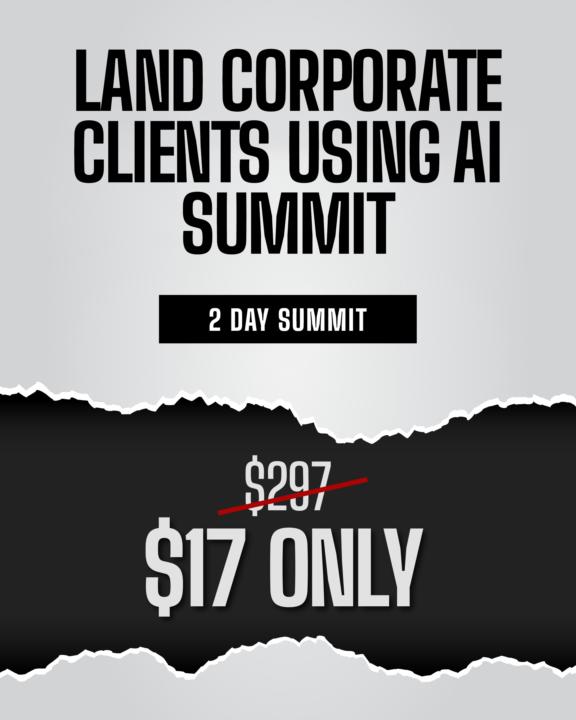

1 like • 2d
Looking forward to this. Land big client showed me what was possible and I think this live workshop is gonna put me in the right room rooms.
1 like • 2d
@Ashley Kirkwood I'm registered. Thank you.
4d •
Stop Pitching Into the Void. Learn How to Close Corporate Deals
Nobody taught us how to sell to corporations. And I am DONE letting that be the reason you stay stuck. Listen. You went to school. Got the degree. Put in the work. Built the expertise. You have done everything right — and you are still undercharging clients who don't even come close to what corporate buyers would pay for the exact same thing you are already doing. That is not a problem. That is a system problem. And I have the fix — and I am SO excited to give it to you! The Land Corporate Clients with AI Two-Day Virtual Summit is where credentialed experts like YOU finally learn how to package your expertise, find the corporate buyers who need it, and use AI to close deals faster than you ever thought possible. Live. Hands-on. All in. We are building the whole system together — finding your buyer, building your offer, writing your pitch, and closing with confidence. All of it. In just two days. And y'all — right now you can get in for just $17. Not $297. $17!! Doctors. Lawyers. CPAs. Coaches. Consultants. Therapists. If you are tired of pitching into the void and ready to start closing — this is the room you have been waiting for. No replays. No second chances. When it's over — it is over. Are you ready to stop pitching and walk into corporate rooms ready to close? 🎟 Grab your seat NOW → https://www.aicorporatesaleslab.com/ai-summit?el=skool
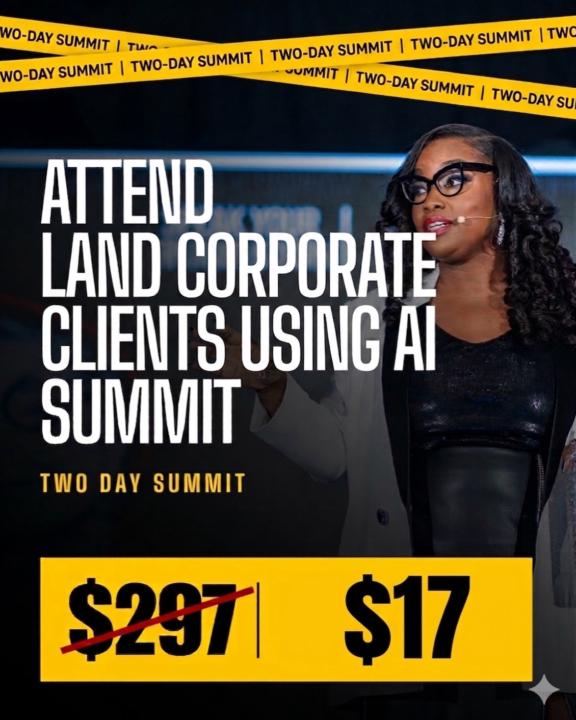
2 likes • 4d
Bought my ticket
0 likes • 5d
Sales vehicles
5d •
Apollo. Io alternative for social media and email outreach
Apollo was mentioned in the LBC trainings and it’s a bit out of my budget at the moment. Are there other platforms that would be a good idea to use? I also use social media like Instagram for majority of my creative contracts with NPOs and CBOs and which just wondering if there was any recommendations for that.
1
0
3 likes • 11d
I want to refine my creative services so that it’s tailored to government and corporations. And I would have to create like a video summary and like a booking page.
1-10 of 50
@nadia-shaik-5314
American award-winning author and artist turned creative contractor.
Stop doomscrolling. Make collage.
youtube.com/@PaperCollage
Active 3h ago
Joined Dec 15, 2025
INFJ
Oregon
Powered by