Activity
Mon
Wed
Fri
Sun
Aug
Sep
Oct
Nov
Dec
Jan
Feb
Mar
Apr
May
Jun
Jul
What is this?
Less
More
Memberships
Bedrock Nation
169 members • Free
4 contributions to Bedrock Nation

Dec '25 •
Guided 72–84 Hour Fast (Gut + Immune Reset)
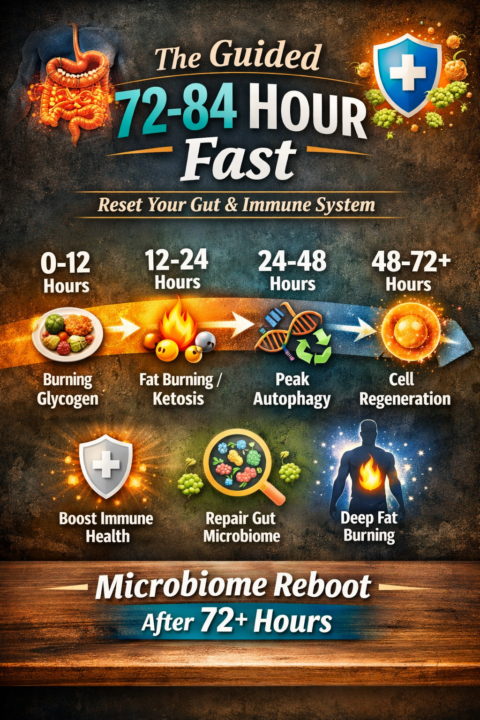
Hey Bedrock Nation — if you’re feeling puffy, inflamed, snacky, or like you need a clean “reboot,” this is one of my favorite tools to reset the terrain. ✅ I just uploaded our Guided 72–84 Hour Fast handout. It walks you through: - Why 72+ hours matters (gut microbiome + immune reset signals) - The stages of fasting (what’s happening in your body at 0–12, 12–24, 24–48, 48–72+ hours) - What to expect (hunger waves, energy shifts, brain fog → clarity) - Electrolyte strategy to make this feel doable - How to break the fast correctly so you don’t wreck your gut or digestion - A simple Sunday → Thursday 84-hour schedule you can follow Important: This is designed as a true guided protocol — not just “not eating.” Your plan matters. 🔗 Download the handout here: 🧂 Electrolytes we recommend: Hydrate, SALTT or our DIY electrolyte recipe "ketoraid" and possibly, IDLife LOAD or I AM Aminos for muscle support (see your team member for help) Before you start — comment below with: 1. Your start date (Mon is my favorite) 2. Your fasting goal (bloating, cravings, insulin resistance, autoimmune flare reset, etc.) 3. Your biggest concern (headaches, low energy, sleep, social events) I’ll be watching the thread and coaching you through the common speed bumps. 🤍— Leanna For more understanding on the how and why of fasting take the FREE mini course by clicking on the classroom tab above!

0 likes • Jun 5
Will do!
Mar 30 •
What if hunger isn’t the enemy… (the small frequent meal myth)
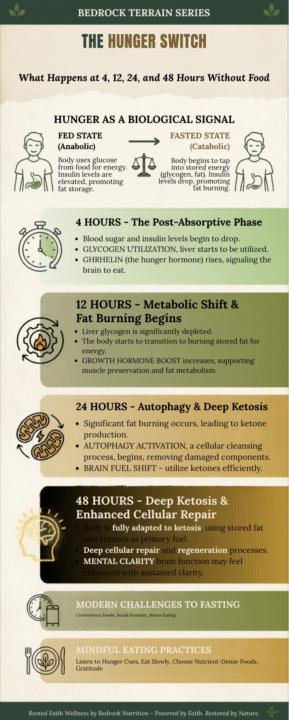
What if hunger isn’t the enemy, but one of your body’s most powerful metabolic signals? For decades we were told to eat constantly. “Six small meals a day.” “Never skip breakfast.” “Keep the metabolism firing.” But biologically, the human body was never designed to be in a constant fed state. For most of human history, periods of eating and periods of fasting naturally alternated. And those fasting windows triggered some of the most important repair processes in the body. When we constantly digest food, the body prioritizes storage and growth. When we pause from eating, the body shifts toward repair and restoration. This metabolic transition is sometimes called “the metabolic switch.” Instead of relying primarily on glucose for fuel, the body begins shifting toward fat oxidation and ketone production. And that shift activates several powerful biological processes. 1️⃣ Cellular Cleanup (Autophagy) Fasting helps trigger autophagy, the cellular recycling system that removes damaged proteins, dysfunctional mitochondria, and metabolic debris. This process was so important that it earned the 2016 Nobel Prize in Physiology or Medicine. Autophagy supports: • mitochondrial health • cellular repair • metabolic resilience 2️⃣ Metabolic Flexibility Many people today are metabolically inflexible — meaning their bodies rely almost exclusively on glucose for energy. Periods of fasting help restore the body’s ability to switch between fuel sources: glucose → fat → ketones This metabolic flexibility is associated with: • improved insulin sensitivity • more stable energy • better appetite regulation 3️⃣ Hormonal Recalibration Hunger is largely regulated by two hormones: Ghrelin — signals hunger Leptin — signals satiety Constant eating disrupts these signals. Strategic fasting can help restore normal hunger and fullness cues, allowing people to experience what true hunger — and true satiety — actually feel like again. But fasting is not one-size-fits-all.
0 likes • Apr 14
This was helpful! I always fear “hunger.” I don’t like it. But understanding why it can actually be a good thing is reassuring!
0 likes • Apr 14
Thank you!
Mar 29 •
🧠 Alzheimer’s, Dementia & The Brain Energy Crisis
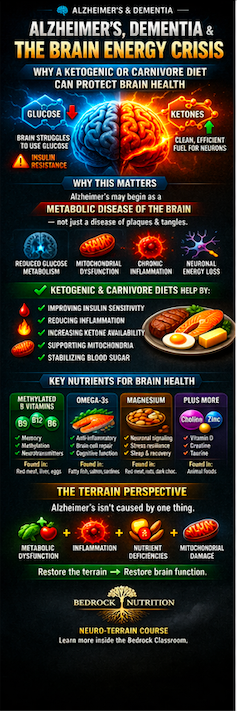
Why Metabolic Health Matters More Than We Thought For decades, Alzheimer’s disease has been framed as a mysterious brain disorder driven by plaques, tangles, and genetics. But a growing body of research is pointing in a different direction. Many scientists now believe that Alzheimer’s may begin as a metabolic disease of the brain. Some researchers even call it: “Type 3 Diabetes.” Not because it is literally diabetes. But because the underlying problem often involves insulin resistance and impaired energy metabolism in brain cells. The Brain Runs on Energy Your brain represents only about 2% of your body weight. Yet it consumes 20–25% of the body’s total energy. That energy is required for: • memory formation • neurotransmitter signaling • nerve conduction • cellular repair • mitochondrial function When the brain cannot access fuel efficiently, neurons begin to struggle. Over time, this energy deficit can lead to: • cognitive decline • memory loss • impaired focus • neurodegeneration The Brain Energy Crisis In many Alzheimer’s patients, researchers observe something remarkable: The brain loses its ability to efficiently use glucose. Brain scans frequently show reduced glucose metabolism decades before symptoms appear. This process is known as: Glucose hypometabolism. At the same time, other metabolic problems often emerge: 🔥 insulin resistance in neurons 🧬 mitochondrial dysfunction ⚡ oxidative stress 🧠 chronic neuroinflammation In other words… The brain is not just aging. It is experiencing an energy crisis. The Brain’s Backup Fuel Here’s where the story becomes fascinating. Even when the brain struggles to use glucose, it can still efficiently use ketones. Ketones are produced when the body shifts into a fat-burning metabolic state, such as during: • fasting • ketogenic nutrition • carbohydrate restriction • metabolic flexibility Ketones provide a clean, efficient fuel source for neurons and can bypass some of the metabolic impairments seen in Alzheimer’s.
0 likes • Apr 14
Leanne - I am interested in the Neuro-Terrain Course inside the Bedrock Classroom.. How do I go about finding this?
Jan 10 •
The 30/30/30 Rule (Bedrock Style): A Morning Rhythm That Changes Your Day
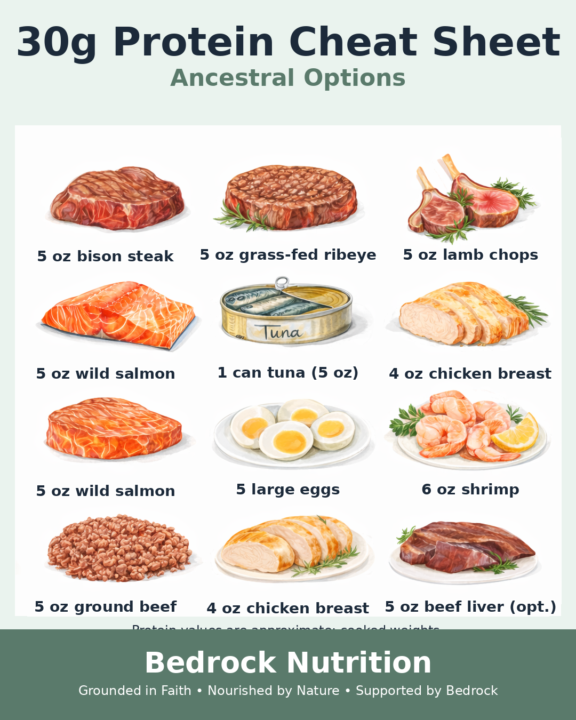
30 grams of protein, within 30 minutes of waking then 30 minutes of low-impact movement (walk, vibration plate, rebounding, easy bike) The reason this “rule” has taken off is simple: it’s not a trendy biohack—it’s a rhythm. And rhythm is where real results live. UCLA Health describes the 30/30/30 rule as a simple 3-step habit: 30g protein at breakfast, eaten within 30 minutes of waking, followed by 30 minutes of low-intensity, steady-state exercise—and also notes it hasn’t been studied as a single “plan,” even if parts of it are supported by research and common sense physiology. Below I discuss why we like it through an ancestral / functional / terrain lens—and why it can be especially powerful for women. Why this works: it stabilizes your terrain early Most women don’t have a “willpower problem.” They have a blood sugar + cortisol + under-fueled muscle problem. 1) 30g protein early = fewer cravings, steadier blood sugar UCLA points out there’s no magic in the exact number 30, but that protein in the morning helps you feel full longer than a carb-heavy breakfast, which can reduce mid-morning cravings/snacking. Functional medicine translation:When you anchor your morning with protein, you’re less likely to ride the rollercoaster of “coffee + cortisol + carbs → crash → cravings.” 2) Muscle is a woman’s metabolic “savings account” Women are trained culturally to under-eat—especially protein. But muscle is not just for aesthetics. It’s glucose storage, metabolic rate support, strength, resilience, and healthy aging. Research and position statements for active individuals commonly land higher than the bare-minimum RDA—often ~1.4–2.0 g/kg/day for many exercising people. And in menopause-focused nutrition reviews, higher protein intakes (often above 0.8 g/kg/day) are commonly discussed for supporting body composition and function as women age. Bedrock takeaway:Women don’t need less protein because they’re women. Many women need more, because they’re navigating hormonal transitions, stress load, and modern sedentary life.
0 likes • Jan 10
If I am sensitive to Whey Protein, which gives me gas and bloating, what do you recommend that will still give a decent amount of healthy protein?
1-4 of 4

@mary-horning-7797
I am a retired nurse who loves to cook! Interested in ways to improve my gut health!
Active 5d ago
Joined Jan 10, 2026