Activity
Mon
Wed
Fri
Sun
Feb
Mar
Apr
May
Jun
Jul
Aug
Sep
Oct
Nov
Dec
What is this?
Less
More
Memberships
MMC BunClub
49 members • Free
6 contributions to MMC BunClub

4d •
A Note on Farm Pricing (From a Farmer)
Lately, I’ve been seeing a lot of conversations — and arguments — where farmers’ skill, time, and labor are brushed aside in the push to get something cheaper, discounted, or free. This isn’t unique to one farm, one product, or one species. Many of us deal with it regularly. So I want to take a moment to clarify how pricing works here, because there are two very different categories of things we offer. 1️⃣ Live Animals I only sell live animals that are suitable for breeding or showing. That means: • Intentional breeding decisions • Health monitoring • Temperament evaluation • Time invested before an animal ever leaves this farm I do not sell culls or unsuitable animals live. Because of that, live animal pricing reflects quality, selection, and the work behind producing animals worth keeping and improving. Yes, animals can be found cheaper at auctions. Those animals serve a purpose — but they are not the same thing, and they are not what I sell. 2️⃣ Processed Products (Meat & Raw Pet Food) Processed products are priced based on actual labor and handling, not just the animal itself. That includes: • My personal time spent processing and packaging • Paid assistance during processing • Transport and facility use • Cold storage and freezer space If you prefer to process your own animals or buy in bulk from a dealer, that is a completely valid option. Many people do. What you are paying for here is convenience, time, and labor already completed. If something isn’t within your budget or isn’t what you’re looking for, that’s okay. Not every product is meant for every person. But attempting to argue, pressure, or shame farmers over pricing — especially in public — isn’t respectful or productive. We price intentionally. You are never required to buy. Scrolling past is always free. — MMC Farmstead How do you deal with lo-ballers and potential customers who do not value your time or product ? Have you learned not to under value yourself? Don'tforget you are worth your price ..

1 like • 4d
I don’t have a lot of experience with rabbits. With my goats, I laugh out loud (usually it’s a Facebook message), then I nicely refer them to the local option, outline how much it’ll cost them for a vet visit and likely antibiotics as one of the two they buy will inevitably end up with pneumonia or likely has coccidiosis. I remind them the vaccinations I do, disbudding that I do, cocci prevention that I do, along with tattooing and bottle raising each of my kids. I remind them I mentor tons of people locally and in other states, and that mentoring is always available if purchasing one of my animals. If you go to a sell barn and purchase, I will not offer interventions and what not. I will refer you to the three vets that offer large animal services. Sometimes they come crawling back. Many times I’ll get a message for help, most times I’ll get a message because one died and now they need a companion for the lonely kid. They end up paying my price after the $500 vet bill 🤷♀️. Generally I tell people I have years of monitored milk records, breeding quality correct animals, along with many having evaluations by the association. If ya wanna buy something you have no background in, that’s fine. This is so much my pet peve! I’ve been known to tell buyers I’d rather eat the goat then sell for that price 🤣.
9d •
Salt Alum Preservation Method
Alright, gather round the campfire—today we’re tanning hides, not telling ghost stories. This is the alum tanning method, which is old-school, reliable, and pleasantly un-mystical once you know what’s actually going on. First, the big idea: alum tanning is alkaline. That means the pH runs high. This isn’t an acid pickle bath and it isn’t witchcraft—it’s chemistry doing what chemistry does best: stabilizing collagen so your hide doesn’t rot, stink, or turn into heartbreak. You’ll want a five-gallon bucket with a lid. Drill a few breathing holes in that lid, or just place it on loosely to keep out extra dirt, insects, or curious pets. Add a 50/50 mix of salt and alum. If you use 2 lb of salt, add 2 lb of alum. If you use 5 lb of salt, add 5 lb of alum. In the video, I started with 2.5 lb of each, and I will be upping the mixture when more alum arrives to reach closer to 3–5 lb total of each per bucket. Fine granular salt works best: pickling salt, feed-mixing salt, eating salt, even fancy sea salt. Then comes the star of the show—pickling alum. Three and a half pounds is about right, but you can use anywhere from 2–5 lb as long as the mixture stays balanced. You’ll also want a long stick for stirring. A paint stick works. A clean branch works. Something that hasn’t recently been in contact with motor oil or existential regret. For drying later, grab a cheap sheet of plywood and a staple gun. You’re not building furniture; you’re just giving the hide something to behave against. A sharp knife, fish-skinning pliers, and a little insurance in the form of curved needles and upholstery thread are smart additions. Holes happen. Even to careful people. That’s life. Before anything touches water, make sure your hides are clean and properly scraped. Big chunks of meat and fat are not “rustic”; they’re bacterial condos. Remove them. Your future self will thank you. If you’re unable to fully flesh right away, you can drop them in and flesh later while they’re wet, or dry them and peel the silver skin—but they are more fragile that way. I’ll be testing a pressure-washer method as soon as it warms up a bit, then returning them to a fresh pickle.

0 likes • 4d
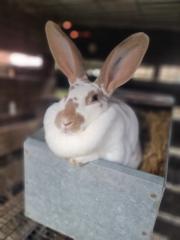
Curious what others do once hides are tanned? What do you do with the hides?
10d •
Showing
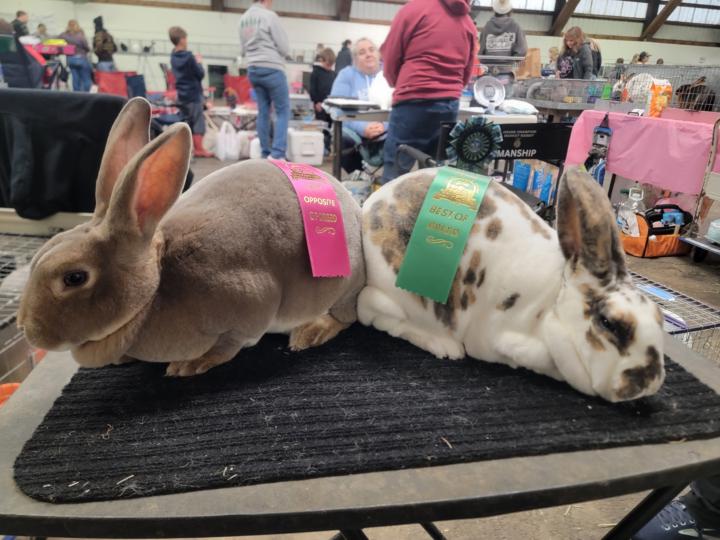
Who is showing? What breed and where? And how long? I am showing Rex in the PNW (mostly western Washington and a little in Oregon). Lynx and tri are my main show varieties, but I have a little bit of almost every rex variety 😅 I've been showing ARBA for just over a year. Just recently started having homebred (first generation but hey its a start) rabbits to show. I'm extremely proud of my lynx and tri buns and very thankful to the amazing breeders around here that have shared stock with me.
2 likes • 4d
My son and I show Rex, silver fox and Harlequin. He and I are pretty new. He’s done quite well with his rabbits. He’s actually looking for a new Rex buck. He has blue, black and broken blu in his Rex group. He did get an opal in a litter, so we may be adding that color.
29d •
Welcome new members!! PLEASE introduce yourselves!!!
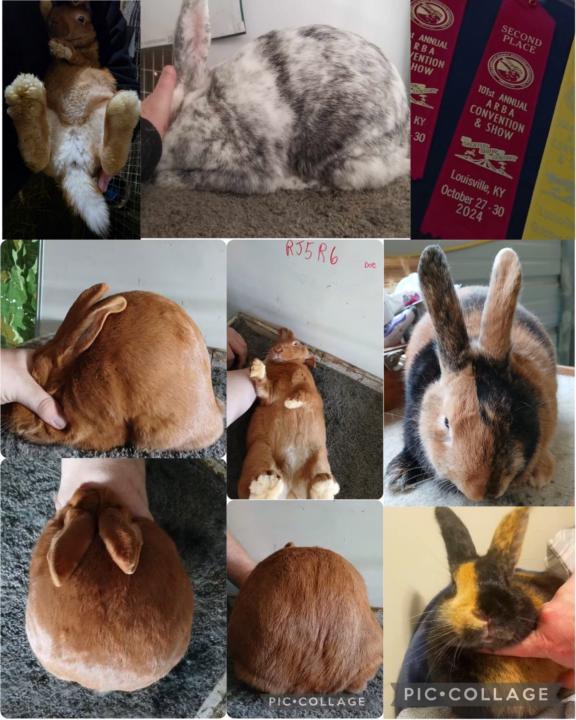
Hi, I’m Mary — rabbit-obsessed, data-driven, and chronically allergic to bad advice. I built this place so we can ditch the House Rabbit driven fantasyland and talk real rabbits, real science, real fast. Now your turn: who are you, what rabbits do you have, and what chaos are they currently causing in your life?
1 like • 17d
Hi all! My name is Kris. My son is the big rabbit breeder. He breeds silver fox and Rex. I ended up with harlequin cause he thought he wanted to breed those. I breed and who registered Nubians, so it’s been a quick learning curve for he and I!
1 like • 17d
My son had a Rex litter overnight. Waiting on his silver fox for. I secretly don’t think she settled. We will see if she kindles over the weekend!
1-6 of 6

@kris-hafey-8950
Small homestead in Washington state. We breed and show registered Nubians. We also breed silver foxes, Rex and harlequin.
Active 4d ago
Joined Nov 28, 2025