Activity
Mon
Wed
Fri
Sun
May
Jun
Jul
Aug
Sep
Oct
Nov
Dec
Jan
Feb
Mar
Apr
What is this?
Less
More
Owned by Katerina
Learn to use AI strategically like an executive—build clarity, systems, and confidence in every decision.
Memberships
Business Synergy Sisterhood
5.2k members • Free
Skoolers
195.2k members • Free
58 contributions to Lucidium Executive AI Strategy

5d •
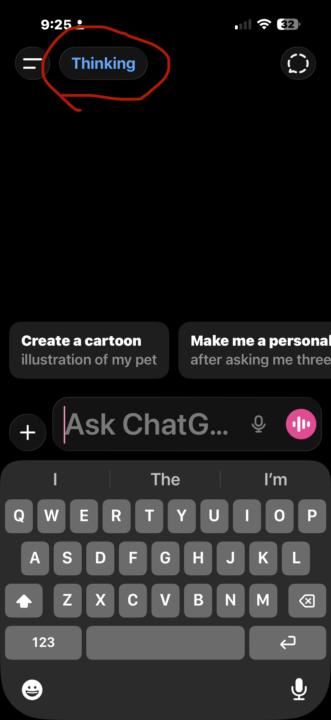
Extended Thinking Mode
There is a new settings menu in ChatGPT that allows you to configure your AI’s thinking effort. I switched mine to extended thinking and it has significantly improved my outputs. Try it out yourself and let me know how it works for you in the comments 👇
0
0
27d •
AI Hallucinates. How do we make up for it?
One constant, yet valid, argument against AI is how it makes things up. It's so confident in it's lies that we believe it. This can be a huge issue that could cost you your credibility. So how do I deal with this daily? I don't listen to AI. I don't read what it tells me. Instead, I skim the outputs and look for things that I don't know. Afterwards, I look those things up and find experts to learn from. Essentially it goes like this: 1. Ask AI a question. 2. Scan the outputs for new words, phrases, and information. 3. Google the new information and find human-led articles, studies, and videos related to it. Research should always be done manually to confirm that it's correct. You could theoretically speed things up by asking another AI to verify outputs, but you risk more hallucinations. So how exactly does this help speed things up if you still need to work manually? One of the most time-consuming parts of researching is figuring out exactly what it is you need to look for. AI brings that all together by searching both its training and the web for main ideas and presenting them in an easy-to-read format. So basically AI is for surface-level research: e.g. What main points do I need to know in order to move forward and really understand? Always verify anything AI tells you, it's far too confident in being wrong. What is your workflow when doing research with AI? Do you trust it? Or do you treat it with skepticism?
0
0
29d •
Graphic Design with AI The easy Way: An Update
For the last several months, I’ve been working on a process to create graphics fast with ChatGPT. In the pursuit of this, I’ve gotten my weekly graphic design and marketing time spent down to around 15 minutes. Here’s my current process: 1. While scrolling through social media, save ads that catch your attention. 2. Upload those ads as a reference to an AI. 3. Tell your AI(I used ChatGPT) what caught your attention about the ad(the colors, the caption, the photos etc) and what you want your audience to feel when they see your version. 4. The AI will offer a few different options, pick the ones that vibe with what you’re going for. 5. Generate your ad. 6. Edit as needed. You can use this method for both graphics and captions. The most important part of this is understanding why an ad works. Really ask yourself exactly what it was that caught your eye, or why an ad is performing so well. Ask your AI if you are unsure and you can dissect it together. What we are doing with this method is creating original content that utilizes proven strategies, so make sure your AI does not copy anything directly. This is a good way to keep your content fresh, original, and high-performing Try it out and let me know how it goes. How many generations did it take to get something good? If you posted it, how did it perform compared to other methods? ——— Right now I am experimenting with this method for more complex content creation. There’s several tools I will be learning over the next few weeks. Stay tuned!
0
0

Feb 5 •
Dear ChatGPT….
You don’t have to praise me when I repeat something you told me… It’s okay. ——— What is something that ChatGPT does with you that’s funny or quirky?
0
0
Jan 30 •
The data is coming in: AI Assets Work, But There’s a Technique To It.
Hello! I have been running an experiment with my other business where all of my ad creatives are at least 90% AI-generated, with only minor editing like font adjustment. These ads are converting, and they are converting well. January has been so successful compared to previous years that I had to pause advertising this week. It’s been insanely busy and I need a breather haha Here’s a few things I’ve observed while making ad assets with AI: - Start with a discussion about your goals, the feelings you want to evoke, and what you want customers to do next. - Provide examples. Even a crude drawing helps. AI relies heavily on references, and if you try to work through dialogue alone, you’ll often get random outputs that don’t align with your vision. - Once AI creates a mockup, it’s hard to pull it away from that direction. You can avoid this by re-uploading your references before requesting the next mockup and having another short discussion. Simply describing the changes you want often doesn’t result in anything useful. - Plan on doing some light editing. It’s not worth the effort to chase perfection. Get the asset to 70–80%, then take it into Canva or Adobe Express to fix the small details. This experiment is on-going and I’m working on a full lesson as it develops. Stay tuned! Have you tried to use AI for your brand assets? What was your experience? Did you find certain prompting habits to be helpful?
0
0
1-10 of 58

@katerina-difatta-3699
Educator, mathematician, AI communicator. I help people grow by mastering complex topics & turning struggle into lasting success.
Active 3d ago
Joined Aug 9, 2025