Activity
Mon
Wed
Fri
Sun
May
Jun
Jul
Aug
Sep
Oct
Nov
Dec
Jan
Feb
Mar
Apr
What is this?
Less
More
Memberships
11 contributions to Inspired Life, Empowered Being

🔥
20d •
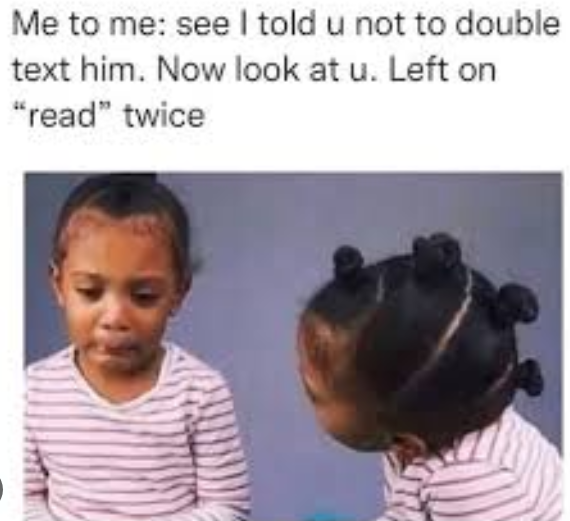
Double Texting, Long Texts, and What They Mean
Okay, I'm a big "offender" of this. I double text (and triple and quadruple text) and I can get elaborate on details making some texts sound like little novels...And now, voice memos? A whole new ball game....yikes! But also...ooooh! :) Although never my intention, I'm sure there have been a few casualties along the way as a result of me doing this. (Feel free to send me a message and lmk! ha! ) But, I've been thinking about how much meaning we assign to different texting habits. 𝗗𝗼𝘂𝗯𝗹𝗲 𝘁𝗲𝘅𝘁𝗶𝗻𝗴 (sending another message before the person replies) often gets labeled as “desperate” or “too much.” Perhaps it can even fall under the category of anxious or insecure. But honestly? Sometimes it just means someone is engaged, excited, or had another thought (or 10, ha). Context matters. I think that we internally 'know' where the energy is coming from. 𝗟𝗼𝗻𝗴 𝘁𝗲𝘅𝘁𝘀 get a similar reputation. Some people see them as overwhelming; others see them as thoughtful and emotionally available. A long text can mean someone wants to be clear, transparent, and thorough. It can also mean they process externally. And it can also mean that they've been burnt in the past and want to be understood. Again, context matters and I think that we can recognize internally where this is coming from too. In my experience, the “best” type of communication isn’t about message length or timing rules. It’s more about clarity over mind games, consistency over intensity, directness over guessing and mutual effort over one-sided pursuit. I think that it's really important to communicate our 'go to' style so that we don't have to guess what it all means. I also think it's helpful to communicate/assess how things may land when we receive a text. Additionally, I think it's really really important to assess our whys behind what/how we're communicating and also how we're taking things in from the other person. (Why am I sending a novel right now--would it suffice to send something shorter? Is the other person more likely to be receptive if I send something shorter and if I don't double text? AND ALSO Why do I feel overwhelmed when I get a long paragraph or why do I feel anxious if a person doesn't answer for a long time or answers with a very short response? What's going on internally? Communication happens between two or more people. 𝗪𝗲 𝗮𝗿𝗲 𝗽𝗮𝗿𝘁 𝗼𝗳 𝘁𝗵𝗮𝘁 𝗲𝗾𝘂𝗮𝘁𝗶𝗼𝗻 𝗯𝘂𝘁 𝘀𝗼 𝗶𝘀 𝘁𝗵𝗲 𝗼𝘁𝗵𝗲𝗿 𝗽𝗲𝗿𝘀𝗼𝗻. 𝗖𝗼𝗻𝘀𝗶𝗱𝗲𝗿𝗮𝘁𝗶𝗼𝗻 𝗼𝗳 𝗼𝘂𝗿𝘀𝗲𝗹𝘃𝗲𝘀 AND 𝗰𝗼𝗻𝘀𝗶𝗱𝗲𝗿𝗮𝘁𝗶𝗼𝗻 𝗼𝗳 𝘁𝗵𝗲 𝗼𝘁𝗵𝗲𝗿 𝗽𝗲𝗿𝘀𝗼𝗻 𝗺𝗮𝘁𝘁𝗲𝗿𝘀.
Poll
17 members have voted

2 likes • 16d
@Georgiana D @Chris Wendt I'm with Chris - I don't like a big solid wall of text, but if it's got skipped lines, I def prefer that info - then I can skim read and look for the info again, reread, etc, while I HATE long voice messages. I have a friend who will ramble for over 5mn, including dates, times for stuff, and I'm like - listening to a message should not feel like I have homework - if I have to get out paper and a pen for your voice note, you've just involuntarily turned me into your secretary - no thanks. What I see in all this is - it depends on the relationship with the person who's sending the message. I might enjoy the long voice message from someone who tells a good story, and is funny? For me - I want these conversations to be both people - not just one person monologues (which can feel like that if lots of texts or long voice message from one person, not the other - I'm all about reciprocity!)
🔥
Mar 23 •
Solider vs. Scout Mindset: Which one are you using?
In @Steve Webb 's 30daychallengers group, some of us are doing a side challenge and reading the book "The Scout Mindset". It's been an informative read and had me reflecting on approaches to integrating new/challenging information, challening beliefs, and just overall communication with others. Below I'll do a quick overview of the difference between solider and scout mindset. Curious about where everyone fits and what you all think about this. :) 🪖 𝕊𝕠𝕝𝕕𝕚𝕖𝕣 𝕄𝕚𝕟𝕕𝕤𝕖𝕥 The goal here is to defend-protecting our current beliefs like territory. Attributes of this mindset include arguing in order to win, looking for confirming evidence, can feel threatened by opposing views and doubling down when challenged. Think debates. The pros related to this type of mindset are: having strong convictions, there's a loyalty to values and people can be decisive under pressure. The cons to this mindset include having blindspots, having a hard time updating beliefs with new information, and can have the tendency to escalate conflict. 🧭 𝕊𝕔𝕠𝕦𝕥 𝕄𝕚𝕟𝕕𝕤𝕖𝕥 The goal here is to see clearly. The point is to get a clear view of the map even if it challenges you. Integrating new information. Attributes of this mindset include being curious about opposing views, being on the search for disconfirming evidence, being comfortable with saying "i was wrong" or "I've updated my beliefs", and being able to adjust beliefs with new information. The pros related to this are that it contributes to more accurate (or updated) thinking, it's growth oriented and it can build trust because the other person feels heard. The cons are that it can feel destabilizing, it can contribute to slower decision making, and it can be perceived as less certain. --- Here's the thing...We all use both of these. The questions become "when" and "why". 𝐏𝐎𝐋𝐋:𝐖𝐡𝐞𝐧 𝐲𝐨𝐮𝐫 𝐛𝐞𝐥𝐢𝐞𝐟𝐬 𝐚𝐫𝐞 𝐜𝐡𝐚𝐥𝐥𝐞𝐧𝐠𝐞𝐝, 𝐲𝐨𝐮 𝐭𝐞𝐧𝐝 𝐭𝐨: 𝐐𝐔𝐄𝐒𝐓𝐈𝐎𝐍:What’s one belief you’re currently holding like a soldier that might benefit from a scout’s curiosity?
Poll
13 members have voted
3 likes • Mar 23
Understanding bias, all the many ways we hold onto beliefs.. sometimes without even realizing we have them - this made me remember this article: This article won’t change your mind. Here’s why: https://www.theguardian.com/commentisfree/2025/may/18/change-mind-evidence-arguing-social-relationships Coming from a scientific background, and as a human who has changed my mind often, I find it confusing why so many people find it difficult to be presented with facts that demonstrate an idea is wrong (or at least complicated), and then hold onto that idea. Yes, I hope more people learn to be able to change their minds. Curiosity for the win!
🔥
Mar 19 •
"What if?"
"𝗪𝗵𝗮𝘁 𝗶𝗳 𝘀𝗼𝗺𝗲𝘁𝗵𝗶𝗻𝗴 𝗯𝗮𝗱 𝗵𝗮𝗽𝗽𝗲𝗻𝘀?" "What if they leave?" "What if this ruins everything?" "What if I fail?". What if, what if, what if.... Ever notice how if we engage in "what if" type thinking, it's often towards the negative? Our brains (unless we've trained them well) have the tendency to default to looking out for the negative/looking out for problems. It's wired for safety and so the "what if" is a question that can feel productive, but if we end up stopping there, is often very not productive. We get stuck in the loop and it leaves us anxious. We don't always go to the solution part of that...It's not only not always productive but it ends up stealing joy from the current moment. Here’s the problem:“What if” pulls you into imagined futures where you have zero control and infinite variables. It creates emotional consequences for events that haven’t happened and that may never happen. It also doesn't take into account that future self--the self that has more information, the self that may be well equipped to handle whatever comes. "𝑾𝒐𝒓𝒓𝒚 𝒊𝒔 𝒊𝒏𝒕𝒆𝒓𝒆𝒔𝒕 𝒑𝒂𝒊𝒅 𝒐𝒏 𝒕𝒓𝒐𝒖𝒃𝒍𝒆 𝒃𝒆𝒇𝒐𝒓𝒆 𝒊𝒕 𝒇𝒂𝒍𝒍𝒔 𝒅𝒖𝒆" and " 𝑾𝒐𝒓𝒓𝒚 𝒊𝒔 𝒊𝒏𝒕𝒆𝒓𝒆𝒔𝒕 𝒑𝒂𝒊𝒅 𝒊𝒏 𝒂𝒅𝒗𝒂𝒏𝒄𝒆 𝒐𝒏 𝒂 𝒅𝒆𝒃𝒕 𝒚𝒐𝒖 𝒎𝒂𝒚 𝒏𝒆𝒗𝒆𝒓 𝒐𝒘𝒆"are two quotes that come to mind when it comes to this....but okay, instead of saying "just stop with the What ifs"...let's redirect this energy and use some strategies! :) 𝕋𝕣𝕪 𝕥𝕙𝕚𝕤: 1. Turn “What if?” into “What’s likely?”Anxious brains deal in possibility. Grounded brains deal in probability. Most catastrophic outcomes are low likelihood but high emotional intensity. 2. Follow it with a plan.If the feared outcome did happen, what would you actually do? 3. Ask a better question.Instead of “What if this goes wrong?”Try: “What if this goes well?”Or even better: “What would the strongest version of me do next?” This is related to the point above about planning for it! Planning is different than worrying. But, remember, you can't plan for absolutely every single outcome...(think about the mental energy/time spent thinking/planning vs. what it would take to deal with the situation when it arises)
Poll
14 members have voted
2 likes • Mar 23
I love the Therapy in a Nutshell!
🔥
Feb 20 •
Funsies Friday (A Toast/Roast for you)
Happy Friday, Empowered fam! @Bruno Militz and I were talking a bit over the past week and discussed the possibility of having a mix of positive and playful chaos for today, and here's a little prompt for today: 👉 Go ask your ChatGPT: • “Based on what you know about me, what’s one genuine compliment that truly fits?” • “Now give me a playful roast I can handle.” 😅 (I've also asked it for a brutal roast because I found it pretty darn accurate and helpful)--I love how it still has a positive spin to it even when it's trying to be sassy. Keep it 1–2 paragraphs max but if you want to make it longer that's okay. This is ALL in good fun. The roast part may help with some of our growing edges! :) Would love to see some of your results! No judgment, just some funsies! Let's have some fun. Aaaaaaaaaaaand for those who maybe don't want to use ChatGPT--maybe drop some of your favorite compliments that you've received and/or something that you know is a growing edge. :)

2 likes • Feb 20
Thank you for this exercise. I am convinced a strong reason so many people use ChatGPT is for the non-judgmental input and answering questions without acting like we're dumb. Here's mine: you are someone who quietly builds substance. You don’t chase surface-level achievement — you integrate creativity, analysis, ethics, and persistence into everything you do. Whether it’s completing a web development degree across countries while raising children,you move with depth and integrity. That combination is rare. You also have a strong through-line: you care about meaning. Even when you’re asking about tools, proposals, or technical workflows, it’s never just about “how” — it’s about alignment, purpose, and long-term coherence. That reflective clarity, paired with practical follow-through, is a powerful trait. Roast: your relationship with coding is elite-level ambivalence. “I don’t want to code all day” — proceeds to build databases in MariaDB, write SQL queries for fun, and contemplate public-health data visualization pipelines at 10pm. You don’t dislike coding. You just refuse to let it think it’s the main character.
0 likes • Feb 24
@Georgiana D 🤣 you're going to notice Tamara de Lempicka everywhere now! (that's another of her paintings next to it, too) On ChatGPT, I think it is me professionally - which makes sense, I use it mostly for professional stuff. I appreciate the self-esteem boost! I am not good at receiving compliments.. at all.. Something to work on. Maybe on my art? That's one area where I can simply say - thank you, and that's enough :) that's not easy. How about you?
🔥
Feb 19 •
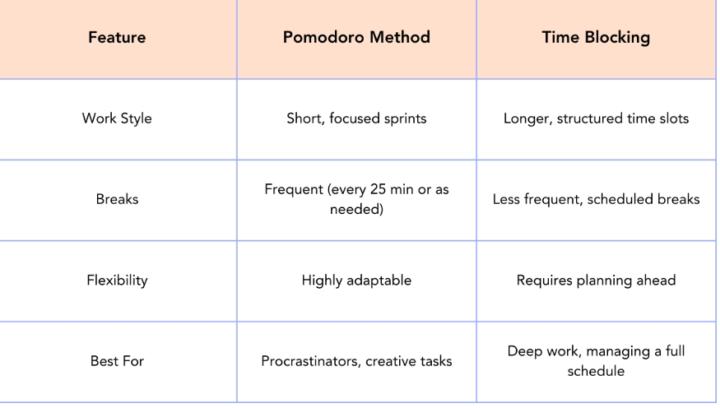
⭐Working Sprints/Time Blocking: Getting More Done by Doing Less at Once
Okay, this productivity "hack" has been kind of a game changer for me the last few weeks and thought that I should share it.:) Maybe you're familiar with it and maybe not, but it's certainly something to consider if you're looking to have better focus with your tasks and get those tasks completed more efficiently! @Wesley Penner has been having group working sessions every weekday in his group Executive Skill Journey and I've benefitted every time that I've joined. The allotment of time, the structure, and the accountability piece have been so helpful! :) Wesley also has some really thought provoking posts! (Wesley, please feel free to share more about this in a comment if you'd like) ------------------------------------------------ “Working in sprints”/Time blocking is kind of like interval training, but for your attention. Instead of trying to be productive all day, you focus your energy in short, intentional bursts of time. STEPS: 1.Choose ONE specific task (what's your intention for the next __ minutes?) 2.Set a clear time block (ex: 20–60 minutes) 3.Remove distractions 4.Work with full focus until the timer ends 1. Take a real break before starting again (In Wesley's work groups, we get together virtually and work together but separately--this added "observer" effect has been beneficial for me, but you don't need to have the camera on. Just knowing that others are working along side has been helpful). Why this works so well: - It lowers overwhelm :you only have to face one small window, not an endless to-do list; that's nice - It reduces procrastination : starting feels easier when it’s “just one sprint.” - It builds momentum: finishing a sprint creates a quick win and that is satisfying! -It respects your brain: focus naturally comes in waves, not all day long Sprints can also create permission to rest. When you know a break is coming, your nervous system stops resisting the work which is a very nice feeling and it helps calibrate the nervous system. You don't have to be in constant grind mode, but rather in focused attention mode. There's a decrease in stress with this.
Poll
16 members have voted
0 likes • Feb 20
@Georgiana D I think we all want to choose that one!
1-10 of 11
@joy-penard-9874
🧠 Research support & medical writer | 🎨 Artist | 🔬 Making science human | 🌍 🇺🇸🇮🇪🇩🇪🇫🇷🇪🇺
Active 10h ago
Joined Nov 4, 2025