Activity
Mon
Wed
Fri
Sun
Jan
Feb
Mar
Apr
May
Jun
Jul
Aug
Sep
Oct
Nov
Dec
What is this?
Less
More
Memberships
Based & Built (Free)
673 members • Free
8 contributions to Based & Built (Free)

May 19 •
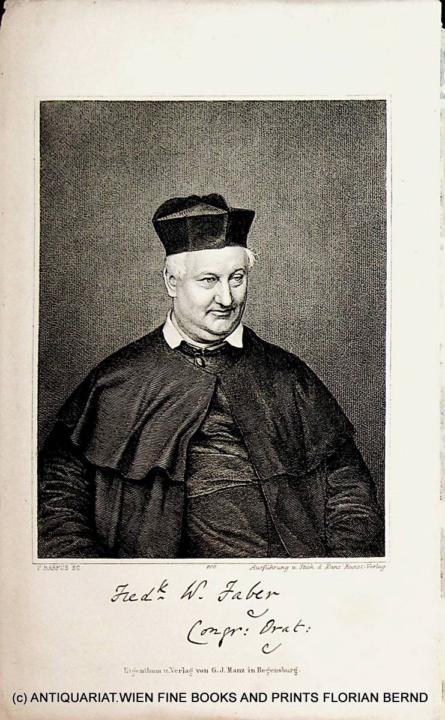
The Necessity of Mortification by Fr. Faber and Fr. Crasset
Fr. William Frederick Faber was a great spiritual writer and theologian in the 19th century. He, much like his close friend of much greater renown, Saint John Henry Newman, was a convert from Anglicanism. In fact, the good Fr. Faber attributes his conversion to the luminous example and intellectual prowess of Saint John Henry Newman. In his wonderful spiritual classic ‘Growth in Holiness’, Fr. Faber thus explains the necessity of mortification and how it ought to be properly understood: “The true idea of mortification is, that it is the love of Jesus, urged into that shape partly in imitation of Him, partly to express its own vehemence, and partly to secure by an instinct of self-preservation its own perseverance… Mortification is both interior and exterior, and of course the superior excellence of the interior is beyond question. But if there is one doctrine more important than another on this subject, it is that there can be no interior mortification without exterior; and this last must come first. In a word, to be spiritual, bodily mortification is indispensable.” There has been a very effeminate and pusillanimous trend running in the Church for some years now, especially among men, that bodily penance is a thing of the rigorous past and that it is unnecessary for salvation—especially by pointing to Saint Thérèse the Little Flower (forgetting she used the discipline thrice a week as a Carmelite and abstained from meat almost year round). But, as the learned Fr. Faber explains, bodily mortification is indispensable to attain to interior mortification of the will, and for union with God. Let this thought be a fresh motivation for us when it comes to our physical fitness journeys. But let us also heed the warning of the same pious Fr. Faber: “Neither must we forget to be on our guard against a superstitious idea of the value of pain growing up in our mind alongside our austerities. Many mortifications remain mortifications when the pain of them has passed away; and the value of them depends upon the intensity of the supernatural intention that was in them, not on the amount of physical pain or bodily discomfort.”
0 likes • May 19
This is absolute Gold. Thank you so much for your research and discernment. I see through this that Goggins has come to love pain but as Catholics we are meant to endure it until the ego steps back and god commands our very actions. Does that seem like what you are saying?
Apr 30 •
Lost
Man, I don’t know how to discipline myself. Goggins is who I study just does stuff because it sucks. I want his mindset. As a newly born catholic are iwe capable of this? How should a catholic look at exercise? What’s the mindset? I know it’s important but does it make room for building character and willpower through discipline?
0 likes • May 7
@Yvan Manzi Mukomeza I agree with you. I think Goggins would agree too. If you read his book about his seal training he built up his team in every exercise. He cheered motivated and lifted up his struggling partners. I think of that as charity. And even now Goggins speaks publicly to help those like us. And I think he’s a non practicing catholic. But God is the only person to live for and greatly appreciate your comment because it show a way to deal with pain and increase will(love).
May 2 •
David Goggins
I just watched Goggins breakdown his mindset. I’ve read his book too. If I remember correctly he’s catholic. But his mindset is this, and remember he’s a warrior so the wording may be able to change to suit our mission; Goggins was heavy like me and one day he said I’m done being a fat loser. He figured out that if he stops exercising that his mind nd will be filled with crap again. If he doesn’t want to go to the gym or exercise at all, he’ll do it anyway and thrive on the pain. He would advocate pain is weakness leaving the body. The research shows that this is the only way to develop willpower, that is, by forcing yourself to do something when your whole being says no. I have learned a great deal from David and I hope you get something from this post. God Bless!
3
0
Apr 28 •
Introduction post
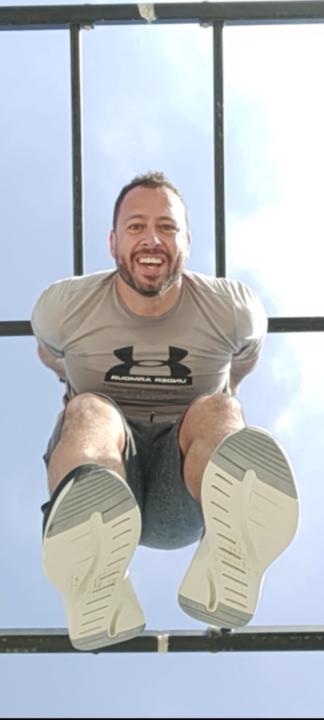
Hello everyone! I'm excited to be here and grateful to join this amazing community of Catholic men who are passionate about both faith and fitness. My name is Mohanad, and I’m deeply committed to living a life rooted in Christ while pushing myself to grow stronger — physically, spiritually, and mentally. I believe our bodies are temples of the Holy Spirit and taking care of them is part of honoring the gift God has given us. I’m looking forward to learning from all of you, sharing encouragement, training tips, and faith journeys. My goal is to build strength that serves a greater mission — to be a better servant, leader, husband, father, and brother in Christ. Thank you for welcoming me — let's grow stronger together, inside and out! God bless you all! Remember me in your prayers
1 like • May 1
Love your enthusiasm brother!

Apr 25 •
Stretching routine
Yo. I’m a pretty serious lifter and I dabble in running, but I don’t stretch at all. Anyone have some advice for a stretching routine?
0 likes • Apr 29
If you’re not stretching at all no need to start but definitely add some mobility exercises. Stretching will actually change the movements you’re used to doing if you aren’t doing it regularly. Flexibility is not necessarily mobility. And always remember with every exercise brace you abs. Your core is where your power is.
1-8 of 8

@joshua-matlack-8617
Hello I’m an x-wrestler and I want to be in the best shape of my life again!
Active 1h ago
Joined Apr 21, 2025
Powered by