Activity
Mon
Wed
Fri
Sun
Apr
May
Jun
Jul
Aug
Sep
Oct
Nov
Dec
Jan
Feb
Mar
What is this?
Less
More
Memberships
Rich Witch Magick
271 members • Free
Hex and Shadow Chronicles
505 members • Free
3 contributions to Hex and Shadow Chronicles

Sep '25 •
🔥 Welcome to Witchfire Forge 🔥
Witches, seekers, and shadow-walkers you’ve stepped into the Forge, where magic is shaped in fire and mystery. This is not a place for surface spells. Here, we dive into the ancient rites, the whispered knowledge of the Old Gods, and the transformation that comes when you truly forge your craft. Every month, you’ll receive: 🌑 Ritual Packets — digital grimoires with guided rites 🔥 Exclusive Group Rituals — work the flame alongside me and the circle 🗝 Knowledge Drops — hidden practices revealed 🌙 The Inner Circle — a community walking this path together ✨ To begin, step forward into the circle: Introduce yourself below. Share: - Your name (or magical name if you prefer) - Where in the world you’re forging your craft - What called you to Witchfire Forge The fire has been lit. Now, it’s time to shape your magic. Welcome, witch. 🖤

0 likes • 19h
Hey hey Am Jessy{Scarface} Kh. Am Lebanese who still live in Lebanon lol.. Sometimes they call me The Mad Sheildmed..I go crazy sometimes hehe.. Well since I was a kid I can see multiple realms/dimensions (whatever you want to name it) all together at the same time.. But didn't know how to control it I used to get lost what's real what's not.. So I choose to walk in the Shadow and Embrace my Darkness and I did but lately I don't know something is pulling me to the fire.. When I look at it I travel in my mind.. ANWS so that's why am here Folks 🙄😁🖤🖤
4d •
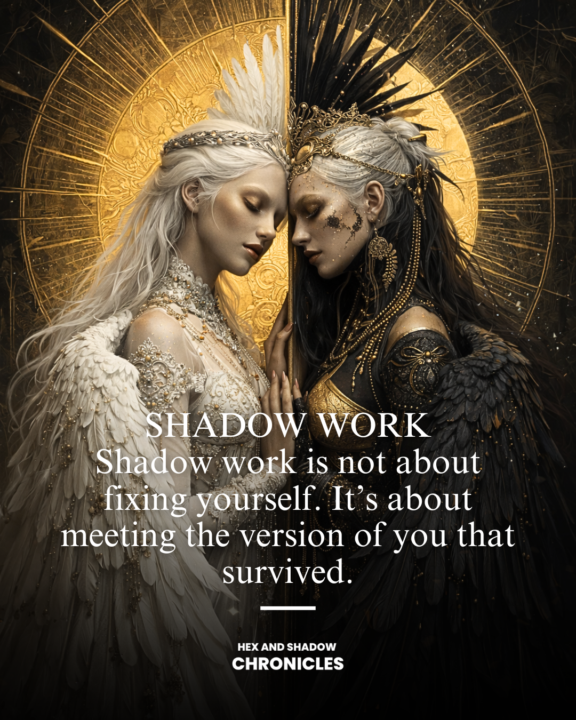
Shadow Work Isn’t Healing. It’s Accountability
Most people say they want to heal. What they often mean is that they want relief. They want the anxiety to quiet down, the heartbreak to stop aching, the triggers to disappear. But shadow work is not relief. It is confrontation. Shadow work is not about candles, journals, or the aesthetic of darkness. It is not about calling yourself “evolved” because you can name your trauma. It is about taking responsibility for the parts of you that hurt others while you were busy surviving. It begins with a difficult truth: you are not just the wounded one. You are also the one who adapted. The version of you that shuts down instead of communicating did not appear out of nowhere. That was a strategy. The version of you that controls conversations, tests loyalty, withholds affection, or leaves before you can be left those were not flaws. They were armor. At some point in your life, those behaviors kept you safe. They protected you from rejection, humiliation, abandonment, chaos. But survival strategies, when left unexamined, become self-sabotage. Your trauma explains your patterns. It does not excuse them. That is where real shadow work begins. Not in blaming your past. Not in endlessly dissecting what was done to you. But in asking yourself how you are now participating in your own suffering. The shadow is not evil. It is unintegrated. It is the part of you that learned distorted lessons in order to cope. Your jealousy may be unspoken desire. Your anger may be violated boundaries that were never defended. Your need for control may be fear of unpredictability. Your detachment may be grief that never had language. When you refuse to look at these parts, they operate unconsciously. They choose your partners. They repeat the same relational dynamic in different faces. They sabotage intimacy just as it begins to feel real. And because they are hidden, you will swear it is fate, bad luck, or “just the way things are.” But the moment you bring awareness to them, everything changes.
0 likes • 21h
I just came out from that same case and I feel great! 🖤🖤
6d •
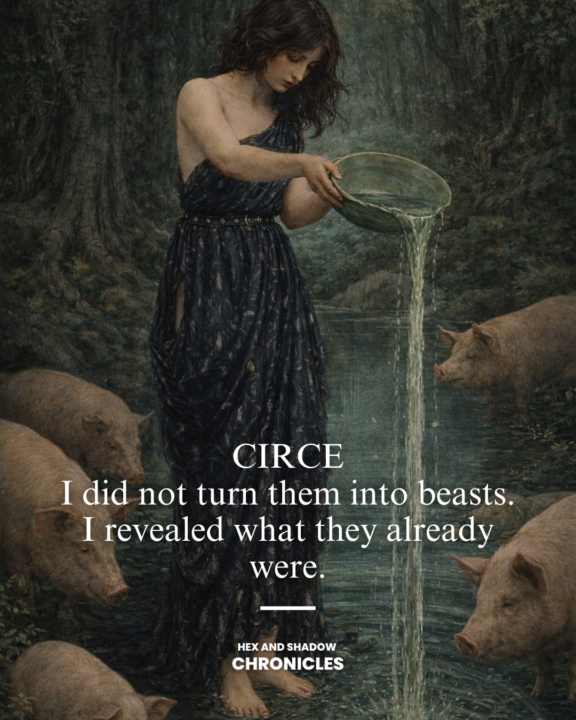
Circe The Witch Who Choose Herself
Circe is rarely portrayed as soft. In Homer’s Odyssey, she lives alone on the island of Aeaea. A sorceress. Daughter of Helios, the sun god. Exiled from Olympus. Self-contained. Self-sufficient. When Odysseus’ men arrive, she does not greet them with submission. She feeds them. She transforms them into swine. For centuries, she has been framed as a temptress. A manipulator. A dangerous woman who uses enchantment to control men. But look closer. She does not hunt them. They arrive uninvited. They consume what she offers without question. They underestimate her. Her magic does not create monsters. It reveals them. Circe represents the feminine archetype that refuses vulnerability without discernment. She lives alone not because she is unwanted but because she does not need attachment to survive. Her power is learned, practiced, honed. When Odysseus resists her spell (with the help of Hermes), she does not destroy him. She respects him. She becomes his ally. She offers guidance for the journey ahead. She does not hate men. She tests them. There is something deeply unsettling about a woman who can survive without needing to be chosen. Who can seduce, but also strategize. Who can isolate, but also instruct. Circe embodies autonomy without apology. Knowledge without permission. Transformation without explanation. She is not chaos. She is sovereignty in exile. And perhaps that is why she has always frightened the heroic narrative. Because a woman who does not need saving cannot be conquered. She can only be met as an equal.
0 likes • 21h
She sounds a lot like me 😳
1-3 of 3
Active 10h ago
Joined Feb 24, 2026
Lebanon