Activity
Mon
Wed
Fri
Sun
Aug
Sep
Oct
Nov
Dec
Jan
Feb
Mar
Apr
May
Jun
Jul
What is this?
Less
More
Memberships
RelationshipMastery4Physicians
48 members • Free
5 contributions to RelationshipMastery4Physicians

Apr 18 •
Being "calm" is not the goal
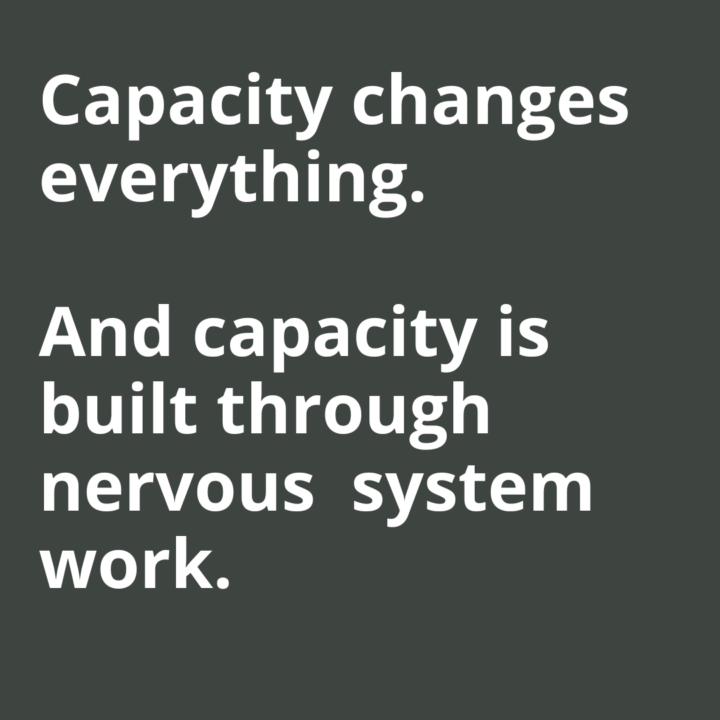
Most physicians were taught how to think and act. How to perform. How to pursue a goal while overriding their emotions and needs. Very few were taught how to remain present with themselves when strong emotions arise. In other words, how to have the CAPACITY to hold and process emotions... ...and to contain your internal experience without discharging it outward and without collapsing inward Not by force. Not by suppression. But by staying attuned your experience moment to moment. This is NOT a calming technique (you can be outwardly "calm" and still be at war inside yourself.) It’s not about suppressing emotion or trying to feel better. It’s about staying present long enough to create a pause, so you have choice instead of being triggered into reaction. That sort of capacity creates presence. Presence creates clarity & choice. Choice creates ease, even in the midst of conflict. P.S: If you'd like to train your nervous system for ease, presence and authentic connection, come join us inside "Untriggered" - my new 6 week program for training capacity and connection. 9 spots left. Details in the comments. 💪👇

1 like • Apr 19
This is so true! We are groomed to ignore a lot of internal emotions and to only prioritize performance because "patient comes first." I remember the first patient on my team who died. As soon as I pronounced her dead and came out of the room, my supervising attending was ready to move on with the next patient. He was an excellent attending but a lot senior so he was numb to it but I hadn't moved on from what I experienced (I was barely given minutes if that)!
Apr 15 •
Couples therapy alone won't save your marriage (DO THIS FIRST)
Most physicians dealing with conflict at home turn to talk therapy (couples counseling, individual therapy etc.) The problem with this is therapy asks you to talk through painful events while you’re still triggered. But once your nervous system is flooded, you can’t access any of the skills you’re learning. Because the skills are stored in your prefrontal cortex, which gets totally bypassed when you are triggered! So despite your best intentions, you will default to walking on eggshells, defending, shutting down, or ‘explaining’ (i.e.: subtly criticizing/convincing) until the cows come home. Before you know it, you’re back in the dance. The topic might change day to day, but the pattern stays the same. Why? Because you’re bypassing a critical first step –> Nervous System Regulation. aka » The process of not getting triggered/flooded in the first place! « By training your nervous system to feel strong emotions without going into fight., flight or freeze… …you can stay calm under pressure, lead the conversation, and actually get to a resolution, even if your spouse happens to be struggling or reactive in that moment. This is MUCH more effective, because when you’re no longer getting hijacked by your triggers, you can think clearly and speak your truth while staying connected. Over time, the people in your life start feeling safe enough to open up. And conflicts that used to last days get resolved in 20 minutes. You don’t have to choose between being true to your feelings and staying connected to the people you love. That’s a losing battle. The better way is to train your nervous system to stay regulated, steady and open - while also speaking your truth. This is what securely attached people do every day. It took me years and a lot of trial and error to train my nervous system to do this well. But I’m so glad I did. Because this one skill then took me from 3 breakups and a divorce by age 31, to now a 10-year marriage I love. If I can do it, anyone can.
1 like • Apr 16
Yes!
Apr 14 •
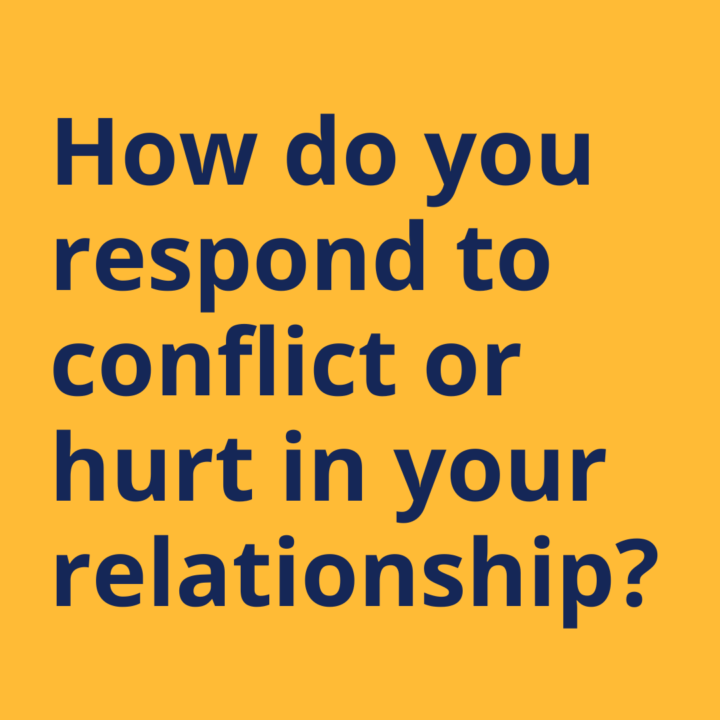
How do you (typically) respond to conflict or hurt in your relationship?
Hey fam, We talked a few days ago about what makes it hard to regulate during conflict. Today, let's unpack what you typically tend to DO in conflict (so I know exactly what tools you need to shift the pattern): 🤔👇
Poll
5 members have voted
0 likes • Apr 14
3 and 4
Apr 8 •
What prevents you from regulating first during a conflict?
Hi friend, I'm working on something special for you. Can you help me by voting in this poll, so I know what tools to add in it?
Poll
17 members have voted

1 like • Apr 8
Becoming the one who pauses/regulates first most of time makes me feel that I am being conditioned to do so the other person can maintain their dysregulated pattern and make every conflict pattern predictable/familiar/comfortable to them. I also feel this incentives others to keep doing it to me where they bring chaos and I predictably respond with composure. I feel like I am breaking the cycle/pattern when I respond differently.
1 like • Apr 11
@Dr. Kavetha Sun, M.D. that's definitely a better mindset to have during these heated situations. The difficult part is the need to be heard or understood because after all we are trying to persuade someone vital in our lives about the issue at hand.
Apr 7 •
DON'T USE I STATEMENTS (Until You Master This)
I-statements are the rage. But just because your favorite couples therapist or that Gottman book mentioned it, doesn't mean it's the best place for you to start. If you get triggered the minute a special someone gets snippy, passive-aggressive or annoyed at you, I-statements will NOT help. At best, you'll say the right words but your tone and body language will ring alarm bells in the person next to you, and they get defensive. And at worst, you'll start with the word I, but end with blame or sarcasm....aaaand they get defensive. See once you are triggered, it's too late. The wheels are already loose and there's no way to stop the train from hurtling off a cliff. The work then is to >> not get triggered in the first place << In other words, to become UNTRIGGERABLE. There's only 3 ways for you to get there: Let's break them down, then help you figure out which is best for you. This is a crucial decision if you want to stop escalating and repairing over and over (with every episode building a wall of resentment and mistrust) // THE THREE WAYS TO BECOMING UNTRIGGERABLE: 1. COUPLES TALK THERAPY/COACHING What is it: You find a couples therapist and work on communication skills every week in a joint setting. Pros: You are doing the work together, so interactions can be caught in real time. Cons: In an already distressed relationship, joint sessions quickly escalate and the therapist spends the hour playing referee whilst trying to make sense of the latest argument. It takes a painfully LONG time to create real change. // 2. INDIVIDUAL TALK THERAPY/COACHING What is it: You speak to an individual therapist every week to gain deeper insight into your patterns, past and psyche. Pros: It's comforting. You have someone in your corner (sometimes for the first time ever) and it feels good to be understood. Growing self-awareness and learning to have your own back is gratifying. Cons: You rarely get challenged. Since the individual therapist often has not seen you interact with them in real time, they can't diagnose your blind spots or growth edges. Plus when you come home and get triggered, all the tools your therapist taught you go out the window.
1 like • Apr 7
So true!
1-5 of 5

@iftequar-ahmed-siddiqui-4952
I am a doctor married to another doctor with 2 kids.
Active 71d ago
Joined Mar 25, 2026
Powered by