Activity
Mon
Wed
Fri
Sun
Oct
Nov
Dec
Jan
Feb
Mar
Apr
May
Jun
Jul
Aug
Sep
What is this?
Less
More
Owned by Dr. Kavetha
A group for women physicians who want to learn evidence based tools to resolve conflict and restore connection. Run by Dr. Kavetha Sun.
Conscious Community
6.2k members • Free
Youtube Monetization
1.8k members • Free
Synthesizer
46.8k members • Free
One Session Method
511 members • Free
How Couples Heal
1.8k members • $77/month
Marriage Mavericks Free
3.5k members • Free
The Art of REPAIR
173 members • $300
Relationship Academy
137 members • $25/month
Decision Journaling
691 members • Free
25 contributions to RelationshipMastery4Physicians

Aug 1 •
July cohort
Hi everyone, Since you all chose to move to September cohort, I’m canceling today’s call and Marta will reach out to set you up for September and also get the 1:1 call with me scheduled. Talk soon! Kave @Tracy Robinson @Neetu Dhawan @Joyce Burnside @Sharese White @Ratna priya Gangi
0
0
Jul 25 •
Today's call
Hi all, I'm so sorry - I am down with a nasty cold and woke up today with laryngitis :-( The calls are very interactive and I want to do a good job for you all. So we will move week 1 call to next Saturday **plus add a week to your program. ** For this week, please notice when you are in each state. You don't need to change anything or fix anything. Just a few times a day, pause and notice which autonomic state you are in. Hugs, Kave @Neetu Dhawan @Tracy Robinson @Sharese White @Ratna priya Gangi @Joyce Burnside
May 30 •
Week 3: Please post your homeplay here
Week 3: Please post a screenshot of If [X] then [Regulate] exercises here!
0 likes • Jun 6
@Peggy Ku super duper! How is it going with the practice?
0 likes • Jun 6
@Patricia Larios well done Patricia! What's been your biggest lesson or takeaway?
May 23 •
Week 2: A.P.E Exploration
Please share your reflections from using A.P.E. in your day-to-day life in the comments below:
0 likes • May 30
@Nicky Gill
May 16 •
Post your Week 1 Exercise here!
Please post a screenshot/picture of your week 1 exercise ("I'm onto myself") in the comments below:
0 likes • May 22
@Lakshmi Shankar wow this was so thorough and illuminating to read Lakshmi. Well done! What was your biggest takeaway/aha moment?
0 likes • May 27
@Sharese White Sharese! Glad to see you here my friend. Good work on week 1. What was your biggest aha moment?
1-10 of 25
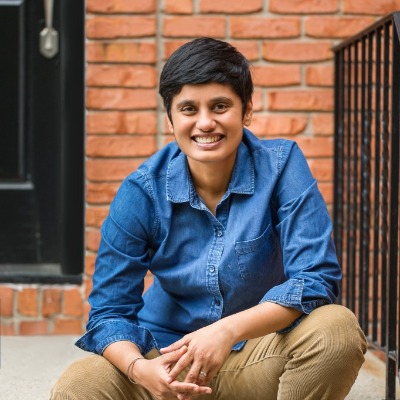
@kavetha-sundaramoorthy-7610
Harvard trained psychiatrist. I help physicians heal their marriage and pass on a legacy they are proud of. 300+ marriages transformed.
Active 5d ago
Joined Mar 8, 2026
Powered by