Activity
Mon
Wed
Fri
Sun
May
Jun
Jul
Aug
Sep
Oct
Nov
Dec
Jan
Feb
Mar
Apr
What is this?
Less
More
Memberships
AI Developer Accelerator
11.2k members • Free
AI Automation Agency Hub
307.5k members • Free
Vertical AI Builders
10k members • Free
Brendan's AI Community
23.9k members • Free
Growth Nation
1.6k members • Free
Strong Men's Power
61 members • Free
Conversational AI Academy
134 members • Free
9 contributions to Brendan's AI Community

Aug '24 •
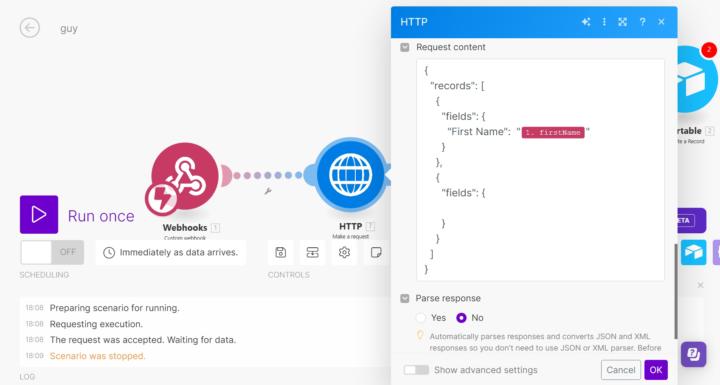
for some reason it does not see the varible in red
when in making the request for some reason it does not see the varible in red and asking to fill out the first name any reason for that ?
1 like • Aug '24
its not reading the varible when i run the scenario its asking to fill a name

Aug '24 •
Urgent Vapi Issue
Hello everyone 🤗 I created a Barbie assistant integrated with milk and a spreadsheet creating an AI code caller, the call went through but instead of the assistant talking about what it was built for, it keeps on saying "You can remove this message by upgrading to full account" why is it saying this
0 likes • Aug '24
its asking for you to buy a subscription
0 likes • Aug '24
@Nwoyi Philip you probably used your trail acount
Aug '24 •
Learning steps
some learning steps that AI has generated for me very useful 1. Deepen Your Understanding of Low-Code Platforms Since you've worked with Voiceflow and Crew.ai, continue exploring other low-code platforms like Microsoft Power Automate, Zapier, or Integromat. These platforms offer a wide range of pre-built connectors and templates that can help you automate various processes efficiently. Action Steps: Explore tutorials and documentation for these platforms. Try to integrate different APIs and services to create complex workflows. 2. Enhance Your Programming Skills Your experience with Java suggests you have a good grasp of programming fundamentals. Now, consider diving deeper into Python, which is widely used in AI and automation due to its simplicity and the availability of libraries like TensorFlow and PyTorch for machine learning. Action Steps: Take a Python course to strengthen your basics. Learn about object-oriented programming (OOP) in Python, as it's crucial for developing scalable applications. 3. Dive Into Machine Learning and AI With a strong foundation in programming and familiarity with low-code platforms, the next logical step is to delve into machine learning (ML) and artificial intelligence (AI). Action Steps: Start with introductory courses on Coursera, edX, or Udacity that cover the basics of ML and AI. Focus on supervised learning algorithms initially, as they are easier to understand and implement. Experiment with small projects using Python and libraries like scikit-learn. 4. Specialize in Relevant AI Subfields Based on your interest in automation, consider specializing in areas like Natural Language Processing (NLP) and Robotic Process Automation (RPA). These fields are closely aligned with your current focus and can significantly enhance your project capabilities. Action Steps: Look for online courses or books specifically on NLP and RPA. Practice by building projects that incorporate elements of these specializations, such as chatbots or automated report generation.
0
0
Aug '24 •
Best Practices for Using Chatbots in Lead Generation
**1. Personalization** Personalize chatbot interactions to make leads feel valued and understood. **2. Clear Value Proposition** Clearly communicate the value of engaging with the chatbot, whether it’s to receive helpful information, discounts, or personalized recommendations. **3. Human Handoff** When a chatbot reaches its limitations or a lead requests to speak with a human, ensure a seamless handoff to a human agent. **4. Continuous Improvement** Regularly analyze chatbot interactions and data to refine the bot’s scripts, questions, and responses. **5. Compliance and Data Privacy** Ensure your chatbots are compliant with data privacy regulations and clearly communicate your data handling policies. --- ### Key Performance Indicators (KPIs) for Evaluating Chatbot Performance **1. Lead Conversion Rate** Measure the percentage of leads generated through chatbot interactions that progress through the sales funnel. **2. Engagement Rate** Track how many visitors engage with the chatbot as a percentage of total website traffic. **3. Qualification Rate** Determine the percentage of leads that meet your pre-defined qualification criteria. **4. Response Time** Analyze the average time it takes for the chatbot to respond to visitor queries. **5. Contribution to Revenue** Calculate the revenue generated from leads captured and nurtured by chatbots. --- ### Real-World Examples of Effective Chatbot Lead Generation - **Intercom’s Qualification Bot:** Intercom uses a qualification bot on its website that asks visitors targeted questions to determine if they are potential customers. If deemed suitable, the bot routes them to the appropriate sales team. - **Drift’s Playbook Bots:** Drift offers “playbooks,” which are chatbot scripts designed for specific lead generation purposes. These include welcome bots, lead qualification bots, and content delivery bots that help businesses engage and convert website visitors effectively. - **HubSpot’s Chatflows:** HubSpot’s Chatflows tool allows businesses to create customized chatbots for various lead generation purposes, such as welcoming website visitors, qualifying leads, or nurturing them with content.
0
0

Aug '24 •
AI PERSONALIZED COLD MAIL OUTREACH
Hello everyone, My name is Guy Kogan. Originally from Israel, I am now residing in Thailand. I have recently completed training in leveraging AI to create and send personalized cold emails to reach decision makers. I specialize in building targeted email lists within your specific niche, extracting personal data from linkedin and using automation tools to send over 1,000 personalized emails daily. My approach ensures that these messages land directly in the inbox, allowing you to select your ideal clients with ease. If you're interested in expanding your outreach and connecting with the right decision makers, feel free to reach out to me on Instagram: @guy_kogen1998. Looking forward to helping you grow your business! Best regards, Guy Kogan
0 likes • Aug '24
ah yakar
1-9 of 9

Active 443d ago
Joined Aug 14, 2024
Powered by