Activity
Mon
Wed
Fri
Sun
Jan
Feb
Mar
Apr
May
Jun
Jul
Aug
Sep
Oct
Nov
What is this?
Less
More

Owned by Frank

We are a creative guild of composers and musicians who use the intervals to write original, magical music!

Memberships

Skool Growth Free Training Hub

4.1k members • Free

Audio Artist Rise

102 members • $47/month

Skoolers

179.4k members • Free

Synthesizer

33.1k members • Free

Audio Artist Academy

1.9k members • $7/month

11 contributions to Audio Artist Academy
2 likes • 3d
This really depends on how deep you want to go. On the surface, music is my income. It helps me provide for my family and keep the fridge full. But there are more layers to it. It is also my passion. I love expressing myself through music. In the past, I even used music to cover up insecurities or to escape from problems. In a way, it was almost like a drug. It gave me something to hold on to when life felt shaky. But my connection with music goes far beyond that. These days, I spend most of my time on the writing part. The actual notes, the arrangement, the orchestration, and how all these choices turn into emotion. It feels like writing a letter, whether it is a love letter or a hate letter, and the musician becomes the person who reads it and brings it to life. To me, music is this incredible form of conversation that works everywhere. It is universal. No matter where you live, what language you speak, or what your background is, everyone understands music. Everyone understands emotion. The same is true for food, by the way, but that is a different topic. 😄
Composing underscore-ish Tracks (Advise and Exercises)
I like melodies. In fact, maybe i like them a little bit too much 😄. When i start a new piece i normally start with the melody and then find fitting chords to accompany it. Most of the times this works ok but when it comes to writing an underscore type like track, i really struggle, because my melodies tend to be to active. So basically the typical problem of overcomplicating things 😅. Can you guys recommend some sort of exercises to get better at this type of composing / Do you have some tipps , when it comes to writing such tracks ? Thanks in advance :)
1 like • 6d
If you like starting with a melody or a short musical idea, then absolutely do that and write it down first. For example, imagine you have a two-bar melody with different note values. Take a look at each note and count the chromatic distance from one to the next. This gives you a sequence of numbers: positive numbers when the line goes up, and negative numbers when it goes down. Once you have this number pattern, you can use it to generate a huge amount of new material based on your original melody. It’s all technique from here. A common approach is to take your original melody and place it in a lower or middle register as long, sustained whole notes. Then, above it, you can write something new that’s inspired by the number sequence you extracted. The nice thing about this is that it will still feel related to your melody, but it’s different enough to keep things interesting and easy to shape. Underscore music is all about energy and pacing. You don’t want to give the listener something they can easily tap along with or sing, because that pulls too much attention. But if you use your melody in a much slower rhythm, stretched out, it stops sounding like a tune and starts acting like a shifting tonal center. That creates space for other elements like pulses, ostinatos, and even textural effects. 🎶 There are countless ways you can build from this. And if you’re curious, I’d be happy to show you some examples of that. I’ve written many pieces using these techniques. Just let me know! 👍
0 likes • 5d
@Marcel Gruhn I'm glad that it helped. I'll reach out to you via a DM soon - need to finish a mix first! 🙂
My latest track
Hello fellow audio artists. Here's a track I produced based on a piano instrumental I played some time ago. I wanted to experiment a bit with a bigger orchestration and see where I could take it. So this is the result. Super curious what you guys think of it, if you have any constructive feedback on what you think would be the areas I need to work on the most in order to get to professional level that d be grand Thanks in advance and have a wonderful week. 🤟
1 like • 12d
@Clemens Hackmack I think what is happening here is that you have too many ideas, which is something creative people deal with all the time. 🙃 (I know that YOU know that!) So, instead of putting every idea into the piece the moment it appears, try to calm that voice a little and focus on the three most important musical functions at any given moment. And you can switch those functions whenever you want. By doing this, you keep the piece interesting and give it enough contrast to tell engaging musical stories. Think of it as bringing a bit of clarity into the chaos. 😌 Just keep going, it's all part of the journey! 💪🎶
1 like • 12d
@Clemens Hackmack Well, not 3 voices, but 3 elements (like melody, harmony, motor, pedal note, and so on ... each one counts as 1 element). And yes, I'd change the color of these 3 elements over time, make them thicker, thinner, change registers, and so on ... basically everything that creates contrast is great here! 💪🎶 And why 3? Because our brain can't process more information simultaneously (at least not without associating it with work 😁). So, 3 is really the sweet spot for us humans.
Scaling Session with Frank | Replay
Hey all, here is the promised Replay of the Scaling Session with Frank. If you have any question, feel free to reach out to Frank for support. I am pretty sure he will answer your questions. Honestly, I had a few lessons about a similar system in the past but in these 45 mins with Frank I understood more about it than ever before 😅. Rest assured, Frank has more spells available for you, ... so if you are curious about this very helpful music composition system, make sure to check out his Circle of Interval Magicians. Let us know, what do you think about scaling? Do you have questions? Also, feel free to post your examples you created with his method.
Scaling Session with Frank | Replay
1 like • 12d
@Adriaan van Niekerk Many thanks for posting this composition! 🎶🙏 It's really great to hear Scaling being used in a more dramatic way than I usually present it! 🙂 You did a great job, and I think it sounds great, aggressive in the beginning, but emotional/inspirational in the second half. So, it feels like a great journey to me! I'm really glad that this technique has inspired you to write this piece! 😌 And now, let's find you some video game developers who are a perfect fit for what you have to offer! 💪
1 like • 12d
@Adriaan van Niekerk Totally agree! And many thanks for your kind words!! I truly appreciate that! 🎶
Is It Better to Stick to One Style or Be Musically “All Over the Place”?
Lately I’ve been thinking a lot about style. Most days, I live in the world of cinematic and orchestral scores. But it’s not just my hard drive that’s mixed: my released songs and the artists I’ve worked with are all over the map too. I’ve done pop songs, synth-driven tracks, trap or gospel vibes, and I still do them alongside my orchestral work. As a composer or producer, I often feel like genres are "fake" borders. At the end of the day, it’s just music. But the industry doesn’t always see it that way. So I wanted to open this up as a discussion here: Is it better to focus on one main style your whole career, or is it okay to split yourself across many? There are solid reasons people say “pick a lane”: - Clarity for clients & listeners: If you’re “the orchestral guy” or “the dark synth person,” people know when to think of you. It’s easier to market, easier to pitch, easier to brand. - Deeper mastery: Sticking to one style lets you go really deep. You learn every nuance of that sound world: voicings, tempo ranges, sound design tricks, what works emotionally, what doesn’t. - Stronger signature: When you live in one style long enough, your fingerprints start to show in a recognizable way. That “oh, this sounds like X” effect is powerful. I totally get this. When I do cinematic scores, I feel like I’m coming my home. That language is natural to me now. But here’s the other side: I don’t only want one home. When I’m writing pop, or sculpting a synth track, or building a trap-gospel groove, I’m using different parts of the same musical brain. And those experiences bleed into each other in useful ways: - Cross-pollination of ideas: A synth arpeggio might become a strings ostinato. A gospel chord move might sneak into a moody game score. A pop topline might teach you how to write stronger main themes. - More emotional colors: Different genres are like different emotional toolkits. If you write for games, movies, or stories, being able to move between “epic,” “intimate,” “modern,” “retro,” “spiritual,” etc. is a huge advantage. - Creative sanity: Staying in one style 100% of the time can become a cage. Jumping into another genre for a while can reset your ears and keep you excited about music in general.
2 likes • 14d
I've spent most of my professional career as a composer scoring animation. So, I can only talk from a composer's point of view. Scoring animation requires rapid emotional changes in the music. That's the core of what we need to create. Then, there's the arrangement/orchestration around it. To me, this is the package of the emotion. So, let's say you're supposed to score a sad scene. You can score this with a solo cello and a flute, for example. You can also score this as a slow rhumba, or maybe as an emotional pop ballad, right? When it comes to scoring (that is your background anyway, right?), there are no rules, and whatever helps the story move forward is great. There's no genre police that points at you and says: "Well, the bass part in that rhumba actually should have to play a different rhythm ..." ... honestly, don't overthink all that. Directors usually don't overthink but want emotions out of the music. That's my experience over the last 15-20 years, at least. Just focus on the emotion, and if you can't get the package to sound right, hire some pro musicians or an arranger to get help - that's the blueprint a lot of successful composers follow. I'm sure you enjoy listening to various genres or styles (film music is the best example of mixed genres anyway), where you can pull inspiration from. So, again, what I'll be focusing on is understanding why a piece of music creates a certain emotion. What element is responsible for that, and how can I re-create it with my own voice? So, to answer your question, I think it's actually a matter of quantity. The more you write, the more you'll find things you love, aka your own voice. So, quantity leads to quality. And if that includes genre-specific elements, why not!? ... 🙂 Quick example: Below, I share a quick excerpt of a piece that I finished today. It has a lot of "big band" elements in there, and I love chromatic lines. This type of writing comes naturally to me, although it sounds a bit edgy to others ... 😄 Also, that's a mixdown directly out of Sibelius. So, no processing at all, and it's not the final sound of it ...
2 likes • 13d
@Ozan Turgay I'm glad this helped! I truly believe that you're on a great path! Just keep going! 💪🎶😎
1-10 of 11
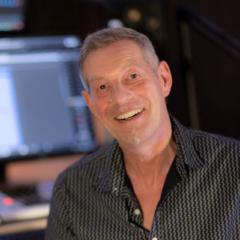
Frank Herrlinger
3
27points to level up
@frank-herrlinger
Frank is a professional composer working in the industry for over 2 decades. He worked for Disney, Mattel, and numerous video game developers.

Active 4h ago
Joined Aug 17, 2024
Vienna
Powered by