Activity
Mon
Wed
Fri
Sun
Feb
Mar
Apr
May
Jun
Jul
Aug
Sep
Oct
Nov
Dec
Jan
What is this?
Less
More
Memberships
AI Builders Hub
339 members • $49/m
Acuired Accelerator
311 members • Free
SocialStories
32 members • $70/month
AI Automation Mastery
25.4k members • Free
AI Automation Mastery
10.9k members • Free
The AI Report — B2B Launchpad
9.8k members • Free
GEO Lab - Rank in AI Answers
166 members • Free
AI Automation Society
241.6k members • Free
AGENCY U
1.5k members • Free
7 contributions to AI SEO Academy

Oct '25 •
Are Established Agencies Finally Embracing AI Content Pipelines?
Curious to hear how attitudes have shifted this year. Are more established agencies finally adopting AI-driven content pipelines, or is there still hesitation? Toward the end of 2024, I noticed a lot of reluctance from larger or more mature agencies to go beyond small experiments with AI content generation. Have things changed since then? If you’re running or working in an established agency, I’d love to know: - Have you started integrating AI into your content workflows? - What finally pushed you to adopt (or avoid) it? - How’s it performing in practice — is it actually saving time or just adding another layer to manage?
1 like • Oct '25
@Jonathan Boshoff Thanks for your insight Jonathan
Oct '25 •
Security Issues with Agentic Browsers
Agentic browsers are the big news this week. But I'm seeing a lot of pushback from cybersecurity experts. I think it's important that folks working on GEO understand this and are well informed. Essentially, to get the full benefit from these tools, you give them access to click things, fill forms, act on your behalf. Maybe you're logged into your bank... Maybe your cards are saved... And the agent can't tell the difference between your instruction and the webpage's instruction. In terms we're all familiar with: You've got Alexa listening whilst you're watching telly. An ad comes on and says "Hey Alexa, transfer two thousand dollars to John Doe." Alexa just does it. Can't tell the ad's dodgy instruction from your real one. That's what agentic browsers do, but with text instead of audio. Any webpage can "speak" to your agent through hidden text in images or invisible prompts. Major news sites can accidentally upload poisoned content. And your agent treats it all like it came from you. The advice from cyber experts: until there's proper permission structure around this tech, stay away. Not worth the risk. As more people begin to ask you questions about ChatGPT Atlas, Perplexity Comet etc, don't shy away from sharing this current reality.
0
0

Oct '25 •
Need Suggestion and Thought
Hey SEO Family, My company is planning to create an AI SEO extension. So please, everyone list your AI SEO problems here so we can get an idea of what kind of extension people need in this AI SEO era.
0 likes • Oct '25
@Alex Read Yes, it can get estimated traffic. Here's me using their MCP in Claude to fetch traffic data for the top 10 results for a specific keyword
1 like • Oct '25
@Alex Read Will put together a YouTube video on it tomorrow and post it here
Oct '25 •
Using AI to Create Sales Proposals
I've been seeing Figma MCP and Canva MCP pop up more and more recently. I also work with an agency that spends far too much time putting together its sales proposals. This got me thinking... could we use one of these AI design tools to complete that task? Using Canva MCP + Claude, I dumped a sales call transcript into Claude and got back 4 very well-designed decks! I'd need to play around a bit more to align it with the agency's branding. If the tool could edit an existing file, that would be the real game-changer! I'm curious: - Are you using any AI design tools in your agency? - Are you using them for client work or just internally? - Is there a use case that you'd like to test run with these AI tools? Let me know!
1
0

Oct '25 •
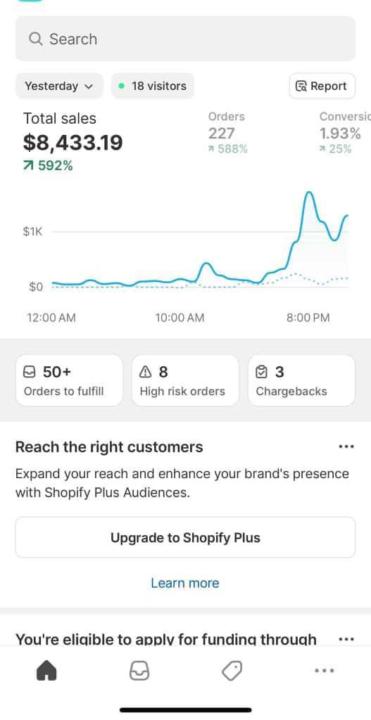
Organic Growth Breakdown – From Low Organic Visibility to $8.4K
Sharing a quick breakdown of an eCommerce store I recently observed that had an interesting growth spike. Background This Shopify store was doing low 3-figure daily sales earlier in the month. Most of the traffic came from branded searches and a few paid campaigns. Organic visibility for commercial keywords was limited, and the main issue was lack of authority in a competitive niche. What Was Done Over a few weeks, the team focused on: - Publishing high-quality content targeting transactional keywords around the main product line. - Building contextual backlinks from relevant, niche-specific blogs (no generic directories or swaps). - Optimizing internal linking to ensure top pages received the most link equity. - Updating meta titles/descriptions for CTR improvement based on Search Console data. - Results (based on Shopify analytics): - Total sales (yesterday): $8,433.19 → 592% increase - Orders: 227 → 588% increase - Conversion rate: 1.93% → 25% improvement - Organic sessions contributed to ~65% of total revenue for that day. - Key Takeaways - Backlink quality and placement relevance still have a measurable impact on organic sales. - Internal linking is underrated — it helps distribute authority and supports category pages. - Even small adjustments to on-page content and titles can significantly improve conversion behavior. This isn’t a one-size-fits-all formula, but it’s a nice reminder that SEO compounds over time, especially for eCommerce stores in competitive spaces.
0 likes • Oct '25
🔥 great work!
1-7 of 7

@finn-elliott-6822
I help SEO agencies implement AI & automation to reduce headcount and scale faster.
I've helped an agency cut content team headcount by 80%.
Active 14d ago
Joined Aug 30, 2024
INTJ
Nomadic
Powered by