Activity
Mon
Wed
Fri
Sun
Aug
Sep
Oct
Nov
Dec
Jan
Feb
Mar
Apr
May
Jun
Jul
What is this?
Less
More
Owned by Henry
#1 Sourdough Community on Skool 🍞 Coaching, not judgment. Sourdough, starter, yeasted, enriched & every bread between. ✅ ProveWorth Certified ⭐⭐⭐⭐⭐
🌾Turn your baking into real income. Learn to price right, sell legal, and sell out at farmers markets. For home bakers, no commercial kitchen needed.
Memberships
Panda for Skool CRM +
432 members • $36/month
The Flour & Heart Collective
12 members • Free
Greek Food and Language 🍅 Ώ
267 members • Free
EmpowerEd
22 members • $9/month
𝐀𝐈 𝐌𝐀𝐊𝐄 𝐌𝐎𝐍𝐄𝐘 💵💰
5.2k members • Free
Community Launch
14.7k members • Free
Old Me Living
294 members • $5/month
SKOOL OF FOOD WRITING
76 members • $10/month
Skool Launch Lab
393 members • Free
1742 contributions to Crust & Crumb Academy

⭐
🔥
2d •
🇺🇸 SATURDAY BAKE-ALONG: CROISSANT DAY 🥐🎆
Well, here we are. Bake day. And it landed on the Fourth of July, so let’s make something beautiful today. 🇺🇸 Most of you have your dough or your butter blocks resting in the fridge right now, which means the hard part is behind you. Today’s the payoff. We shape, we proof, we bake. Here’s the game plan: 🥐 Pull your dough, roll it out long, cut your triangles, and shape ⏳ Proof until puffy and jiggly. This is the make-or-break step, so don’t rush it. French folks, you’re looking at a couple hours. Sourdough, yours runs longer, 3 to 5, so be patient with it. 🔥 Egg wash, then bake to a deep mahogany. Pale is underbaked. Let that color build. Now, two things about the heat. 🎇 First, the real one. This heat wave across the country is dangerous, not just uncomfortable. Drink your water, stay cool, and check on the older folks and neighbors around you. Your bread can wait. You come first. Take care of yourselves out there. 🇺🇸 Second, that same heat is sitting in your kitchen. Your final proof has to stay under 78F or the butter melts and weeps out before the croissants ever hit the oven. Find the coolest room in the house. If your kitchen’s running warm, the fridge is still your friend, use it to hold the proof steady. Keep a close eye today, because in this heat they can over-proof faster than you’d think. This thread is home base all day. 🎆 Post your progress right here. Your shaped croissants, your proof, your first tray out of the oven, your crumb shots when you cut in. And if you hit a snag, butter leaking, dough fighting you, proof looking off, drop it in the comments and I’ll walk you through it. I’m around all day. Let’s bake, everybody. 🇺🇸🥐 Perfection is not required. Progress is. Henry ⭐🔥🇺🇸

⭐
🔥
2 likes • 16h
@Ann Snow You see now that's my kind of burger
⭐
🔥
3 likes • 5h
@Mary Nunaley if you can’t beat them, put them to work in the kitchen
⭐
🔥
12h •
Let me show you guys what’s going on in the room next-door “ From Oven to Market”
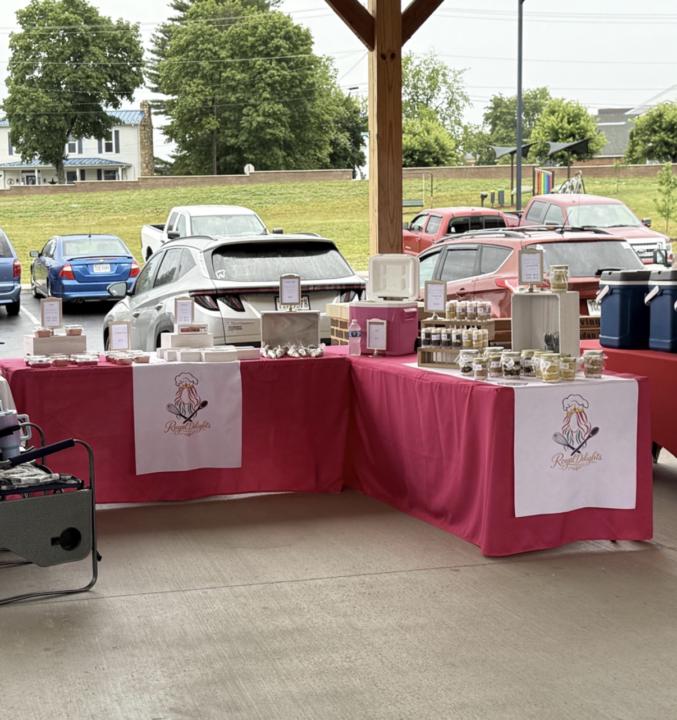
Remember if you joined this week, you’ll have membership FREE for life. That door closes in a few days. Click here: https://www.skool.com/from-oven-to-market/about What a real market table looks like This is @Kim Cochran’s setup from Royal Delights this past Saturday. I want to walk through it, because she’s doing almost everything right and there’s a lot here to learn from. Start with the shape. Most bakers set up one long table and stand behind it like a cashier. That table becomes a wall. Kim went with a U, and that horseshoe pulls people into her space. They slow down, they step in, and once they’re inside they’re browsing instead of walking past. Her cloths drop all the way to the floor and they match. That’s what separates a business from a bake sale. Nobody sees the totes and the backup bins underneath. It’s clean and it’s finished. Her branding repeats. The Royal Delights logo is on both runners and on her signage, same mark every time. When a customer sees the name three times before they’ve said a word, she stops reading as somebody’s mom selling cookies and starts reading as a bakery. The product is tiered. She’s using risers to build height, so everything climbs instead of lying flat. A full, stacked table tells the customer other folks have been buying and there’s plenty to go around. A sparse table says the opposite. Prices are out where people can see them. A lot of customers will walk rather than ask what something costs. Kim took that friction away. One color story, pink and white, right down to the cooler. Even the cold items that have to stay cold got worked into the look instead of fighting it. And her chair’s off to the side, so she can step out and greet somebody instead of being walled in. She also showed up in the rain. That’s its own kind of marketing. When people learn you’re there every Saturday no matter the weather, you become the stop they plan around.
⭐
🔥
3 likes • 5h
@Dusty Commons It lands when you can walk through it together
⭐
🔥
2 likes • 5h
@Linda Glantz it doesn’t take a lot to look professional when you do it intentionally
⭐
🔥
13h •
🍞 SATURDAY BAKE-ALONG RECAP: CROISSANT DAY (Week 25)
We picked the one bake that hates heat the most, on the hottest holiday weekend of the year, and we did it anyway. Two working threads, 1,800-plus comments, first-timers pulling their first croissants at nightfall, and a whole room holding each other up through a heat dome. Ann Snow's dough fought her from 6:12am to dark and she still got them out of the oven. That's the whole story. Full recap is live: https://still-orbit-xf2s.here.now/ This week we featured: @Ann Snow @Sandy Chong @Cheryl Odden @Mauvette Bailey @Maureen Kilbride @Colleen Vergara @Linda Glantz @Barb Kratzmann @Deborah Karaban @Judy Lyle @Candi Brown-McGriff f @Mary Nunaley @Stacey Avraham @Heather Lattanzio @Melissa Molaison @Susie Kendall @Michele Nilson @Donna Angelo @Pat Van Schalkwyk @Jenny Rader-Bakos @Ehsan Omara @Michel Jodoin @Candy Barnes @Jill Hart @Ruby Dack @Jen Dolan @Lisa D @Dusty Commons @Victoria Merriwether @Pam Cote @Travis Crawford @Jana Hassett @JoAnn Amato @Angela Sides-McKay @Tammi Thurston @Tamsin Boshoff @Annette Mitchell @Rhonda Talamo @Linda Gregory @Gareth Parkes @Kathee Judd @Timothy McQuaid @Robert Caldas

⭐
🔥
6 likes • 11h
@Judy Lyle thank you Judy. It’s so much fun getting to know you all.
⭐
🔥
2 likes • 5h
@Jana Hassett It is a game day, recap, isn’t it?
⭐
🔥
5 likes • 16h
@Mauvette Bailey i’m jealous
⭐
🔥
5 likes • 16h
@Michele Nilson That’s because you are right here with me

5d •
Always continue your bake
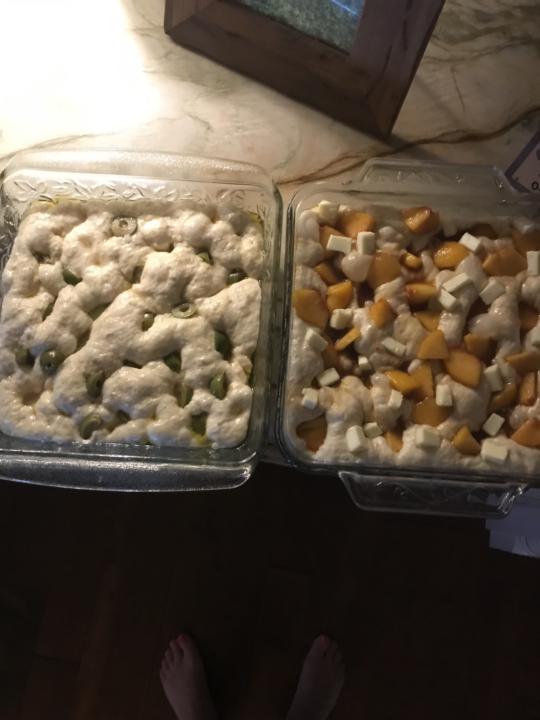
What do you do when you plan to make half of a Ligurian focaccia but put most of the ingredients for a full loaf before realizing your mistake? Continue on, split the dough in half and put fresh peaches on top with brown sugar and a little butter so now you have dessert. While I was at it, I decided to put some olives in the other one. Thank you @Henry Hunter, Jr for my new found confidence!
⭐
🔥
2 likes • 21h
Impressive well done
1-10 of 1,742
⭐
🔥
@henry-hunter-5222
Founder, Baking Great Bread at Home (50K+ members). Cookbook author. Creator of Crust & Crumb Academy.
Active 3h ago
Joined Jan 2, 2026