Activity
Mon
Wed
Fri
Sun
Aug
Sep
Oct
Nov
Dec
Jan
Feb
Mar
Apr
May
Jun
Jul
What is this?
Less
More
Memberships
🌾 From Oven to Market
74 members • $5/month
Sourdough Improvement
83 members • Free
The Crumb Table
109 members • Free
Crust & Crumb Academy
1.1k members • Free
189 contributions to Sourdough Improvement

4d •
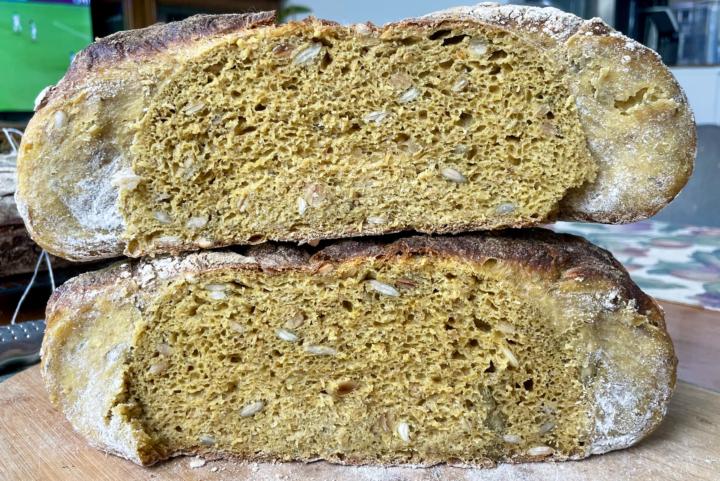
Pumpkin 🎃 bread
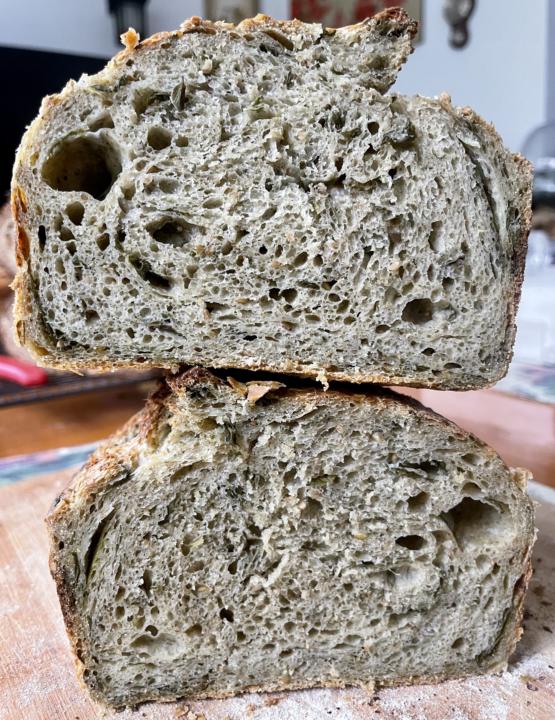
I baked the pumpkin 🎃 bread and this is the recipe Ingredients: - 490g bread flour - 100g wholemeal wheat flour - 100g spelt flour - 100g rye flour - 500g water - 150g starter - 15g salt - 300g pumpkin puree - 200g roasted pumpkin seeds - Mix water + flours and leave the dough for the autolyse phase for 3 hours. - Add the starter over the dough and knead for 8 to 10 minutes with a standing mixer. Then, leave the dough to relax for 30 minutes. - Incorporate the salt and knead for 5 minutes more in the standing mixer. Then cover the bowl and let the dough to relax for 30 minutes. - knead for 5 minutes more in the standing mixer. Then cover the bowl and let the dough to relax for 30 minutes. - Add the pumpkin puree and the pumpkin seeds over the dough and knead for 8 to 10 minutes with a standing mixer. Let the dough rest covered for 1 hour. - Coil fold 1. Let the dough sit for 1 hour covered. - Coil fold 2. Let the dough sit for 1 hour covered. - Shape the dough. Place the dough face down into well-floured bannetons. - Place the dough in the fridge. It can stay in the fridge between 14-20 hours

2 likes • 1h
Very nice!
1 like • 2h
Wow! This one has a great flavour combination, and it’s a beautiful bread!
4d •
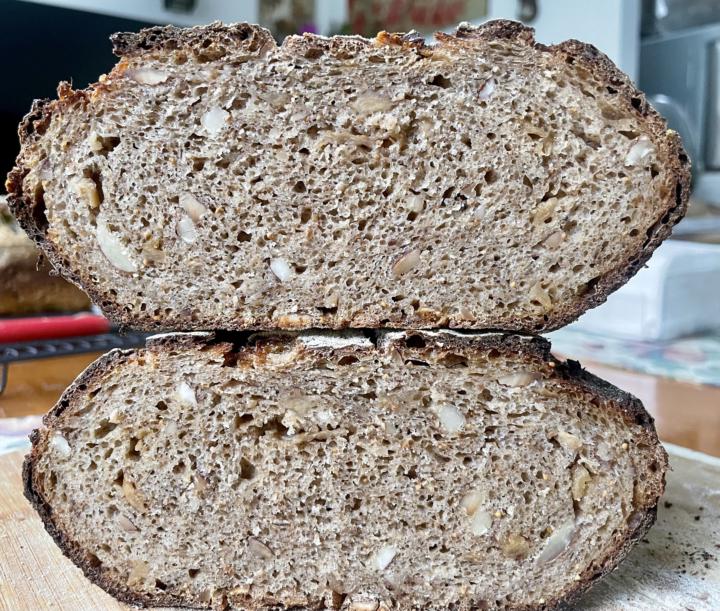
Pain aux Amandes et Figues
I baked Pain aux Amandes et Figues. I used almonds instead of walnuts
2 likes • 2h
Beautiful bake, with amazing scoring! And a very nice breadscore!

🔥
6d •
A project, learning experience for me.
I have a favor to ask. If you have had a chance to see @JoAnn Amato Chicago cookbook, I would like to try to do a Sourdough Improvement cookbook. It may takes 6 months to do but I have time. So how can you help me you ask? If you could give me your favorite sourdough bread recipe to put in my cookbook. I would either need the recipe written out or the link to it. If you do not want to that is okay too. To be honest I am trying to learn something new to keep my mind sharp, and I think it would be fun.
1 like • 2h
I’m definitely going to have to think on this! I mostly use other people’s recipes, and then adapt them for myself. I’ll have to look for the ones that I have changed enough to call mine

2d •
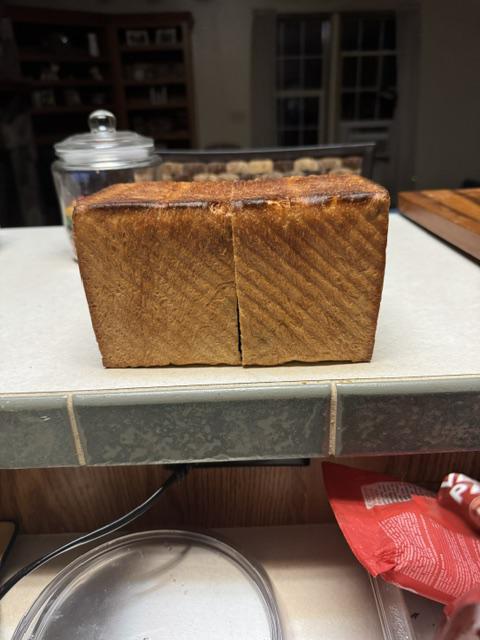
Cinnamon Raisin Sandwich Loaf
May I get a bread score please? Used the recipe for my small Pullman loaf, 375g strong bread flour, 250g whole milk, 90g starter, 8g salt, 25g sugar, and 50g melted butter. Mixed in about 75g of raisins during 2nd and 3rd stretch/fold. Cinnamon swirl was added during shaping....75g brown sugar, 5g cinnamon, 30g bread flour, and 30g milk....made into a paste. The thing I think I am most proud of....not a bit of a leak in the pan, no raisin escaped, and no cinnamon/sugar burnt. I'm so pleased with the taste and the over all crumb, just need a better distribution of raisins, and the swirl. And yes I was so excited I cut into it before taking any pics!
0 likes • 2h
Very nice loaf! No leaking burnt sugar and a nice swirl. Well done!!
1-10 of 189

@donna-angelo-4525
So glad to be here. I have been baking yeasted breads my whole life, but am very new to sourdough, and loving it and this group!
Online now
Joined Mar 21, 2026