Activity
Mon
Wed
Fri
Sun
Sep
Oct
Nov
Dec
Jan
Feb
Mar
Apr
May
Jun
Jul
What is this?
Less
More
Memberships
BioOptimization Collective
302 members • Free
26 contributions to BioOptimization Collective

28d •
Which Longevity Peptide Is On Your Radar
We are building out our longevity protocols and we want to know where your head is at. Of these four compounds, which one are you most curious about right now? Cast your vote:
Poll
14 members have voted

2 likes • 19d
"cellular energy" piqued my interest. I want my energy levels back. I was go go go in my day. I want it back.
Apr 7 •
If You’re Not Tracking… You’re Wasting Your Time (Here’s Why)
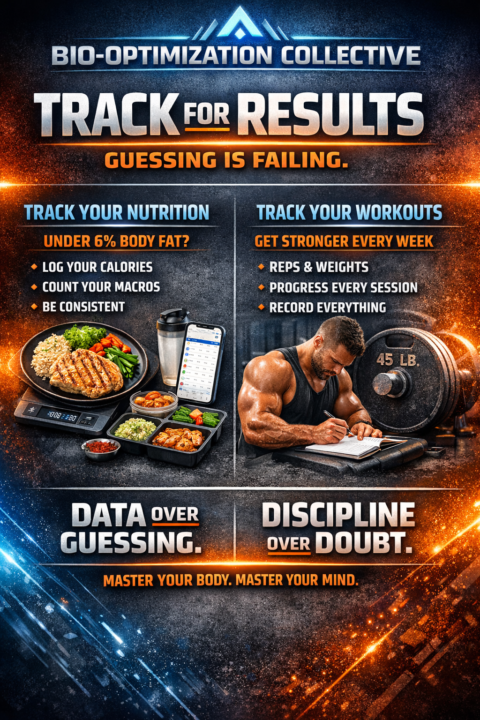
If you’re not tracking your nutrition…and you’re not tracking your workouts… What are you really doing? How do you know you’re making progress? How do you know what’s working… or what’s not? Most people guess. They “feel” like they’re doing enough. But feelings don’t build results — data does. Tracking is awareness. Awareness creates control. And control is what leads to transformation. Now here’s the truth… Once you’ve been consistent long enough — once you’ve gotten lean, disciplined, and in tune with your body — you don’t have to track everything forever. You start to know. But if you want to dial it in… If you want to push to that next level… If you want to get under 6% body fat… You don’t guess. You track You execute with precision. Same thing with your workouts: Are you getting stronger every week? More reps? More weight? Better control? Because if there’s no measurable improvement… There’s no guaranteed progress. Progress leaves clues. Tracking reveals them. When you track your nutrition and your training over time, something powerful happens — You stop hoping for results… And start engineering them. That’s the difference between people who “try” and people who transform. Track it. Own it. Improve it.
1 like • Apr 8
Way to call me out, brother. Ha.
Apr 7 •
I Need Your Help!!!
We have built a bot that can answer any questions you have about peptides. Try to trick it or break it, and let me know what you think. https://www.perplexity.ai/computer/a/dr-seeds-ai-helper-bio-opt-col-0jQ7hfuiQoiPoMAAe_Hz6Q
1 like • Apr 7
So far, better and more thorough than both Grok and Chat GPT. I copy pasted the same prompt and by far, this wins.
Feb 27 •
Genetic Testing Is Coming
We don’t guess here. We build around your body. That’s why we’re adding DNA-based genetic testing as the next step. This isn’t ancestry stuff. This isn’t disease testing. This is performance data. With one simple cheek swab, we analyze key genetic markers that influence: • Fat loss • Muscle building • Metabolism • Inflammation • Recovery • Aging patterns • Insulin sensitivity Instead of trying every diet on the internet, we can align your plan with how your body is actually wired. After 35, biology matters more. Hormones shift. Recovery slows. Stress hits harder. Most people keep guessing. We won’t. This adds another layer of precision to bloodwork, training, nutrition, and recovery. You don’t need more effort. You need better alignment. This is about training smarter, eating smarter, and aging stronger. Coming soon inside Bio-Optimization Collective.
1 like • Mar 20
Exciting!
0 likes • Apr 3
When?
Feb 27 •
Eat This First and Lower Your Blood Sugar Naturally
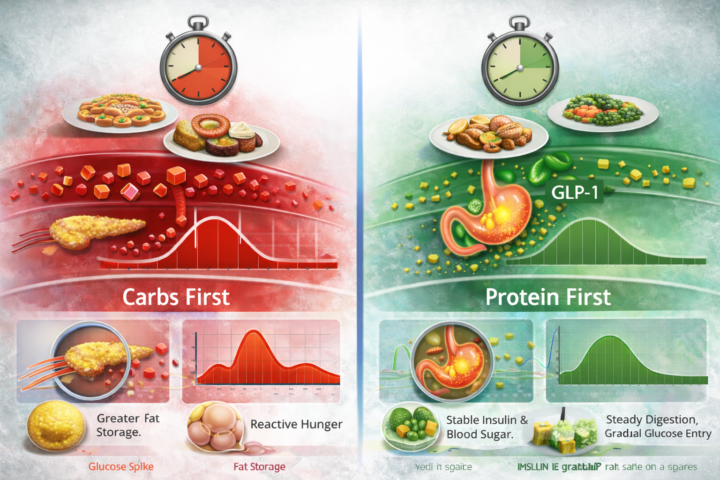
Your body already makes the same hormone that drugs like Ozempic and Mounjaro work on. You don’t always need a shot. You need the right order on your plate. Here’s what happens. If you eat carbs first, they turn into sugar fast. That sugar rushes into your blood. Your body releases a lot of insulin to handle it. Then your blood sugar drops. An hour later, you’re tired and hungry again. That’s the spike and crash. Now here’s the smarter move. Eat your protein first. Protein digests slower. It slows down your whole meal. When you eat carbs after, the sugar goes into your blood more slowly. No big spike. No big crash. Protein also turns on a hormone called GLP-1. That hormone helps you feel full, slows digestion, and keeps blood sugar more steady. Studies published in Diabetes Care showed that when people ate protein and vegetables before carbs, their blood sugar was up to 37–44% lower compared to eating carbs first. Same food. Different order. Better result. So here’s the rule: Protein first. Vegetables second. Carbs last. You don’t need to wait between bites. Just eat in that order. This is not dieting. This is using your biology the right way. Train smart Eat smart. Let your body work for you.
1 like • Mar 20
That's how I've always eaten since I started weight training back in high school. For whatever reason I just felt like protein was the right thing to start with and the veggies secondly in between after half my protein then the carbs only last and occasionally as filler or taste additive. Like going to get a burger at a sit down, you have carbs on the bun but the fries don't get touched until the end. That way you may be full before needing those deep fried dangers. Thanks for providing hard evidence to prove my oddities.
1-10 of 26

@cody-foster-2751
35 years old in the ever constant cycle of improvement and learning.
Active 8d ago
Joined Nov 18, 2025
Powered by