Activity
Mon
Wed
Fri
Sun
Jun
Jul
Aug
Sep
Oct
Nov
Dec
Jan
Feb
Mar
Apr
What is this?
Less
More
Memberships
The Dementia Lifeboat
65 members • $15/m
10 contributions to The Dementia Lifeboat

Dec '25 •
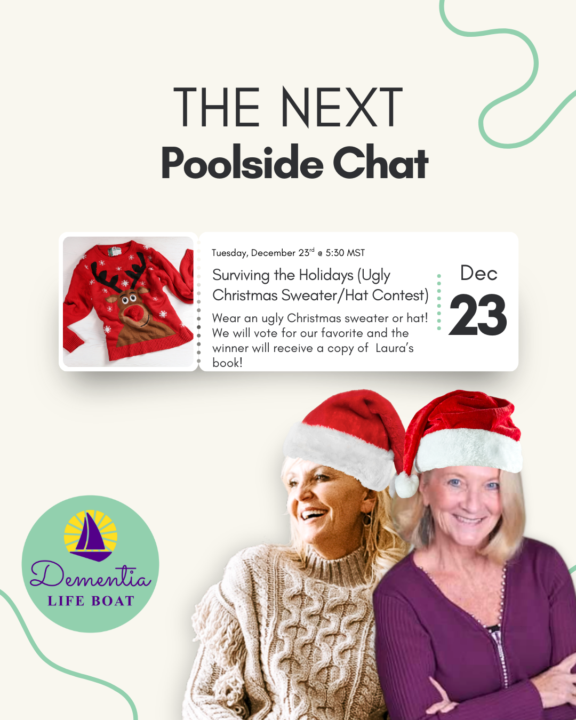
December 23rd | Ugly Sweater/Hat Contest!
Hello Dementia Lifeboat community! A couple of updates: *Reminder about our next Poolside Chat: Our topic is "Surviving the Holidays"* - We will be having an ugly sweater/hat contest. The winner will get a copy of Laura's book! - @Ike Schneider's Challenge: Bring at least one person to a Poolside Chat in 2026. This would be a great session to start! December 23rd @ 5:30 pm MST (AZ) / 7:30 EST Register Here: https://us02web.zoom.us/meeting/register/PRzPtXKIRf-NNdHzhSToUg#/ -------- THREE new training videos have been added to the CLASSROOM Tab: - A Loving Approach to Bathing - Dementia Aware Dining - Dementia Aware Intimacy and Sexuality Be sure to check them out!
1 like • Dec '25
I am sad I will have to miss this very fun event. I even have a great ugly sweater! I will be out of the country for about 3 weeks. I hope to catch up on all of the trainings and information when I return. Merry Christmas everyone.
Nov '25 •
What a dementia doctor does to reduce risk
I'm a neuropsychiatrist who diagnoses dementia every week. Here are the 6 things I do differently because of what I know. People ask me constantly what I do to protect my own brain. Fair question when you spend your career watching people lose theirs. Here's my honest answer: 1. I treat my sleep like it's life or death Because it basically is. 7-8 hours every night. Dark room. Cool temperature. White noise (and/or ear plugs). Eye mask. No screens 1 hour before bed. Sleep is when your brain clears out toxic proteins. Skip sleep, proteins accumulate. Do that for years, you're building toward dementia. 2. I exercise for 30-60 minutes daily minimum I do love how I feel after but and for the days I don't feel like it, the data is overwhelming. Walking 5,000 steps per day delays Alzheimer's cognitive decline by 7 years. More powerful than any medication we have. 3. I aggressively manage my blood pressure High blood pressure in midlife increases dementia risk by 60%. I check mine quarterly. Keep it under 120/80. Your brain's blood vessels matter as much as your neurons. 4. I maintain real social connections Loneliness and social isolation increase dementia risk substantially. I make time for friends even when work is busy. Your brain needs social stimulation like your body needs exercise. 5. I eat to reduce inflammation Mediterranean diet pattern. Lots of vegetables, fish, olive oil. Limited processed food and sugar. The MIND diet specifically designed for brain health shows measurable cognitive benefits. 6. I don't spend on unnecessary brain supplements Unless you have a specific vitamin deficiency, supplements don't prevent dementia. (I've written previously about the supplements I take based on my deficiencies). Save your money. Spend it on good food and a gym membership instead. What I don't do: - brain games (minimal evidence they help but if you enjoy them keep going!) - Excessive worry about occasional forgetfulness (that's normal aging)
1 like • Nov '25
Thank you for these tips.
Nov '25 •
What have you stopped doing?
I teach medical students one question that catches dementia earlier than most screening tests. "What have you stopped doing that you used to enjoy?" Not "how's your memory?" Not "what's today's date?" This question reveals functional decline. Here's why it works: People with early dementia don't usually complain about memory loss. They know something's wrong, but they can't articulate it. So they stop doing things. Quietly. Gradually. They stop managing finances because it's "too stressful" They stop cooking because they're "not hungry" They stop driving to new places because they "prefer familiar routes" They stop hosting friends because they're "too tired" Each excuse seems reasonable. But together they paint a picture of someone avoiding tasks they can no longer handle. I had a patient, Maria, who came in for annual checkup. Age 68. No memory complaints. I asked my question: "What have you stopped doing?" She paused. Then said "I used to love crossword puzzles. Haven't done one in months. They just frustrate me now." That can be early cognitive decline. Not the puzzles themselves. The frustration when something that used to be easy becomes hard. We did cognitive testing. Mild cognitive impairment. Early enough to intervene. Early enough to plan. Three patterns that signal early dementia: 1. Withdrawal from complex tasks 2. Managing money, cooking elaborate meals, planning travel. These require executive function that declines first. 3. Reduced social engagement Not because they're depressed. Because social situations demand cognitive effort they can no longer sustain. Preference for routine New situations require learning and adaptation. People with early dementia stick to routines because routines don't challenge their declining cognition. Standard screening tests miss this. The Mini-Mental State Exam asks "what's the date?" and "spell WORLD backwards." Patients with early functional decline can pass those tests easily. But they can't manage their checkbook anymore. They've stopped organizing family gatherings. They've given up hobbies that require concentration.
2 likes • Nov '25
This is so helpful, thank you for sharing.
Aug '25 •
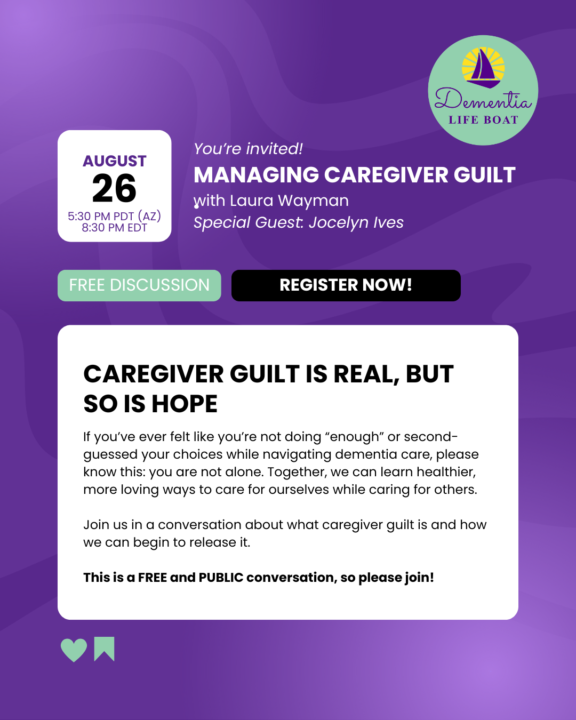
Poolside Chat: Caregiver Guilt
Register Here Please invite your friends, family, and coworkers to join this important conversation! Many caregivers quietly carry something heavy: guilt. This Tuesday, Laura and Jocelyn will be talking about what caregiver guilt really is, and how we can begin to release it. If you’ve ever felt like you’re not doing “enough” or second-guessed your choices while navigating dementia care, please know this: you are not alone. Together, we can learn healthier, more loving ways to care for ourselves while caring for others. August 26 @ 5:30 pm PST (AZ) Register Here
0 likes • Aug '25
Looking forward to seeing everyone one and discussing this very important topic.
Jul '25 •
Caregiving
This is from the book I was reading and shared at a poolside chat. So thankful for the author sharing this. From June Hunt: I’ve learned that caregiving is a calling of the highest order. It affords us the privilege to be the hands and feet of Jesus in the lives of others—pouring out His love upon the weak and weary, expressing His heart to the helpless. Caregivers are clearly our world’s unsung heroes. They serve selflessly and sacrificially far from the spotlight and applause. Armed with patience and perseverance, their deeds—too numerous to count— meet continual needs as they encourage the living and give dignity to the dying. And yet to some, caregiving can feel like a prison—a constrictive duty squeezing the joy out of life and siphoning off physical and emotional energy. Caregivers must take care to avoid a crisis. And more so, those providing this ministry must be ministered to as well. We need to find healthy ways to replenish their strength. Ultimately, caregiving is a calling to model the care of Christ. As Jesus said, He “did not come to be served, but to serve, and to give his life as a ransom for many” (Matthew 20:28). When you are called to be a caregiver, to find a caregiver, or to help a caregiver, remember that God is your unceasing caregiver. He says, “I will be your God throughout your lifetime—until your hair is white with age. I made you, and I will care for you” (Isaiah 46:4 nlt). My prayer is that you will allow the Lord to provide you with the help, strength, and hope needed for you to give and receive care. At those times when you feel understandably burdened, may you pause to feel God’s blessing on you as you bless others by sharing His loving care. June Hunt Founder, Hope for the Heart
2
0
1-10 of 10
@christine-macdonald-2435
I am a chaplain and I work at our church. I have been interested in dementia for many years. I want to help people with the needed resources.
Active 71d ago
Joined Mar 29, 2025
Powered by