
Pinned

27d •
We're MOVING!
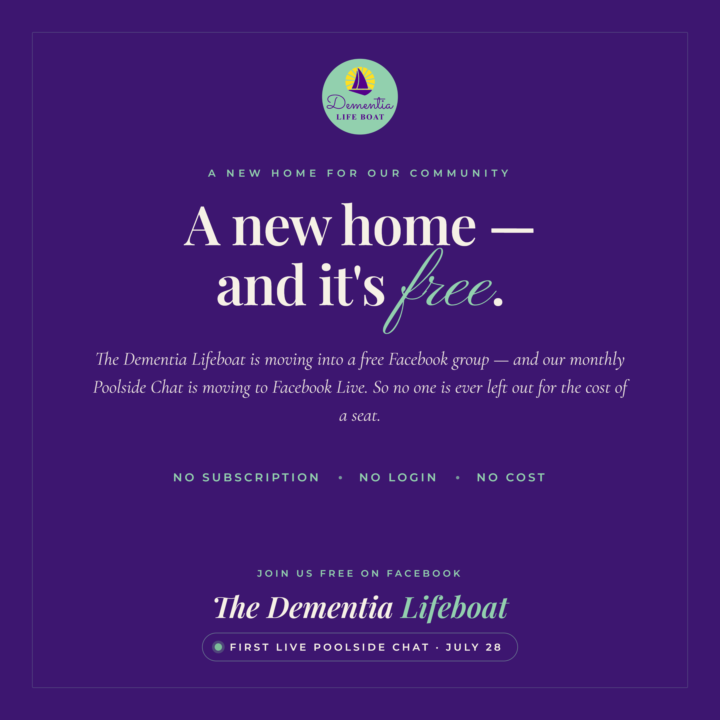
The Dementia Lifeboat community is moving off of Skool and into a free Facebook group — and our monthly Poolside Chat is moving to Facebook Live. This was a purposeful decision. I want this space to be available to every caregiver who needs it, without any barrier to entry. No subscription, no login, no cost. Just a community that shows up for one another. If you or someone you know is navigating dementia caregiving, this is the place. Come join us. 👉 Join the Dementia Lifeboat: https://www.facebook.com/groups/2138455819816838 Our first Facebook Live Poolside Chat is July 28th: https://www.facebook.com/share/1G3D6mJ4Si/
0
0
7d •
In case you missed it...
WE ARE MOVING! 💜The Dementia Lifeboat is now on Facebook! Join our group here! 💜Poolside Chats are now on Facebook Live! RSVP to our next Facebook Live! 💜All our Classroom videos are moving to YouTube! Subscribe and watch! ---- This was a purposeful decision. We want this space to be available to every caregiver who needs it, without any barrier to entry. No subscription, no login, no cost. Just a community that shows up for one another. If you or someone you know is navigating dementia caregiving, this is the place. Come join us. Join the Dementia Lifeboat on Facebook! Our first Facebook Live Poolside Chat is July 28th. We hope to see you there.
0
0

28d •
We are live now!
We have an exciting announcement to share with everyone! Join anytime between now and 6:30 PST! https://us02web.zoom.us/meeting/register/PRzPtXKIRf-NNdHzhSToUg
0
0
Jun 18 •
In need of resources
Hello all - I have a lot going on. I have a Father In Law in Dementia care close to us, I have both my parents not close to us and both showing dementia signs for years now and not ready to accept it yet, and I now have a husband newly diagnosed with Parkinson's. We live in AZ. Any help for resources - especially for Parkinson's would be VERY appreciated if you have any. We are checking out all the "big" websites / foundations already. TIA.
Jun 18 •
Jocelyn's Thursday Thought
I really like a superhero movie where there are good guys and bad guys. Villains and victims. I love a dramatic story or a great murder mystery. I love all those things when I am reading a book or watching a movie or a play. But in real life people are not that simple. Stories are not this black and white. People are not just good or bad. Most of the time the drama in our minds is an oversimplification of real life. Your mom isn't an evil villain even though you disagree with some of her choices and worldviews. You're not a victim even if she's not showing up like the mom you think she should be. There aren't good guys and bad guys in this story after all. There are just people who are complicated and lovely and flawed. People who love each other and have different opinions about what that means. People with thoughts and feelings and ideas and all of it is messy at times, but understandable and reasonable if you really pay attention. When we make another a villain, we are left being the victim. We give them (in our minds) way more power than they actually have and we are left powerless. Drama is so much better saved for the big screen. Let your life and the people in it just be dynamic. Everyone IS doing their best. Sometimes their best is pretty crappy, but if they could have done better in that moment - they would have. Trust me. Have a beautiful week! I love you all, Jocelyn
1
0
1-30 of 238
skool.com/dementia-lifeboat
Dementia Care Support & Expert Guidance.
Powered by