Activity
Mon
Wed
Fri
Sun
Aug
Sep
Oct
Nov
Dec
Jan
Feb
Mar
Apr
May
Jun
What is this?
Less
More
Owned by Chris
Save money. Build wealth. Take control of your personal finances with simple strategies.
Memberships
84 contributions to Inspired Life, Empowered Being
🔥
19d •
The Art of Noticing (Day 1: Conduct a Scavenger Hunt)
𝐃𝐀𝐘 1 𝐂𝐇𝐀𝐋𝐋𝐄𝐍𝐆𝐄: 𝐂𝐎𝐍𝐃𝐔𝐂𝐓 𝐀 𝐒𝐂𝐀𝐕𝐄𝐍𝐆𝐄𝐑 𝐇𝐔𝐍𝐓 Most of us move through our days on autopilot, noticing only what's familiar or immediately relevant. This scavenger hunt is designed to interrupt that pattern. By intentionally searching for specific objects, colors, shapes, textures, or experiences, you'll train your attention to pick up details that would normally go unnoticed. So...pick a goal and tell us what you've found! Super plus if you can take a picture! Some examples: - Something yellow - A heart shape - A reflection - Something older than you - Something handmade - A plant growing in an unexpected place - Observation-Focused - Evidence that a human was here - Evidence that an animal was here - Something that has changed over time - A pattern that repeats - Something you have passed by many times but never really noticed - Creative - Something that looks like a face - Something that reminds you of your childhood - Something that symbolizes hope - Something that represents resilience - Something beautiful that most people would overlook - An object that could inspire a story - Something that seems out of place - A "hidden treasure" in an ordinary setting - People & Community - An act of kindness - Evidence of creativity - Something that tells a story about your community - A sign of hard work - Something that makes you smile What were you on the lookout for today and what did you notice? Thanks to @Steve Webb and his group 30daychallengers for introducing me to the book The Art of Noticing. His community offers one live 30-day challenge every month. It provides a space where we can turn good intentions into action and each day there is a daily prompt/action related to the month's challenge. This month's challenge is 30 days of sunlight, movement, and remembering what the real world feels like. There's access to previous challenges as well and the community is great about support!

1 like • 15d
@Georgiana D it’s good I’m actually ‘training’ for a half marathon in September 👀
0 likes • 14d
@Georgiana D I did a 10k like 10 years ago, but decided to give myself something to work towards 💪
🔥
24d •
Our brain is not a muscle (nerding out alert)
Our brains/bodies are SOOOOOO frickin' cool!!! I woke up at my usual time this morning (4a.m.), got ready for the gym and read and journaled until about 6a.m.. This is the usual routine. Although fully caffeinated, at 6a.m. a wave of tiredness hit me and I decided to not go to the gym and take a nap before work instead and slept until 8. (this is unusual--I usually force myself to go even if I'm tired)...(side thought: In college I used to have redbull and it would be funny because within an hour of having it, I'd still be able to go to bed...good times). Anyways, this whole situation got me wondering about the why and I think that the mental load of the activities (and the CONTENT and EMOTIONAL LOAD/MANAGEMENT of what I was thinking/writing about) this morning kind of depleted me just a bit. And this made me think of the lower amount of energy investment I've been putting into things as of late. (I was writing about truth which took me down a cool path but at the end (and it's not really the end), I started digging into things more and that ended up being it's own journey that I know will be going on for a long time. But, I knocked myself out in the process. ha. So, I woke up and started looking up things about the brain because I'm often energized by learning new things and engaging in conversations (my whole job is dependent on me being alert/engaged) but this time it wiped me so I wanted to know the science behind what was happening....nerding it out ). The video talks about HOW to address/ manage energy! :) So here are some fun facts for you (that you may have already known, but they're interesting anyway). It's okay if you don't read it all....I'll be using this moving forward so I and my clients will be benefitting! :) BUT, it might be worth reading to gain an even deeper understanding of what's happening if you feel depleted! :) (Thanks to notebooklm for condensing a bunch of different articles and spitting out some cool facts about the 𝐧𝐞𝐮𝐫𝐨𝐛𝐢𝐨𝐥𝐨𝐠𝐲 𝐨𝐟 𝐰𝐢𝐥𝐥𝐩𝐨𝐰𝐞𝐫 𝐚𝐧𝐝 𝐧𝐞𝐮𝐫𝐚𝐥 𝐫𝐞𝐠𝐮𝐥𝐚𝐭𝐢𝐨𝐧)
Poll
6 members have voted
0 likes • 23d
Dangggggg this goes deep! This reminds me, I probably need a sleep reset soon. the 4am wakeups have hit harder this week for some reason
🔥
29d •
Pause.
Taking one for a few days. Truly thankful for each of you. If you want to drop some wisdom you've gathered in your life, would love to start a thread on that! That'd be cool but no pressure. Truly appreciate you all. 💗 See you soon.🤗
5 likes • 29d
Good for you! Enjoy it
🔥
Jun 2 •
Go get your butt kicked-why your critics are not the ones who count...
A central theme in Brown's work is inspired by a Theodore Roosevelt quote "The Man in the Arena". Legitimately one of my favorite quotes and one that I return to often...mainly because I need the reminder. I need the reminder more often than I'd like to admit... The core idea is that the critic does not count; credit belongs to the person who is actually in the arena, doing the damn thing and getting their ass kicked in the process. Courage is defined by showing up and being seen when the outcome is uncertain rather than by achieving a perfect result. 𝐓𝐡𝐞 𝐑𝐞𝐚𝐥𝐢𝐭𝐲 𝐨𝐟 𝐭𝐡𝐞 𝐀𝐫𝐞𝐧𝐚 (Guarantee of Failure-oh the joy of failure) -If you choose to be brave and show up in your life or work, you are guaranteed to "𝐠𝐞𝐭 𝐲𝐨𝐮𝐫 𝐚𝐬𝐬 𝐤𝐢𝐜𝐤𝐞𝐝" at some point. So....let's fumble forward enthusiastically, yeah? ***failure is an inevitable consequence of courage, the critic’s observation of that failure is technically accurate but morally irrelevant to the person striving*** 𝐓𝐡𝐞 FOUR 𝐏𝐞𝐫𝐦𝐚𝐧𝐞𝐧𝐭 𝐂𝐫𝐢𝐭𝐢𝐜𝐬 There are 4 seats in the "arena" that are always occupied: 𝐬𝐡𝐚𝐦𝐞: The "gremlin" that tells you "you're not enough" or "Who do you think you are" 𝐬𝐜𝐚𝐫𝐜𝐢𝐭𝐲: "The voice asking what you are contributing that is original or if your work even matters 𝐜𝐨𝐦𝐩𝐚𝐫𝐢𝐬𝐨𝐧: The nightmare of looking at others' work to judge your own value (rather than to inspire) (thief) 𝐩𝐞𝐫𝐬𝐨𝐧𝐚𝐥 𝐜𝐫𝐢𝐭𝐢𝐜: specific seat reserved for a parent, a teacher, or a "shitty ex-coworker", spouse, 'frenemy', basically someone we value in some way. 𝐌𝐚𝐧𝐚𝐠𝐢𝐧𝐠 𝐅𝐞𝐞𝐝𝐛𝐚𝐜𝐤 If a critic is not also in the arena/has not been in the arena "getting their ass kicked," their feedback should be eyed carefully. If a critic is sitting in the "cheap seats" (they're not putting their reputation or heart on the line; they're staying safe and small; they're afraid that you won't serve the same role for them), be cautious. The critic is the person who points out how the "strong man stumbles" but they are not the ones who actually risk failure or there's a dependency on you staying in the exact role you have been in because they may have been benefitting and you taking action may require them to change too.....
Poll
10 members have voted
5 likes • Jun 2
This was great! It's so easy to spin up all these ideas in our head of how WE THINK people portray us or how WE THINK we suck. But in reality, everyone sucks and everyone has their own challenges so don't be afraid to take a chance because of what outside factors may say/think
1 like • Jun 3
@Georgiana D
🔥
May 24 •
From online to IRL connections- the gift of friendships
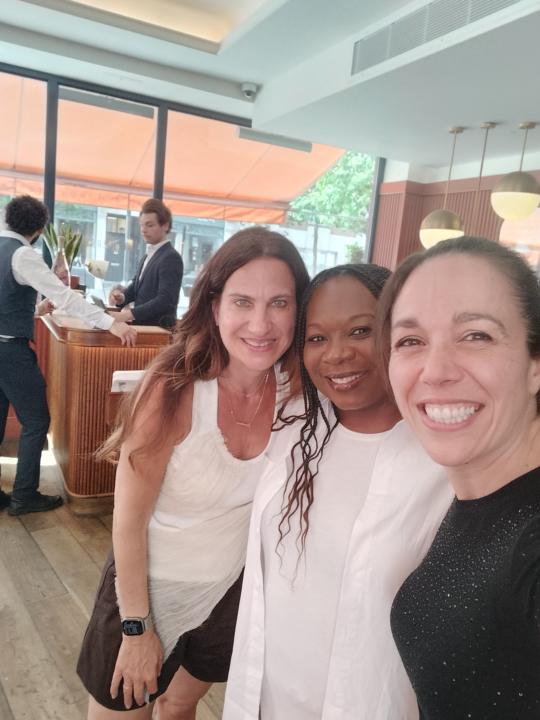
I've said this before, but when starting this community and when joining other communities on skool, I never anticipated the actual 'community' piece of it. Didn't expect the very real connections that would be made through a medium that seemed so detached to me. But, here we are, connecting. And it feels real. Because maybe, just maybe, it is real after all? This past week @LaTanya Carter and I had an incredible journey making our way through a few countries (more on that in a different post). It's been a beautiful trip filled with realizations, beautiful scenery and gratitude. I'm so thankful for the ability to do this and so so blessed to do this with her! She's lovely 💗 The highlight on the very last day of our trip has been being able to meet @Serena DAfree in real life!!! 🇺🇲🌎🇬🇧 Her and I met early on and we just 'clicked'. Her heart for people and her ability to look beyond the surface really stood out and I just love her energy. The real life meet up just further highlighted her spirit and her love. (Thank you for a lovely lunch!) Spending time with her was the best part of the last day. It never ceases to amaze me that we live in a time where we can meet strangers (from all over the world) online and become friends and meet them in real life. Wild times... How have your online connecting experiences been for you? I personally know it doesn't always turn out positive but obviously I'm hoping for more good than bad!
Poll
18 members have voted
4 likes • May 25
Very cool!
1-10 of 84

@chris-wendt
Helping busy families save $500 - $1,000+ per month with the 6 week money challenge
Active 7h ago
Joined Oct 12, 2025